
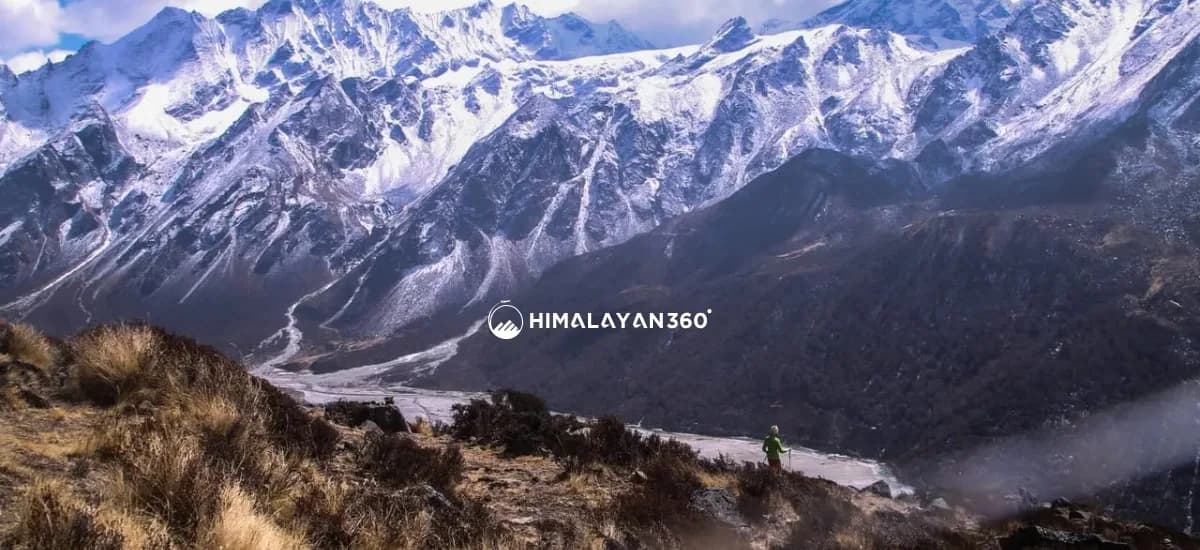
Langtang National Park is the first Himalayan national park established in 1976, covering an area of 1710 sq km. A buffer zone covering 420 sq km was added to the park in 1998. It is located in the central Himalayan region of Nepal and is spread over Rasuwa, Nuwakot, and Sindhupalchowk districts. It ranges in altitude from 1,000M to over 7,000M. It is the closest Himalayan national park to the capital city of Kathmandu, which lies approximately 30KM to its north.
It is connected with the Qomolongma National Nature Preserve in the Tibet Autonomous Region of China in the east and north. As well as the border follows the Trishuli River in the east and Shivapuri National Park in the south. The southern part of the park contains the Chimse Danda ridge and the Ganja La Pass, which is a high mountain pass.
Langtang National Park has a rich ecosystem and is one of the major attractions in Langtang Region. It shelters wildlife like red pandas, Himalayan black bears, musk deer, and over 250 bird species like Himalayan monal, Rufous-vented Tit, and Green-winged Teal. Langtang National Park is also rich in culture. The park is full of Tamang villages that offer a glimpse into traditional Himalayan life. Visitors can enjoy warm hospitality, traditional food, and unique festivals inside this park.
Langtang National Park at a Glance
Langtang National Park is located in the central Himalayan region of Nepal, directly north of the Kathmandu Valley, which makes it the only high Himalayan reserve in the country you can walk into on the same day you leave the capital. The park was established in 1976 as Nepal’s first Himalayan national park and the country’s fourth protected area, and a further 420 sq km was gazetted as buffer zone in 1998. It is administered by the Department of National Parks and Wildlife Conservation, whose warden’s office and main entry checkpoint sit at Dhunche in Rasuwa.
The park takes its name from the Langtang Himal, the range that walls the valley in, and from the Langtang Khola, the Langtang River that drains it westward into the Trishuli. In the north and east the boundary links up with the Qomolangma National Nature Preserve in Tibet, so the himalayan landscape under protection here carries on across the frontier rather than stopping at it. That continuity is part of why Langtang National Park in Nepal holds species, such as snow leopard and musk deer, that need far more ground than any single park can give them.
| Established | 1976, the first Himalayan national park in Nepal |
| Area | 1,710 sq km, plus a 420 sq km buffer zone added in 1998 |
| Districts | Rasuwa, Nuwakot and Sindhupalchowk |
| Altitude range | 1,000M to over 7,000M |
| Highest peak | Langtang Lirung (7,227M) |
| Distance from Kathmandu | Park boundary about 30KM north, trailhead at Syabrubesi about 120KM by road |
| Main entry checkpoint | Dhunche, Rasuwa |
| Recorded species | 1,000+ plants, 380 birds, 46 mammals |
| Entry permit | NPR 3,000 foreign nationals, NPR 1,500 SAARC, NPR 100 Nepali |
| Main treks | Langtang Valley, Tamang Heritage, Langtang Gosaikunda |
Popular Trekking Routes & Opportunities
Langtang National Park offers some of the most scenic trekking routes in Nepal. Trails pass through forests, rivers, and high mountain valleys. There are three main trekking routes inside the park boundary, and every itinerary sold for this region is a version of one of them: the Langtang Valley trek to Kyanjin Gompa, the Tamang Heritage Trail through the villages west of Syabrubesi, and the Gosaikunda Lake trek over Lauribina La. A fourth option, the Helambu trek, starts at the Kathmandu end and can be joined to the Gosaikunda crossing to make a loop. None of the three is a difficult trek by Himalayan standards, and none needs a domestic flight. Let’s discuss the main trekking options in detail.
Langtang Valley Trek
The Langtang Valley trek is one of the most popular and moderately difficult routes in the Langtang National Park. It is often called the “Valley of Glaciers” because it offers a more convenient high-altitude experience than more strenuous treks like the Everest Base Camp.
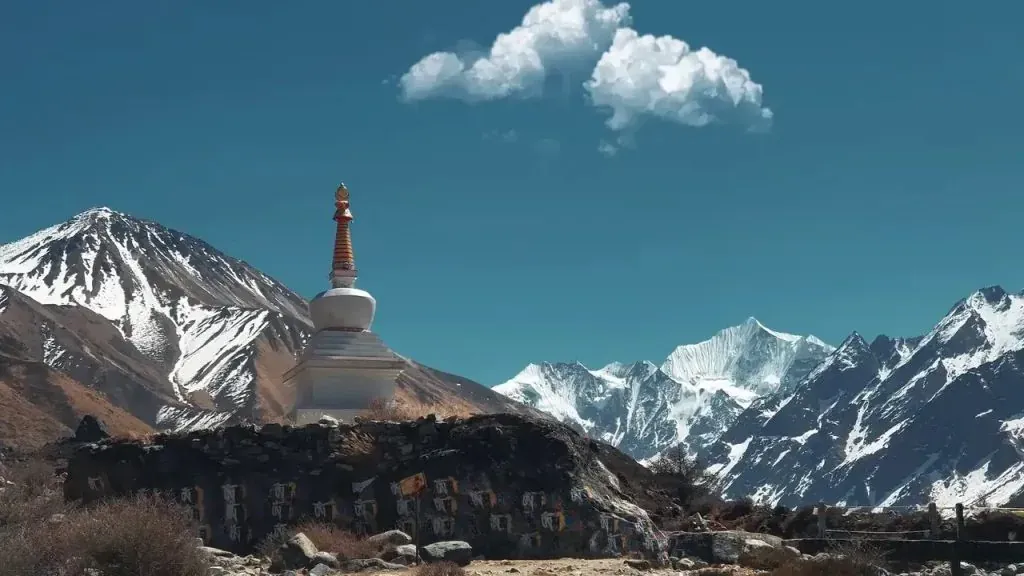
- Trek length: 8-10 days
- Elevation: Starts around 1,200M and reaches up to 4,984M at Kyanjin Ri
- Scenic villages: Visit Langtang, Kyanjin Gompa, and Lama Hotel
- Mountain Views: Langtang Lirung (7,227M), Ganesh Himal (7,422M), and Dorje Lakpa (6,988M)
- Cultural experience: Interact with the Tamang communities and explore monasteries
Tamang Heritage Trek
The Tamang Heritage Trek is a unique trek in Langtang National Park that focuses on culture and nature. This route is popular for its local village experience and views of the Langtang and Ganesh mountain ranges.
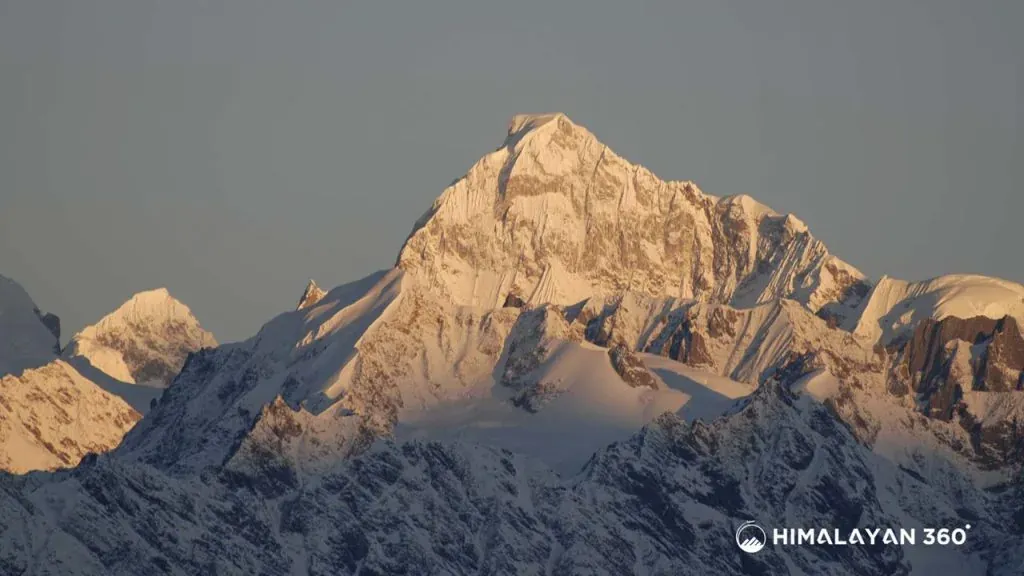
- Trek length: 6-7 days
- Elevation: Ranges from 1,200M to 3,165M at Thuman
- Scenic village: Explore Dhunche, Briddhim, Tatopani
- Wildlife spotting: Monkeys, birds, and occasional Himalayan small mammals
- Difficulty level: Easy to moderate, suitable for beginners and cultural enthusiasts
Langtang Gosaikunda Trek
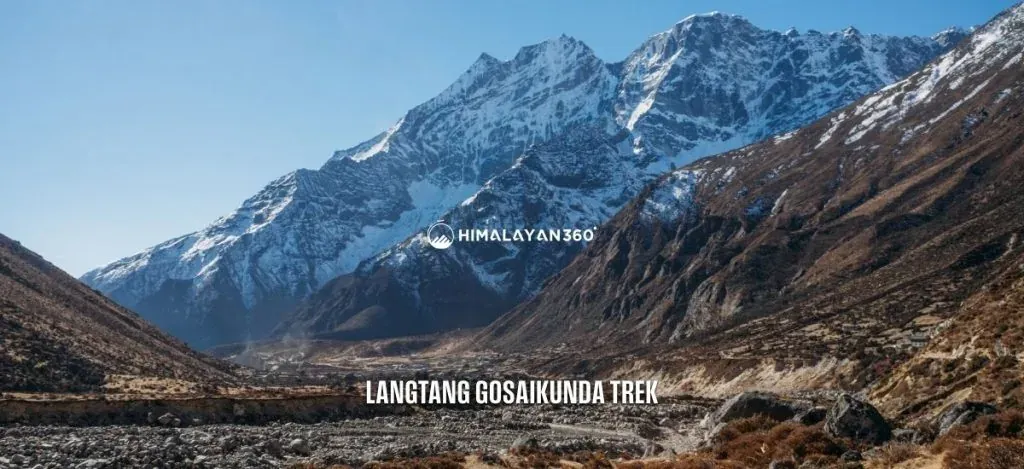
The Langtang Gosaikunda Trek is a combination of the mountain scenery and the Tamang culture, with a visit to the sacred high-altitude lakes of Gosaikunda. The long journey includes crossing Lauribina La Pass and often ends by descending through the Helambu region.
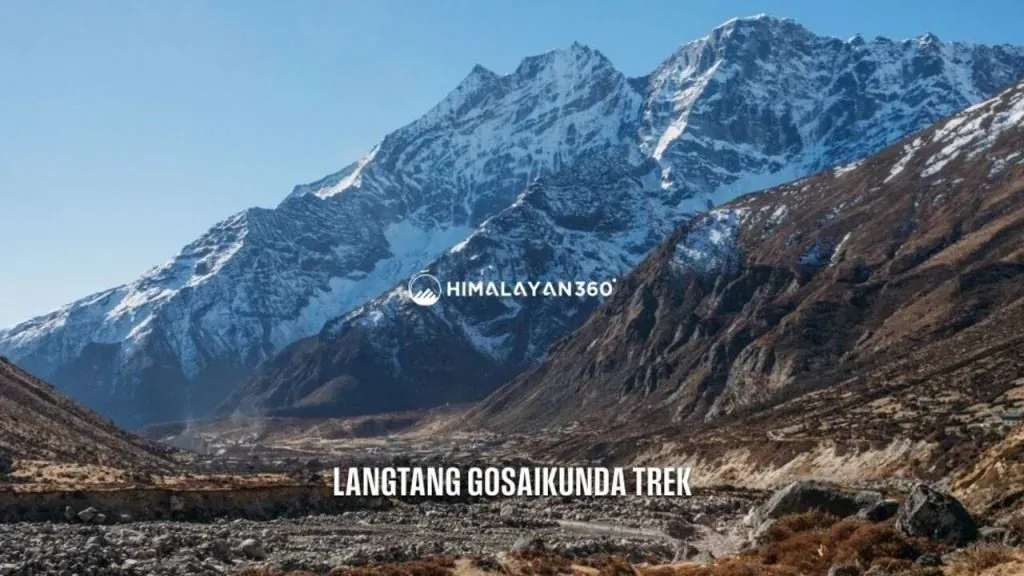
- Trek length: 5-13 days (5 days for Short Gosaikunda Trek)
- Elevation: Starts around 1,460M and reaches 4,380M at Gosaikunda Lake
- Scenic villages: Pass through Dhunche, Sing Gompa, and Lauribina
- Mountain Views: Langshisha Ri (6,427M), Kyunga Ri (6,949M), Changbu (6,781M), Gangchenpo (6,387M), and Yansa Tsenji (6,690M)
- Difficulty level: Moderate, suitable for trekkers with some previous experience
Major Attractions of Langtang National Park
Langtang National Park is full of natural and cultural wonders that attract thousands of visitors every year. Along with rare wildlife, the park is rich in culture, with Tamang and Sherpa villages being the major communities here. This park also contains several mountain peaks, with Langtang Lirung being the highest of all. Let’s discuss some of the major attractions in brief.
Turquoise Colored Gosaikunda Lake
Gosaikunda Lake is an alpine lake situated at an elevation of 4,380M in the Rasuwa district within Langtang National Park. It holds religious and cultural significance for both Hindus and Buddhists. According to the legend of Samudra Manthan (the churning of the cosmic ocean), Lord Shiva created Gosaikunda by thrusting his trident into the ground to release water. Gosaikunda is not a single lake but a complex of 108 lakes. The entire area was designated a Ramsar site in 2007. The turquoise lake is set within a glacial basin, surrounded by peaks including Langtang Lirung, Ganesh Himal, and Manaslu. Every August thousands of Hindu pilgrims walk up from Dhunche for Janai Purnima, and for a few days the shore holds more people than the trail does in a normal month.
Local Lives Sustaining Natural Beauty: Langtang Glacier
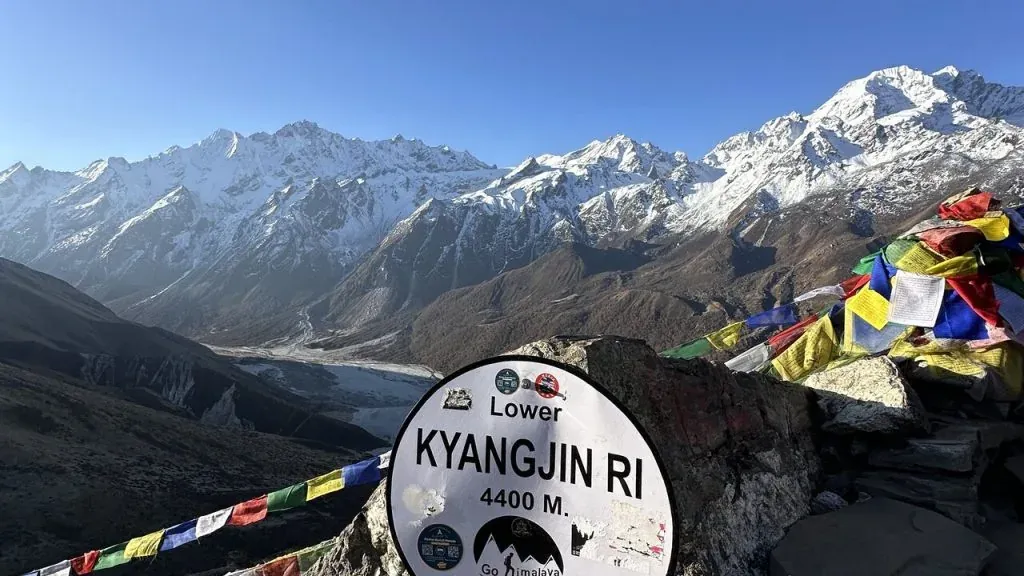
The Langtang region is well-known for the Langtang Glacier and the Lirung Glacier. They originate from the flanks of Langtang Lirung and are important for the local ecosystem and the communities living downstream. They are also the freshwater source for the Langtang Khola and Trishuli River. The meltwater from the Lirung glacier is also used to generate electricity for Kyanjin and Langtang villages. For the beautiful views of these glaciers, trekkers can hike to the vantage points like Kyanjin Ri and Tserko Ri.
Langtang Village: An Unwavering Relic of the 2015 Earthquake
Langtang Village is a Himalayan settlement surrounded by Langtang Lirung. It was destroyed by a rock-ice avalanche and air blast triggered by the April 2015 Nepal earthquake. A new settlement has since been rebuilt a short distance away. The new homes and lodges were constructed with more resilient, earthquake-resistant materials. Today, the rebuilt Langtang Village stands as a symbol of hope and strength for its people. This is a real attraction of Langtang Village.
The Acclimatization Spot Kyanjin Gompa
Kyanjin Gompa is located at an elevation of 3,870M in the Langtang Valley of Nepal. It is named after the ancient Buddhist monastery. Kyanjin Gompa serves as a perfect spot for acclimatization hikes to gain panoramic views of the Himalayas. Popular options include Kyanjin Ri and Tserko Ri. The village is home to a cheese factory where visitors can see the process of making cheese from yak milk and even purchase the products. It is the last settlement in the upper Langtang Valley, a scatter of stone lodges under lines of prayer flags with the south face of the Langtang Lirung mountain filling the sky behind them.
Majestic Views of +5,500M Mountains
The park is dominated by Langtang Lirung (7,227M), Langshisa Ri (6,427M), Dorje Lakpa (6,966M), Yala Peak (5,500M),Kyunga Ri (6,949M), Changbu (6,781M), Gangchenpo (6,387M), and Yansa Tsenji (6,690M). You can witness these snow-covered giants from spots like Kyanjin Gompa and Tserko Ri. On a clear day, the horizon offers one of the most beautiful Himalayan panoramas outside the Everest and Annapurna regions.
Tibetan Descendants, Lifestyle and Culture
The prominent ethnic group in the region is the Tamang people. They are thought to be descendants of Tibetans who intermarried with locals centuries ago. In the Helambu region, the Hyolmo and Sherpa are other distinct groups. They celebrate both Lhosar and Janai Purnima. Janai Purnima, in particular, is the festival that attracts thousands of pilgrims to Gosaikunda Lake in August. Villagers here practice agriculture and terrace farming, cultivating crops like maize, millet, wheat, potatoes, and buckwheat. This combination of farming traditions and spiritual practices gives the Langtang region its unique cultural identity.
Diverse Flora and Fauna in Langtang Area
Langtang National Park is home to more than 1,000 species of plants and nearly 46 species of mammals. Bird counts differ between sources: more than 250 species is the figure most commonly cited, while counts approaching 380 appear where migratory and seasonal species are included. In the lower elevations up to 2,600M, the park is full of subtropical forest. These forests contain sal (Shorea robusta), chilaune, chirpine, and Nepalese alder. Between 2,600 and 4,000M, the park is filled with subalpine forest. It contains silver fir, hemlock, Nepalese larch (Larix nepalensis), and birch. And above 4,000M, it is alpine meadows. Plants like juniper and scrub rhododendron are found here.
The park is a habitat for a variety of mammals and birds. Mammals like r****ed panda (Ailurus fulgens), s****now leopard (Panthera uncia), m****usk deer (Moschus chrysogaster), h****imalayan tahr (Hemitragus jemlahicus), h****imalayan black bear (Ursus thibetanus), g****rey langur, and rhesus macaque are found here. Bird species include Himalayan monal (Lophophorus impejanus), Large raptors, Ibisbill, Crimson-horned, and Satyr tragopan pheasants. This rich diversity of flora and fauna makes Langtang a vital ecological zone.
How to Reach Langtang National Park
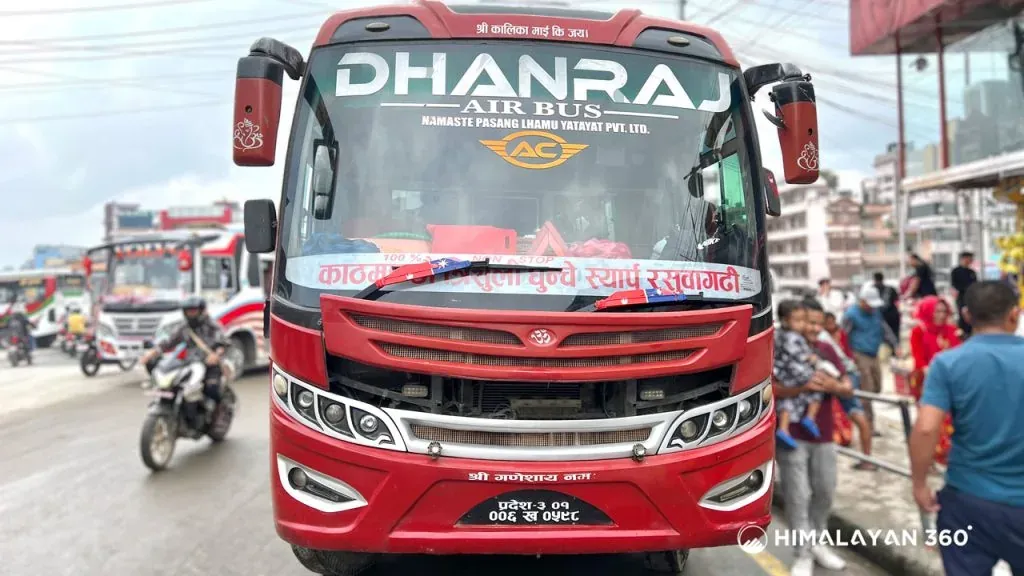
Langtang National Park is reached entirely by road, which is the main reason it costs less and goes wrong less often than Everest or Annapurna. No domestic flight is involved, so there is nothing for the weather to cancel. Almost every trek begins with the drive from Kathmandu to Syabrubesi (1,460M), about 120KM north, on the Pasang Lhamu Highway. Trekkers fly into Tribhuvan International Airport in Kathmandu, spend a night in the city collecting permits, and start the drive the next morning.
- Public bus: leaves Kathmandu in the morning and takes 7 to 8 hours to Syabrubesi.
- Private jeep: the same road in roughly 6 to 7 hours, with stops of your own choosing.
- Dhunche: the last town before Syabrubesi and the park entry checkpoint where permits are inspected.
- Monsoon note: landslides on this highway between June and August can add hours or close the road for a day.
The Helambu side of the park is reached differently. Those trails start from the edge of Kathmandu at Budhanilkantha, inside Shivapuri Nagarjun National Park, which carries its own entry permit. For the full breakdown of the drive, fares and stops, see Kathmandu to Syabrubesi route and distance.
Permits and Documents Required to Visit Langtang National Park
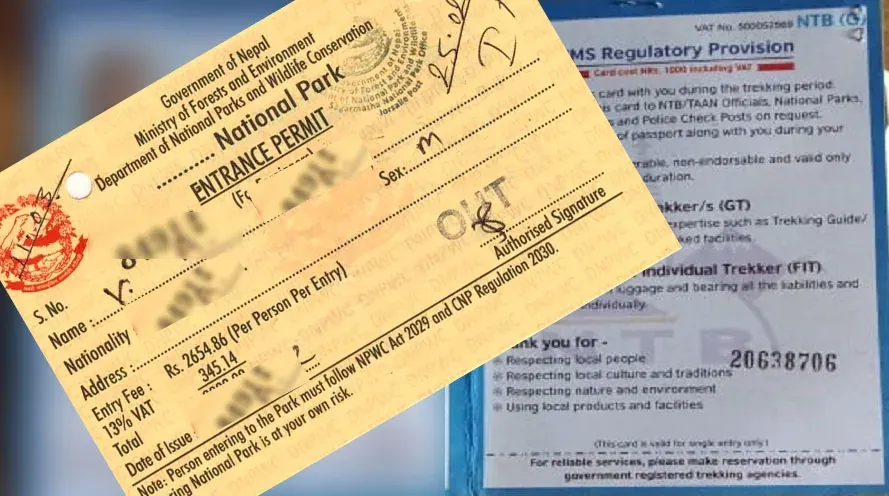
To visit Langtang National Park, you’ll need two main permits. First Langtang National Park Entry Permit and the Trekkers’ Information Management System (TIMS) card. An additional permit is required if you pass Shivapuri National Park. Here’s detailed info about two permits:
| Permit | Foreign nationals | SAARC nationals | Where to get it |
| Langtang National Park Entry Permit | NPR 3,000 | NPR 1,500 | Nepal Tourism Board (Kathmandu) or the Dhunche entry point |
| TIMS Card | NPR 1,000 | NPR 600 | TAAN office, Kathmandu or Pokhara |
| Shivapuri Nagarjun Entry Permit (Helambu start only) | NPR 500 | NPR 100 | Park gate at Budhanilkantha |
Nepali citizens pay NPR 100 for the park entry permit. Neither permit can be bought online, and neither is issued to a trekker without a guide. The full rules, penalties and application steps are set out in our Langtang Valley trek permit guide.
Document required
To obtain your permits, you will need to provide the following
- A valid passport and visa
- Two or more passport-sized photos
- Your trekking guide’s license number and trekking agency information
- Cash to cover the permit fees (in Nepalese Rupees is preferred).
Langtang Among Nepal’s Other National Parks
Nepal has a long list of national parks, and Langtang occupies an unusual place on it. Sagarmatha National Park, gazetted in the same year, protects the Everest approaches and is normally reached by a flight to Lukla. Chitwan, the country’s first national park, protects lowland jungle rather than a himalayan landscape at all. Langtang is the one protected area that packs subtropical forest, rhododendron, alpine meadow and glacier into a single valley you reach by road. That is the reason a trek in Nepal that has to fit inside a two-week holiday so often ends up here rather than in the two bigger regions.
What is the Best Time to Visit
The best time to visit the Langtang region is during spring (Mar to May) and autumn (Sept to Nov). Spring brings the rhododendron forests between Lama Hotel and Langtang Village into bloom, and autumn brings the clearest skies of the year for viewing Langtang Lirung. Both seasons are dry enough that the road to Syabrubesi stays open.
Winter (Dec to Feb) is cold and quiet, with snow lying above 3,500M and some upper teahouses closed or thinly staffed. Monsoon (Jun to Aug) is green and almost empty of trekkers, but it brings landslides on the access road and leeches in the forest below Lama Hotel. Month-by-month temperatures, rainfall and season-by-season packing lists are covered in weather in Langtang.
Health, Altitude and Medical Attention in Langtang National Park
In the Langtang National Park, medical facilities are extremely limited. At the start of the Langtang Valley Trek, Syabrubesi has a small hospital that offers basic medical facilities. Some larger villages, like those in the Helambu region, may have small health posts that provide better health care. In case of minor issues, teahouse owners and local guides often carry first-aid supplies, and they have basic medical knowledge.
Altitude sickness is the most common health risk for trekkers in Langtang. In such a case, trekkers have to immediately tell their guide or trekking partner how they feel. If symptoms do not improve or worsen, the only proven cure is to descend to a lower altitude. Severe symptoms, such as confusion or loss of coordination, require immediate descent and emergency evacuation. For emergencies, army posts at Ghoda Tabela and Langtang have emergency radio facilities.
Dos and Don’ts inside Langtang Valley
Dos:
- Hire a licensed guide: As of Feb 15, 2025, it is mandatory to hire a licensed trekking guide through a registered agency like us to visit national parks.
- Obtain proper permits: Make sure your guide has helped you receive the necessary Langtang National Park Entry Permit and TIMS card.
- Respect the local culture: Show respect for the Tamang and Sherpa communities you pass through.
- Practice Leave-No-Trace principles: Minimize your environmental impact by following the “Leave No Trace” ethos.
- Acclimatize and hydrate properly: To avoid altitude sickness, ascend gradually, drink at least 3–4 liters of water a day, and include acclimatization days in your itinerary, such as in Kyanjin Gompa.
Don’ts:
- Do not drink alcohol or caffeine at altitude: These dehydrate the body and can exacerbate the symptoms of altitude sickness.
- Do not disturb wildlife: Give animals their space, and never attempt to feed or touch them.
- Do not litter or leave waste behind: This pollutes the environment and harms both humans and wildlife.
- Do not waste water or energy: Resources like electricity and water are limited in the mountains. Be mindful of your consumption.
- Do not enter homes or monasteries without permission: Always be respectful of private and sacred spaces.
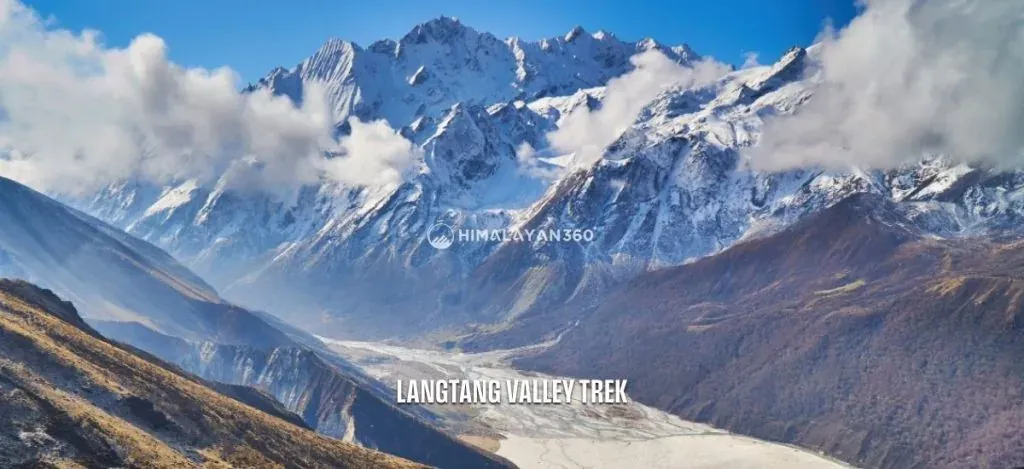
8 Days
Langtang Valley Trek
$449
5.0(10 reviews)
Have you ever dreamed of trekking in the Himalayas but worried that overcrowded trails will ruin the adventure? The 8-days Langtang Valley Trek is the perfect solution to this dilemma. Located just north of Kathmandu, the trek can be reached within a 6-hour drive, with no flights required. Fully rebuilt after 2015 earthquake and safer than ever, this trek offers a Tamang Himalayan experience rather than a Sherpa-focused one, while directly supporting the economic growth of the local community. This trek is fully focused on nature. You will cross the Langtang Khola and Bhote Koshi rivers using simple suspension bridges made of steel or wood, with minimal modern modification You can also see Langtang Lirung (7,234M), Dorje Lakpa (6,966M), Gangchempo (6,388M), Yala Peak (5,500M), and many other snow-covered mountains throughout the journey. The trekking route also connects with high Himalayan passes used by local traders and yak herders for many years. Villages in the Langtang valley still follow old Buddhist traditions. During festivals like Sonam Lhosar (Jan–Feb) and Buddha Jayanti (May), local people gather for prayers, dancing, singing, and family celebrations. Trekkers can see yak farming, the cheese-making process, and traditional stone and clay houses that portray the lifestyle of the high Himalayas. The route from Syabrubesi to Lama Hotel and Langtang Village up to Kyanjin Gompa lies inside Langtang National Park, the first Himalayan national park of Nepal, established in 1976. The park covers around 1,710 sq km and protects forests, rivers, glaciers, and alpine grasslands. The region is inhabited by red pandas, Himalayan black bears, musk deer, snow leopards, and over 250 species of birds including Himalayan Monal (the national bird of Nepal). If you want capture mountain views without going on a long expedition, the Langtang Valley Trek is one of the best choices in Nepal. Pack your boots, charge your camera, and get ready to walk in one of the most loved Himalayan valleys.


6 Days
Tamang Heritage Trek
$360
5.0(7 reviews)
If you are looking for a different adventure that is also enriching, the 6 Days Tamang Heritage Trek is a perfect package for you. Opened in 2004, the Tamang Heritage Trail is one of the closest trekking route from Kathmandu. The rewarding trek takes you through the Langtang region’s scenic and diverse landscapes. The trail is ideal for anyone looking for a shorter Himalayan adventure. It’s a relatively easy trail suitable for any trekker with reasonable health and fitness. The highest point of the trek is 3,165 meters, and the average trekking hours per day is 6 hours. The Tamang community’s origin is linked to Tibet, and they practice Tibetan Buddhism. The religion has a deep influence on their unique culture, vibrant attire, and traditional lifestyle. During the Tamang Heritage Trek, you will get to look at their culture closely as you trek through the winding forest trails. Furthermore, these traditional villages are set against the majestic Langtang ranges. Hence, you can enjoy a panoramic mountain view throughout the journey. The trail takes you to an altitude of 3,165 meters at Nagthali. You will hear stories from the locals while staying in locally-run teahouses and witness various rituals, cultural programs, and local lifestyle. The trek wonderfully blends adventure with rich Tamang culture immersion.
13 Days
Langtang Gosainkunda Trek
$659
5.0(11 reviews)
The Langtang Gosaikunda Trek offers an all-in-one experience through the village of Langtang to the sacred Gosaikunda Lake. Starting with a drive from Kathmandu to Syaprubesi, the trek is near Kathmandu, just 115km away within the Langtang National Park of Rasuwa district. It is ideal for those who prefer to experience mid-hills and high altitudes. It is also suitable for first-time trekkers as it only reaches up to 4,610 meters. The trek offers everything from deep gorges, pine and rhododendron forests, rocky terrain to yak pastures, monasteries, terraced farms, rural villages, Buddhist culture, and icy glaciers. The prominent highlight of this journey is a panorama of the Langtang range. The peaks included are Mount Dorje Lakpa, Langshisha Ri, Kyunga Ri, Changbu, Gangchenpo, Yansa Tsenji, and the Langtang Lirung. In 2015, the earthquake triggered an avalanche, causing massive loss to this valley. Many people died, and the trekking route was also closed until 2017. Hence, it is less commercialized. The community worked hard during these years and rebuilt the valley, keeping the essence of centuries-old monasteries. Now, in the present, it stands as a beautiful and strong valley yet to be discovered.
 Trek
Trek By air
 Pilgrimage
 Festivals
 Wildlife
 Luxury
 Yoga
Yoga Food
Food Heritage