
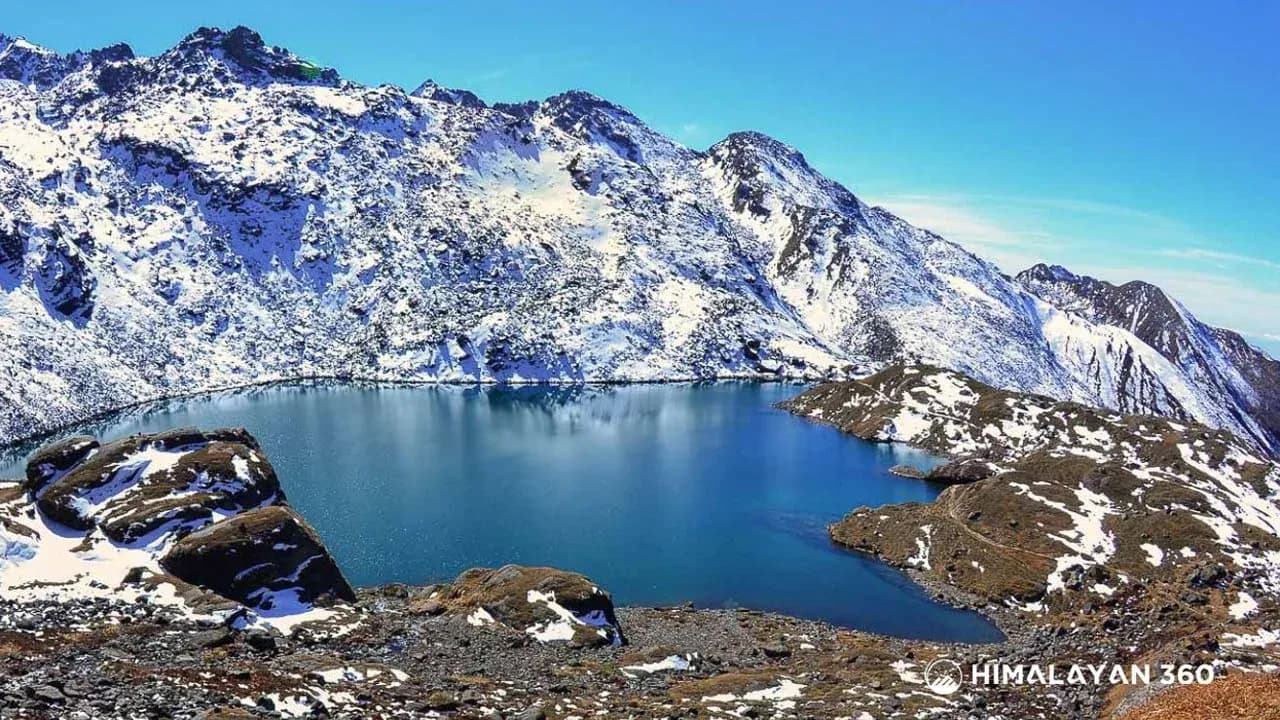
You don’t need Wi-Fi at Gosaikunda; Lord Shiva already provides a divine connection. It is a sacred lake in Nepal, which is believed to have been created by Lord Shiva when he struck his trident into the mountains to cool his burning throat after drinking poison during the Samudra Manthan. The lake is also considered a major source of the Trishuli River, adding spiritual and geographical importance to its story.
Even today, thousands of Hindus and Buddhist pilgrims travel to this high-altitude lake each year. Most of them visit it during Janai Purnima (August) to take a holy dip that is believed to wash away sins and offer protection. With its mythological roots, location, and cultural connection, Gosaikunda remains one of the most spiritually powerful destinations.
Gosaikunda Lake, also spelt Gosainkunda Lake, is a sacred alpine lake at 4,380M above sea level in the Rasuwa district of Nepal, a short way north of the Kathmandu valley and entirely within Langtang National Park. Its sacred significance rests on two separate traditions rather than one, and this is a complete guide to both. What follows explains the religious significance of the holy lake in Hindu and Buddhist traditions, the rituals performed at the waters of the lake, and how to reach the lake on foot.
Religious Significance in Hindu Mythology
The story of Gosaikunda goes beyond its beauty and reaches into ancient Hindu traditions. Many legends describe this lake as a meeting point of divine energy, where gods once walked and powerful events took place. These stories have been passed down for centuries and still influence local culture and pilgrims’ journeys today.
Samudra Manthan: Churning of the Ocean
The story of Samudra Manthan, as described in the Vishnu Purana, tells how the gods (Devas) and demons (Asuras) united to churn the ocean of Milk (Kshira Sagara) to obtain Amrita (the nectar of immortality). The event occurred after the Devas lost all their strength due to the curse from the sage Durvasa. So, Lord Vishnu advised them that the only way to regain their power was to work with Asuras to churn the ocean for the sacred nectar.
Birth of Gosaikunda Lake: Lord Shiva’s Trident Strike
During Samudra Manthan, a deadly poison called Halahala rose from the ocean, putting the world in danger. Lord Shiva drank the poison to save all living beings, but the heat was unbearable. This caused his throat to turn blue, earning him the name Neelkantha. To cool himself, he struck the rocky mountains with his trident (Trishul), and from that spot, a crystal-clear lake appeared, known as Gosaikunda. The lake is said to carry the divine energy and purity of Lord Shiva, and it is regarded as an abode of Lord Shiva rather than a place he merely passed through. The telling that names both Shiva and Goddess Gauri has Parvati, also called Gauri, gripping his throat so the poison could go no further, which is how it stayed there and gave him the name Neelkantha. According to Hindu mythology, that is the moment the alpine lake was made.
Where Gosaikunda Lake Is and How to Reach the Sacred Lake
Gosaikunda lies at 4,380M in Rasuwa district, inside Langtang National Park, on the ridge that separates the Langtang Valley from Helambu. It is not one lake but a complex of 108, and the whole wetland was designated a Ramsar site in 2007. Water leaving the basin feeds the Trishuli River, which is part of why the site carries geographical as well as religious weight.
The basin sits surrounded by snow-capped mountains, with Langtang Lirung and Ganesh Himal on the skyline, and the smaller lakes in the vicinity fill the hollows on either side of it. There is no road to the lake. Everyone who goes to Gosaikunda walks the last stretch, whether as a pilgrim or on a Gosaikunda lake trek, and the two usual approaches are these:
- Dhunche approach: drive from Kathmandu to Dhunche, then climb through Sing Gompa and Lauribina over three to four walking days. This is the route the Gosaikunda Short Trek uses.
- Langtang Valley approach: finish the Langtang Valley trek at Kyanjin Gompa, descend to Thulo Syabru, then climb to the lakes, which is how the longer Langtang Gosaikunda Trek is built.
During Janai Purnima the trail carries far more people than teahouse beds, and many pilgrims walk through the night rather than sleep. Distances, driving times and the road stages are set out in Kathmandu to Gosaikunda distance.
Local and Cultural Significance for the Tamang and the Langtang Region
Thousands of pilgrims from Nepal and India make the challenging Langtang Gosaikunda trek annually to bathe in its icy, sacred water to purify the soul. Nepali pilgrims arrive from the hill districts as well as from Kathmandu, and the villages nearest the lake are Tamang, so the trail is kept up by the same communities who walk it for the festivals. This cultural practice has been followed for centuries. Beyond the main lake, the area includes 108 smaller lakes, such as Saraswati Kunda, Bhairav Kunda, and Surya Kunda, each with its own spiritual significance and stories.
Gosaikunda Lake is not just sacred for its mythological ties: it plays an important role in the lives of local communities. The lake is considered a source of clean water for nearby Langtang villages and maintains the ecosystem of the Langtang National Park. Locals organize annual pilgrimages during Janai Purnima and Gangadasahara, attracting thousands of visitors. These events strengthen community bonds and support small businesses, like lodges and guide services, which rely on tourism for income.
Rites, Rituals, and Major Festivals Associated with Gosaikunda Lake
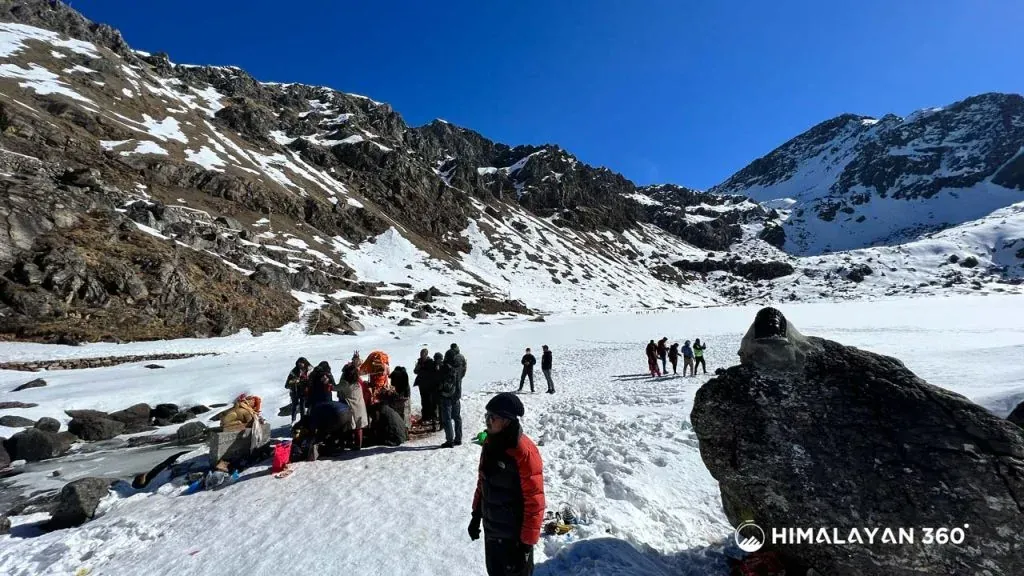
Gosaikunda is the center of many sacred rites and rituals of Buddhists and Hindus. It is famous for festivals like Janai Purnima, when thousands of pilgrims take a holy dip, and Gangadasara, which marks sacred rituals and offerings to the lake. Let’s discuss them in brief:
Janai Purnima
Every year in August, on Shravan Purnima or Janai Purnima, thousands of devotees, including shamans known as Jhankris, make the challenging trek to Gosaikunda. Hindu men, particularly Brahmin and Chhetri, who wear a sacred thread called Janai, perform a ceremony to renew that holy thread. The lake water is snowmelt and stays close to freezing all year, which is part of the point: the discomfort is the offering. After bathing in the lake, they discard their old, worn thread while chanting Vedic mantras. Throughout the event, devotees offer prayers, flowers, incense, and other items to Lord Shiva for his grace and fulfillment of their wishes.
Gangadasara
The Gangadasara festival is one of two major Gosaikunda festivals that draw a large number of Hindu pilgrims after the monsoon season. The festival is named for the goddess Ganga and honors her arrival on Earth. The name Gangadasara literally means “the ten sins of Ganga”, which means taking a bath during this time can wash away ten different kinds of sins. While the festival is associated with the Ganges River in India, the tradition extends to other sacred bodies like Gosaikunda in Nepal.
Mythological Reason 2: Gosaikunda in Tibetan Buddhism
While the Hindu mythology connects the lake to Lord Shiva, the Buddhist connects it to Guru Rinpoche, who is known for introducing Tantric Buddhism to Tibet. According to local legends, Guru Rinpoche meditated near the lake approximately 600 years ago. This act purified the area, turning it into a pilgrimage site for his followers.
The region has several monasteries and hermitages where Buddhist monks and nuns seek solitude and enlightenment. The presence of stupas, chortens, and prayer flags along the Langtang Gosaikunda trekking route further highlights the strong Buddhist influence. Buddhist monks also gather during the Janai Purnima festival to meditate and offer butter lamps.
Thus, the lake is a junction of faiths that provides shared sacred space for both Hindus and Buddhists. Few sites in the Himalaya are claimed by Buddhism and Hinduism in equal measure, and fewer still are walked by Buddhist and Hindu pilgrims on the same days of the same festival.
National and Governmental Interest
Gosaikunda holds value not only for pilgrims but also for the nation. The government supports efforts to protect its cultural stories and religious importance. Its location inside Langtang National Park and its strong tourism potential give the lake even more national attention. Because the site is sacred, local beliefs also help protect the area naturally.
Langtang National Park
Gosaikunda lies inside Langtang National Park, one of the most important protected areas in Nepal. Nepal’s Langtang National Park was the first Himalayan national park in the country, and the lake sits within Langtang National Park’s highest wetland zone. The lake supports the fragile environment of the park, which includes rare plants, wildlife, and high-altitude wetlands. Protecting Gosaikunda also means protecting the clean water resources, forests, and animal habitats around it. The park authority works to control waste, manage trekking routes, and reduce environmental pressure from visitors. This makes the lake an important part of Nepal’s long-term conservation.
Impact of Tourism
Tourism plays a big role in the Gosaikunda region by bringing trekkers, pilgrims, and nature lovers from around the world. This flow of visitors supports local lodges, guides, and small businesses. But the growing popularity of the lake also creates pressure on the environment and atmosphere. Waste, trail erosion, and overcrowding during festival seasons are rising concerns. Because of this, there is a strong need for sustainable tourism. Good waste management, responsible trekking practices, and protection of local traditions can keep Gosaikunda safe for future generations.
Conclusion
Gosaikunda Lake connects Hindu legends, Buddhist beliefs, and centuries of local tradition. It is linked to Lord Shiva’s trident strike, the story of Samudra Manthan, Guru Rinpoche, and even associated routes connected to the Kailash Mansarovar Yatra. Pilgrims visit for holy bath, major festivals, and spiritual renewal. For many travelers and pilgrims, Gosaikunda remains a rare place where faith, culture, and nature come together. If you want the walking detail rather than the story, the stages of the Gosaikunda lake trek and the wider case for religious trekking in Nepal are set out in our Langtang trek route guide.
13 Days
Langtang Gosainkunda Trek
$659
5.0(11 reviews)
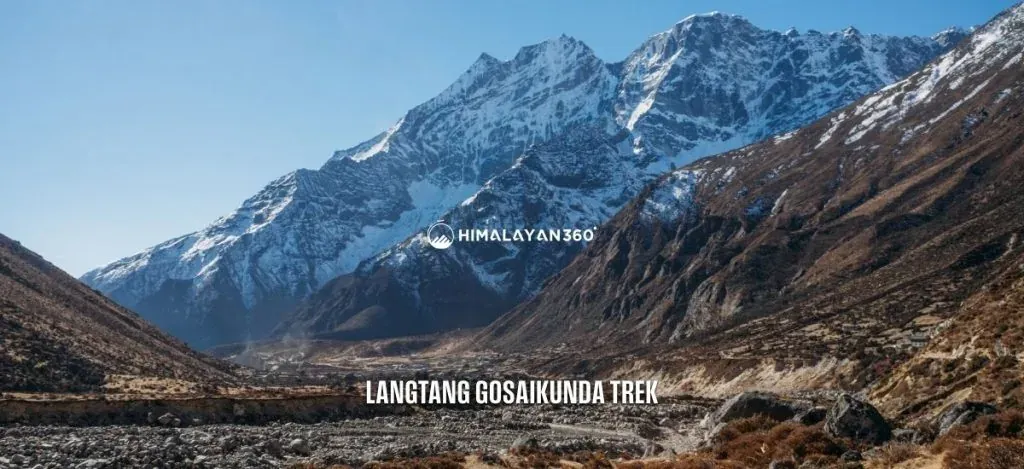
The Langtang Gosaikunda Trek offers an all-in-one experience through the village of Langtang to the sacred Gosaikunda Lake. Starting with a drive from Kathmandu to Syaprubesi, the trek is near Kathmandu, just 115km away within the Langtang National Park of Rasuwa district. It is ideal for those who prefer to experience mid-hills and high altitudes. It is also suitable for first-time trekkers as it only reaches up to 4,610 meters. The trek offers everything from deep gorges, pine and rhododendron forests, rocky terrain to yak pastures, monasteries, terraced farms, rural villages, Buddhist culture, and icy glaciers. The prominent highlight of this journey is a panorama of the Langtang range. The peaks included are Mount Dorje Lakpa, Langshisha Ri, Kyunga Ri, Changbu, Gangchenpo, Yansa Tsenji, and the Langtang Lirung. In 2015, the earthquake triggered an avalanche, causing massive loss to this valley. Many people died, and the trekking route was also closed until 2017. Hence, it is less commercialized. The community worked hard during these years and rebuilt the valley, keeping the essence of centuries-old monasteries. Now, in the present, it stands as a beautiful and strong valley yet to be discovered.
5 Days
Gosaikunda Short Trek
$250 $200
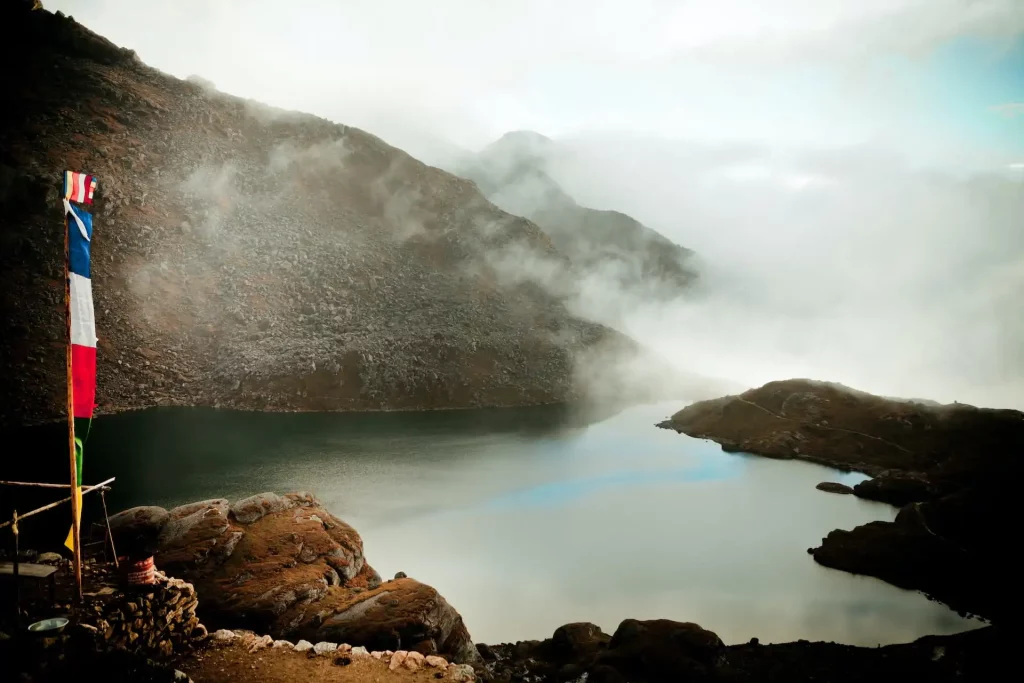
The Gosaikunda Short Trek is a captivating Himalayan adventure that takes trekkers through the stunning landscapes of Nepal’s Langtang region. This trek is renowned for its mix of natural beauty, cultural exploration, and spiritual significance. At the heart of the journey lies Gosaikunda Lake, a holy site revered by both Hindus and Buddhists. The trek’s path winds through lush forests, quaint villages, and alpine meadows, providing a blend of diverse experiences. It is easily accessible from the capital city and offers a relatively shorter trek compared to some other popular routes. The trek’s duration can vary based on your starting point and the specific itinerary you choose. Generally, it takes about 6-7 days to complete the trek, but it can be extended or shortened depending on your preferences and the trails you take.
 Trek
Trek By air
 Pilgrimage
 Festivals
 Wildlife
 Luxury
 Yoga
Yoga Food
Food Heritage