February, March, April, May, June, September, October, November, December
Transportation
Flight, Car, Jeep
Start / End
Kathmandu / Kathmandu
Meals
All Meals (Breakfast, Lunch & Dinner) during the trek
Trek Distance
(102.5 km / 64 miles)
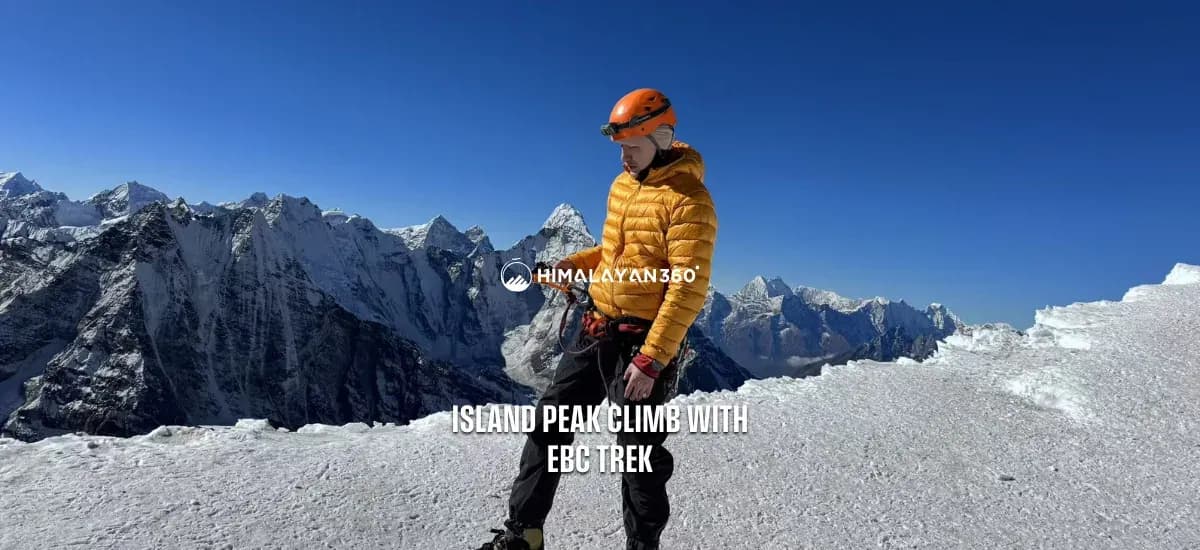
Island Peak Climbing is a thrilling Himalayan adventure that will take you to 6,189 meters in Nepal’s Everest region. Island Peak is also known as Imja Tse, where “Imja” refers to the valley and “Tse” means peak. Island Peak is a perfect climbing expedition for trekkers who want to do their first Himalayan summit without requiring advanced technical skills . This journey follows the classic Everest base camp trekking route through Namche Bazaar, Tengboche, and Dingboche.
During the trip, you have a pre-climb training session at base camp to prepare you for the summit push. The climb itself is intense with many glacier crossings, fixed ropes, and a steep ice wall leading to the summit ridge. But the reward? Ethereal 360° views of Everest, Lhotse, Makalu, and Ama Dablam. With experienced Sherpa guides and a carefully paced itinerary, Island Peak Climbing offers the ideal blend of challenge, altitude, and high-mountain achievement.
Per Person From
$1,945
16 Days
No. of Persons
Price per Person
1 – 1
$2,751
2 – 3
$2,250
4 – 6
$2,040
7 – 12
$2,010
13 – 20
$1,985
21 – 30
$1,945
Group discount will be auto applied in checkout & booking page.
Experts for help
Ask our travel experts about customising this trip.
Climb Island Peak (6,189m) for incredible views of Lhotse, Makalu, and Ama Dablam.
Take the exciting Lukla flight and trek through the iconic Khumbu region.
Explore Sherpa villages like Namche, Tengboche, and Dingboche along the route.
Acclimate at Namche and Chhukung with scenic hikes to Hotel Everest View and Chhukung Ri, respectively.
Train at base camp with expert guides and learn essential climbing techniques before the summit push.
Cross glaciers and rope climb a steep ice slope on the way to the summit.
Return via Pangboche and Namche, soaking in the final mountain moments.
You will get pre-climb training at base camp. You learn how to use ropes, harnesses, climbing boots, and crampons.
Fixed ropes are already in place on the steep sections of the climb to make the climb much safer and easier to handle.
You’ll always have an experienced Sherpa guide with you. They will help in every section, not just the tricky ones.
You don’t need prior high-altitude trekking experience. You need decent fitness and to follow the instructions of your guide.
The itinerary allows you enough time to acclimatize, thereby reducing the risk of altitude sickness.
Many first-time climbers have already reached the summit. So your chances are also very good.
Lodges and camps are well-organized. You’ll have food, shelter, and rest without any stress.
Most importantly, the climber needs to be resilient rather than being a pro climber. That’s your cue to stay positive.
Acclimatize properly: Follow the itinerary, take rest days seriously, and hydrate well. Train your body: Do cardio, strength training, and long hikes before your trip. You can even test your climbing skills by trying rock climbing.
Learn basic skills: Use the pre-climb training to get confident with ropes and gear. Stay positive: Mental strength matters as much as physical strength. You must not panic or give up halfway.
Trust your guides: They know the path to Island Peak and how to keep you safe. Listen carefully and ask questions if you are confused.
Eat and sleep well: Fuel your body every day and rest as much as possible.
Layer up: Wear proper cold-weather clothes, and pack light but smart. Don’t forget essential climbing equipment like crampons, a harness, a helmet, and an ice axe.
Island Peak Climbing at a Glance
Distance, walking time and high point for each day
Day
Itinerary
Distance / Time
Altitude
01
Arrival at Tribhuvan International Airport in Kathmandu and transfer to hotel
—
1,400 m
02
Fly to Lukla from Kathmandu or Ramechhap Airport and then to Phakding
7.3 km3 hrs
2,860 m
03
Trek to Namche Bazaar from Phakding
9.8 km6 hrs
3,440 m
04
Acclimatization Day at Namche. to Hotel Everest View
4 km2 hrs
3,860 m
05
Trek to Tengboche from Namche Bazaar
9.3 km6 hrs
3,860 m
06
Trek to Dingboche from Tengboche
10.4 km6 hrs
4,410 m
07
Trek to Chhukung from Dingboche
4.5 km4 hrs
4,730 mChhukung
08
Rest day to relax and acclimatize and climbing preparation at Chhukung
—
—
09
Chhukung to Island Peak Base camp
5 km
5,200 mIsland base camp
10
Summit Island Peak and return to Chhukung
11 km
6,189 mIsland peak Summit
11
Contingency day for weather conditions
—
—
12
Trek back to Pangboche from Chhukung
11.4 km6 hrs
4,730 mChhukung
13
Trek back to Namche Bazaar from Pangboche
12.6 km6 hrs
3,930 mPangboche
14
Trek back to Lukla from Namche Bazaar
17.2 km7 hrs
3,440 m
15
Flight back to Kathmandu or Ramechhap Airport from Lukla
—
2,860 m
16
Transfer to the International Airport for your Final Departure
—
—
On foot, across 16 trekking days
102.5 km46 hrs
6,189 m
Reviews from our Guests
From travellers on closely related departures of this trip, the same route walked to a different plan.
The summit push was the longest day of my life. We started walking before midnight, and it felt like it would never end. The ice walls and rope climbs drained every bit of energy. But it was also the most rewarding. I didn’t expect the Himalayas to look so close. I could see Everest, Lhotse, Ama Dablam and it was unreal. By the time we returned to Chhukung, I could barely stand, but it was the happiest exhaustion I’ve ever felt. So glad I did it.
Verified purchase
SA
Sofia AnderssonSeptember 2025
★★★★★
I met the team in Chhukung, and they were friendly right away. We checked our boots, harness, and everything. On day two, we reached base camp after a short trek. The place was cold, but the view of the glacier was amazing. That evening, we practiced climbing with ropes. Everyone laughed when I struggled with the knot, but the guide patiently showed me again. Summit day was tough. I didn’t expect how steep it would feel near the top. But when we reached the summit, I couldn’t stop smiling. The return to Chhukung was long and painful for my knees, but the happiness covered all of it.
Verified purchase
NK
Nawaz KhanSeptember 2025
★★★★★
When I arrived in Chhukung, the Himalayan 360 team welcomed us and checked our gear. I didn’t expect the preparation to be so thorough. That night I stayed in the small village and felt the altitude already. The next day, we walked up to Island Peak Base Camp. The hike itself was short but steep, and the view of Imja Glacier kept me stopping for pictures. At base camp, we had climbing training with ropes and crampons, which gave me so much confidence. Summit day started at midnight, and it was the hardest physical challenge I’ve ever done. The ice wall at the top felt impossible at first, but the guides pulled me through. Standing at 6,189m, looking at Lhotse, Ama Dablam, and Makalu was unforgettable. Returning to Chhukung the same day was exhausting, but the tea we had there tasted like victory.
Verified purchase
HF
Hannah FischerSeptember 2025
★★★★★
What made this climb special was the group I was with. At base camp, everyone was nervous, but we laughed a lot during the training. On summit day, people encouraged each other when someone felt tired. I didn’t expect such strong team energy among strangers. Reaching the top together and hugging at 6,189 meters felt incredible. It felt like I found home right among strangers. Thanks to the team!
Verified purchase
EW
Emily WrightSeptember 2025
★★★★★
On the first day in Chhukung, the guides checked every piece of gear. I didn’t expect that level of detail, but it made me feel safe. The next morning, we trekked to base camp. It was only a few hours, but the altitude made it heavy. At camp, we trained with ropes and crampons. It was fun but also serious. Summit day was the hardest thing I have ever done. The final rope section scared me, but the guides helped every step. Standing at the top of Island Peak felt unreal. Coming back down to Chhukung in one day was so tiring, but I felt so proud of myself.
Verified purchase
MR
Matteo RicciSeptember 2025
★★★★★
Sleeping at base camp was no joke. The cold went straight through my sleeping bag, and I hardly slept a minute. By midnight, when the guides woke us up for the climb, I was already shaking. But once we started moving, I forgot about the lack of sleep. The glacier crossing was mind blowing. I didn’t expect to walk on ice that sparkled under the moonlight. It was the coldest night of my life, but also the most unforgettable.
Verified purchase
PD
Priya DeshmukhSeptember 2025
★★★★★
At first, I was so nervous about this climb. I didn’t have much mountaineering experience. But the training at base camp gave me confidence. It was still a shock how steep the climb became after midnight. The cold was so painful that I couldn’t even feel my toes for a while. But when the sun started rising, I forgot about the cold. Standing on top of Island Peak was pure joy. The descent was exhausting, but I had a huge smile all the way back to Chhukung.
Verified purchase
ML
Marcus LeeSeptember 2025
★★★★★
The summit push was the longest day of my life. We started walking before midnight, and it felt like it would never end. The ice walls and rope climbs drained every bit of energy. But it was also the most rewarding. I didn’t expect the Himalayas to look so close. I could see Everest, Lhotse, Ama Dablam and it was unreal. By the time we returned to Chhukung, I could barely stand, but it was the happiest exhaustion I’ve ever felt. So glad I did it.
Verified purchase
SA
Sofia AnderssonSeptember 2025
★★★★★
I met the team in Chhukung, and they were friendly right away. We checked our boots, harness, and everything. On day two, we reached base camp after a short trek. The place was cold, but the view of the glacier was amazing. That evening, we practiced climbing with ropes. Everyone laughed when I struggled with the knot, but the guide patiently showed me again. Summit day was tough. I didn’t expect how steep it would feel near the top. But when we reached the summit, I couldn’t stop smiling. The return to Chhukung was long and painful for my knees, but the happiness covered all of it.
Verified purchase
NK
Nawaz KhanSeptember 2025
★★★★★
When I arrived in Chhukung, the Himalayan 360 team welcomed us and checked our gear. I didn’t expect the preparation to be so thorough. That night I stayed in the small village and felt the altitude already. The next day, we walked up to Island Peak Base Camp. The hike itself was short but steep, and the view of Imja Glacier kept me stopping for pictures. At base camp, we had climbing training with ropes and crampons, which gave me so much confidence. Summit day started at midnight, and it was the hardest physical challenge I’ve ever done. The ice wall at the top felt impossible at first, but the guides pulled me through. Standing at 6,189m, looking at Lhotse, Ama Dablam, and Makalu was unforgettable. Returning to Chhukung the same day was exhausting, but the tea we had there tasted like victory.
Verified purchase
HF
Hannah FischerSeptember 2025
★★★★★
What made this climb special was the group I was with. At base camp, everyone was nervous, but we laughed a lot during the training. On summit day, people encouraged each other when someone felt tired. I didn’t expect such strong team energy among strangers. Reaching the top together and hugging at 6,189 meters felt incredible. It felt like I found home right among strangers. Thanks to the team!
Verified purchase
EW
Emily WrightSeptember 2025
★★★★★
On the first day in Chhukung, the guides checked every piece of gear. I didn’t expect that level of detail, but it made me feel safe. The next morning, we trekked to base camp. It was only a few hours, but the altitude made it heavy. At camp, we trained with ropes and crampons. It was fun but also serious. Summit day was the hardest thing I have ever done. The final rope section scared me, but the guides helped every step. Standing at the top of Island Peak felt unreal. Coming back down to Chhukung in one day was so tiring, but I felt so proud of myself.
Verified purchase
MR
Matteo RicciSeptember 2025
★★★★★
Sleeping at base camp was no joke. The cold went straight through my sleeping bag, and I hardly slept a minute. By midnight, when the guides woke us up for the climb, I was already shaking. But once we started moving, I forgot about the lack of sleep. The glacier crossing was mind blowing. I didn’t expect to walk on ice that sparkled under the moonlight. It was the coldest night of my life, but also the most unforgettable.
Verified purchase
PD
Priya DeshmukhSeptember 2025
★★★★★
At first, I was so nervous about this climb. I didn’t have much mountaineering experience. But the training at base camp gave me confidence. It was still a shock how steep the climb became after midnight. The cold was so painful that I couldn’t even feel my toes for a while. But when the sun started rising, I forgot about the cold. Standing on top of Island Peak was pure joy. The descent was exhausting, but I had a huge smile all the way back to Chhukung.
Day 01: Arrival at Tribhuvan International Airport in Kathmandu and transfer to hotel
Itinerary Details
Itinerary Fact
Details
Time:
00-00
Highest Altitude:
(1,400m/4,593ft)
You arrive at Tribhuvan International Airport in Kathmandu. Our representative will pick you up and take you to your hotel in Thamel. Here, you can rest and prepare for your trek. Thamel is a pretty busy area with many shops and restaurants, so you can stroll around the place during your free time. Later, your guide will meet you and provide important information about the journey ahead.
Itinerary Details
Itinerary Fact
Details
Meals:
No meals included
Accommodation:
3 Star Hotel
Day 02: Fly to Lukla from Kathmandu or Ramechhap Airport and then trek to Phakding
Itinerary Details
Itinerary Fact
Details
Time:
02-14
Trek Distance:
7.3km/4.5miles
Ascent:
176m/577ft
Descend:
389m/1,275ft
Trek Duration:
3 Hours
Flight Hours:
35 mins flight from KTM or 5-6 hrs drive & 20 min flight from Manthali
Highest Altitude:
2,860m/9,383ft (Lukla)
Today, you will take a flight from Kathmandu or Ramechhap to Lukla. The flight takes about 35 minutes from Kathmandu and about 20 minutes from Manthali airport. During the flight, you can view the stunning Himalayas as you near Lukla. And once you land, you will start trekking to Phakding. The route is mostly flat and easy, passing through small villages and forests. It takes about 3 hours to reach Phakding. Along the way, you will see prayer flags and suspension bridges. You will spend the night in a cozy tea house at Phakding.
The village of Phakding is quiet and peaceful. Rest and enjoy the mountain air. The lodges here provide simple meals and warm rooms. You can take a short walk to stretch your legs or talk with other trekkers. This is your first step into the Everest region, where you will see many Sherpa people and their culture.
Itinerary Details
Itinerary Fact
Details
Meals:
Breakfast, Lunch, and Dinner
Accommodation:
Tea House or Lodge
Day 03: Trek to Namche Bazaar from Phakding
Itinerary Details
Itinerary Fact
Details
Time:
08-16
Trek Distance:
9.8km/6miles
Ascent:
1,090m/3,575ft
Descend:
290m/951ft
Trek Duration:
6 Hours
Highest Altitude:
3,440m/11,286ft (Namche)
The third day of the Island Peak climbing itinerary takes you to Namche Bazaar from Phakding. From Phakding, the trek to Namche Bazaar is longer and harder than yesterday. The path goes uphill and crosses many suspension bridges built over rivers. You will walk through forests filled with rhododendron trees (flowers in spring). The air is fresh, and the scenery changes as you climb higher. This trek takes about 6 hours, so pace yourself well. Namche Bazaar is the main town in the Khumbu region.
Once in Namche Bazaar, you’ll feel like you’ve just entered a city but with a mountainous look. It’s that lively. You will stay in a tea house or lodge. If you have time, you may explore the markets and cafes, although they are small. Enjoy local Sherpa culture with friendly locals. Tomorrow is acclimatization day anyway, so there is no need to hurry.
Itinerary Details
Itinerary Fact
Details
Meals:
Breakfast, Lunch, and Dinner
Accommodation:
Tea House or Lodge
Day 04: Acclimatization Day at Namche. Hike to Hotel Everest View
Itinerary Details
Itinerary Fact
Details
Time:
08-13
Trek Distance:
4km/2.5miles
Ascent:
420m/1,378ft
Descend:
420m/1,378ft
Trek Duration:
2 Hours
Highest Altitude:
3,860m/12,664ft (Everest View Hotel)
This day is reserved for acclimatization. As you have reached 3,440 meters at Namche, you need to let your body adjust. However, you don’t have to stay still. Hike up to the Everest View Hotel. This takes about 2 hours and goes through forests and small villages. Along the way, you will see amazing views of Everest, Lhotse, and other giant mountains. The fresh mountain air and peaceful surroundings make the hike very enjoyable.
After the hike, you will return to Namche Bazaar. Then, take some rest. Later, you can visit the local market and buy supplies. The town also has internet cafes and many places to relax, like bakeries and even small local pubs. After that, rest well tonight to be ready for the next day.
Itinerary Details
Itinerary Fact
Details
Meals:
Breakfast, Lunch, and Dinner
Accommodation:
Tea House or Lodge
Day 05: Trek to Tengboche from Namche Bazaar
Itinerary Details
Itinerary Fact
Details
Time:
08-16
Trek Distance:
9.3km/5.8miles
Ascent:
1035m/3,395ft
Descend:
597m/1,958ft
Trek Duration:
6 Hours
Highest Altitude:
3,860m/12,664ft (Tengboche)
Today, the trek to Island Peak route starts in Namche Bazaar and ends at Tengboche. The trail includes both uphill and downhill sections. You’ll first pass by the village of Phunki Thenga. Also, if you get lucky, you can witness rare Himalayan wildlife like musk deer, Himalayan Thar, and colorful pheasants. Along the way, you’ll also enjoy incredible views of famous peaks such as Everest, Lhotse, Nuptse, and Island Peak.
In the last part of the hike, you’ll cross the Imja Khola River before reaching Tengboche. This village is known for its famous monastery, Tengboche Monastery, which was built in 1916 by Lama Gulu. It’s one of the most important religious places in the Everest region. Every day at 3 PM, monks perform a prayer ceremony at the monastery. If you arrive on time, you can quietly sit and watch the ritual, which many trekkers find calming and special.
Itinerary Details
Itinerary Fact
Details
Accommodation:
Tea House or Lodge
Day 06: Trek to Dingboche from Tengboche
Itinerary Details
Itinerary Fact
Details
Time:
08-16
Trek Distance:
10.4km/6.5miles
Ascent:
676m/2,217ft
Descend:
229m/751ft
Trek Duration:
6 Hours
Highest Altitude:
4,410m/14,468ft (Dingboche)
On day 6, you trek from Tengboche to Dingboche. You will climb higher and see wide valleys and snowy peaks. The route goes through forests at first, then opens up to rocky landscapes. Dingboche is a peaceful village nestled among the mountains. It is one of the best plus important places to rest and prepare for the next climb.
During your time here, you can feel the air getting thinner. The lodges are warm and comfortable, with hot meals after the trek. You might meet other climbers and trekkers here. Relax and enjoy. Drink plenty of water to keep your body ready for tomorrow’s trek to Chhukung.
Itinerary Details
Itinerary Fact
Details
Meals:
Breakfast, Lunch, and Dinner
Accommodation:
Tea House or Lodge
Day 07: Trek to Chhukung from Dingboche
Itinerary Details
Itinerary Fact
Details
Time:
09-13
Trek Distance:
4.5 km/2.8 miles
Ascent:
320 m/1,050 ft
Descend:
0m/0ft
Trek Duration:
4 Hours
Highest Altitude:
4,730 m/15,518 ft Chhukung
The walk from Dingboche to Chhukung is shorter, but you still gain more altitude. The route is gentle and scenic. You follow a wide valley with views of Himalayan peaks like Lhotse, Island Peak, and Amphu Lapcha. It takes about 4 hours to reach Chhukung. You’ll notice the trees are now gone. The landscape becomes more rocky and dry. Walk slowly and drink water often to stay hydrated. Altitude is getting serious here, so don’t rush.
Chhukung is a small village used mainly by climbers. It is quiet, with only a few tea houses. You’ll settle in and enjoy a warm meal. This is your last stop before you reach the Island Peak base camp. From here, you can see glaciers and huge peaks up close. Spend your evening relaxing and saving energy. Your climbing guide may check your gear and explain tomorrow’s plan. Go to bed early to rest your body well.
Itinerary Details
Itinerary Fact
Details
Meals:
Breakfast, Lunch, and Dinner
Accommodation:
Tea House or Lodge
Day 08: Rest day to relax and acclimatize and climbing preparation at Chhukung
The ninth day is another acclimatization day dedicated to resting and preparing for Island Peak. You are now at 4,730m, so your body needs time. Take some light walks around the village to help with blood flow. You can stretch, read, or talk with other climbers. Your guide will check your health and give important tips. Staying active but calm is the goal today. Try not to nap too much during the day.
In the afternoon, you’ll go over the climbing plan. Your guide will show you how to wear your gear properly. You’ll learn basic climbing techniques, including the use of ropes, harnesses, and crampons. This training helps you feel safe and confident. Ask questions if you’re unsure about anything. Tonight, pack your bag lightly and sleep early. Tomorrow is base camp and pre-climb training; your adventure is about to level up.
Itinerary Details
Itinerary Fact
Details
Meals:
Lunch and Dinner
Accommodation:
Tea House or Lodge
Day 09: Trek from Chhukung to Island Peak Base camp
Itinerary Details
Itinerary Fact
Details
Time:
4 Hours
Trek Distance:
5km / 3.1miles
Ascent:
465m/ 1,526ft
Descend:
0m/ 0ft
Highest Altitude:
5,200m / 17,050ft Island base camp
You will leave Chhukung and head toward Island Peak Base Camp. The route is rocky and gradually ascends to higher elevations. You will start walking north along the valley next to the Lhotse Glacier. The path follows a small river, and after about 40 minutes of climbing past a big rock, you reach Island Peak Base Camp. As you get closer, Island Peak stands tall in front of you. You’ll reach base camp by early afternoon.
After setting up tents, you’ll get a short training session. The guide will teach you rope handling, harness fitting, and how to walk in crampons. You’ll also learn how to use a jumar on fixed lines. This training is very important for the summit day. This practice helps you feel safe and ready for the climb ahead.
Itinerary Details
Itinerary Fact
Details
Meals:
Lunch and Dinner
Accommodation:
Tented camp
Day 10: Summit Island Peak and return to Chhukung
Itinerary Details
Itinerary Fact
Details
Time:
10 Hours
Trek Distance:
11km / 6.8miles
Ascent:
989 m/ 3,245ft
Descend:
1,454m/ 4,770ft
Highest Altitude:
6,189m / 20,305ft Island peak Summit
Today is the summit of the Island Peak. You need to wake up super early, around 1–2 a.m. After a light meal, your climb begins. The route starts with a rocky route that leads to the glacier. You’ll cross crevasses using fixed ropes and crampons. There’s a steep ice wall before the summit ridge. This is the most challenging part. Stay calm and focused. Your climbing Sherpa will guide you every step.
After 5–6 hours, you’ll stand on Island Peak’s summit. The views are absolutely mesmerizing as Mount Everest (the world’s highest mountain), Lhotse, Makalu, and Ama Dablam surround you. After spending some time at the summit, you’ll begin your descent. Going down is quicker than going up, but it still takes effort and care. Once you’re back at base camp, a warm meal will be waiting for you. After resting for a bit, you’ll continue walking down to Chhukung. It’s a long and challenging day, but the feeling of reaching the summit makes it all worth it.
Itinerary Details
Itinerary Fact
Details
Meals:
Breakfast and packed lunch
Accommodation:
Tea House or Lodge
Day 11: Contingency day for weather conditions
This is your buffer day in case of bad weather or any delays. Mountain weather is unpredictable, so having a day like this helps. If the summit was not possible yesterday, you’ll try again today. If you have already made it, then you rest like royalty. Stay in Chhukung, relax, and give your muscles a break. Drink plenty of water to stay hydrated. You can discuss your team’s experience or journal your summit experience alone. Tomorrow, you start heading back, but today, you breathe, reflect, and heal.
Itinerary Details
Itinerary Fact
Details
Meals:
Breakfast and Lunch
Accommodation:
Tented camp
Day 12: Trek back to Pangboche from Chhukung
Itinerary Details
Itinerary Fact
Details
Time:
07-15
Trek Distance:
11.4 km/7 miles
Ascent:
30 m/98 ft
Descend:
830 m/2,723 ft
Trek Duration:
6 Hours
Highest Altitude:
4,730 m/15,518 ft Chhukung
After the contingency day, today, you will start your return journey and trek from Chhukung down to Pangboche. The route feels easier as the air gets thicker and walking becomes more comfortable. You’ll pass back through Dingboche and retrace some of the paths you climbed days ago. During the walk, beautiful views of the surrounding mountains are visible.
Pangboche is a peaceful village known for its old monastery. If you’re interested, you can take a short visit to explore it. Or, if you’re tired, just relax at your lodge and enjoy some quiet time. The lower elevation will help your body feel better. In the evening, treat yourself to some warm Dal Bhat, a cup of ginger tea, or try Sherpa stew. The village is simple, but it offers comfort and great mountain charm.
Itinerary Details
Itinerary Fact
Details
Meals:
Breakfast, Lunch, and Dinner
Accommodation:
Tea House or Lodge
Day 13: Trek back to Namche Bazaar from Pangboche
Itinerary Details
Itinerary Fact
Details
Time:
08-15
Trek Distance:
12.6 km/7.8 miles
Ascent:
410 m/1,345 ft
Descend:
900 m/2,953 ft
Trek Duration:
6 Hours
Highest Altitude:
3,930 m/12,894 ft Pangboche
Today, you’ll leave Pangboche and trek back to Namche Bazaar. En route, forests, stone walls, and small villages like Deboche and Tengboche come. You may revisit the famous Tengboche Monastery if time allows. The path includes a few uphill sections, so take it slow. You’ll also cross several suspension bridges over the Dudh Koshi River.
During the descent, you’ll feel the air getting warmer and richer in oxygen. It becomes easier to breathe and walk. Finally, when you get to Namche Bazaar, you will see busy streets and maybe even familiar faces. Do as you please here: relax, shop, or reflect on your experience at the summit. You’ll stay at a tea house, sleep in a real bed, and maybe even enjoy Wi-Fi again. So, this night will feel especially rewarding.
Itinerary Details
Itinerary Fact
Details
Meals:
Breakfast, Lunch and Dinner
Accommodation:
Tea House or Lodge
Day 14: Trek back to Lukla from Namche Bazaar
Itinerary Details
Itinerary Fact
Details
Time:
08-16
Trek Distance:
17.2km/10.7miles
Ascent:
672m/2,205ft
Descend:
1,246m/4,088ft
Trek Duration:
7 Hours
Highest Altitude:
3,440m/11,286ft (Namche)
Day 14 is the final day of trekking. It’ll begin after a good breakfast. Leaving Namche, you head back to Lukla, retracing your steps through Monjo, Benkar, and Phakding. Although it’s downhill, the route still has some challenging sections. You’ll cross many bridges, descend stone steps, and pass the forests one last time.
It’s a day for both physical effort and quiet reflection. You’ve seen peaks, glaciers, villages, and monasteries, and even climbed Island Peak. Relieve and take pride. Enjoy your final dinner with your guide and porter team. Sleep well tonight; you’ve earned every bit of it.
Itinerary Details
Itinerary Fact
Details
Meals:
Breakfast, Lunch and Dinner
Accommodation:
Tea House or Lodge
Day 15: Flight back to Kathmandu or Ramechhap Airport from Lukla
Itinerary Details
Itinerary Fact
Details
Time:
07-16
Flight Hours:
35 mins flight from KTM or 5-6 hrs drive & 20 min flight from Manthali
Highest Altitude:
2,860m/9,383ft (Lukla)
Day 15 begins with an early morning wake-up in Lukla. Since mountain weather can change quickly, flights usually take off in the morning. You’ll head to Lukla Airport and wait for your short flight back to Kathmandu or Ramechhap. The flight takes around 35 minutes if you’re going directly to Kathmandu. If your flight lands in Ramechhap, you’ll take a 5–6 hour drive back to the capital. Either way, enjoy your last scenic view of the Himalayas from the sky.
Once in the city, you’ll check into your hotel in Thamel and get some well-deserved rest. Enjoy hot showers, comfortable beds, and, of course, your comfort foods: burgers, pizza, pasta, and a variety of coffee. You can also spend the evening shopping for souvenirs or meeting friends for dinner. This is the last night before your journey officially ends.
Itinerary Details
Itinerary Fact
Details
Meals:
Breakfast and Dinner
Accommodation:
3-Star Hotel
Day 16: Transfer to the International Airport for your Final Departure
This is your final day in Nepal. After breakfast, you’ll be transferred to the international airport. If you travel with a group, this might be your last chance to have breakfast together. Bid farewell to them. The airport can get busy, so arrive early. Check your passport, bags, and boarding pass. As you fly out, don’t forget to look out the window one last time. The mountains might be far below, but they’ll stay with you forever. Remember, you’re leaving Nepal after summiting Island Peak. Return proud.
Itinerary Details
Itinerary Fact
Details
Meals:
Meals: Breakfast
Island Peak Climbing Included/ Excluded
Cost Includes
Cost Excludes
Kathmandu to Ramechhap airport by shared vehicle
Ramechhap to Kathmandu by sharing a vehicle as per availability
Ramechhap to Lukla to Ramechhap flight ticket
Airport transfer
2 nights in Kathmandu with 3-star accommodation (sharing basis)
1 night Ramechhap local lodge accommodation (sharing basis)
11 nights in Mountain Tea House Lodge (sharing basis)
1 night camping tent (sharing)
15 breakfasts, 12 lunches, 12 dinners
One guide during the trek
Climbing Sherpa during climbing
Porter to carry your luggage (2:1 porter)agarmatha National Park permit fees
Kitchen equipment, trekking tents, dining tents, kitchen tents, toilet tents, tables and chairs, and mattresses for Island Peak climbing
Climbing guide and staff insurance
Climbing boots, ice screws, snow bars
Government, local taxes and agency service charges
Free luggage storage services in Kathmandu
Appreciation certificate after the successful trek
Farewell dinner at the end of the trek
International and domestic airfare
Nepal visa fees
Extra night accommodation in Kathmandu due to early arrival, late departure, or early return from the trek
Travel insurance that covers emergency high-altitude rescue and evacuation (compulsory)
Additional costs due to unforeseen circumstances (weather, landslides, illness, itinerary changes, etc.)
Excess baggage charges on the trek
Personal climbing gear
Personal clothing and equipment
Personal expenses: snacks, drinks, boiled water, alcohol, Wi-Fi, hot showers, battery charging, extra porters, etc.
Tips for staff (expected)
All other costs and expenses not listed in “included.”
Route & Elevation
Highest point reached on each day, plotted against distance walked. Metres on the left, day number along the bottom.
FAQs for Island Peak Climbing
Do I need oxygen for Island Peak?
No, supplemental oxygen isn’t required for Island Peak. Sure, the elevation is high, but it is also manageable with proper acclimatization. Most climbers don’t use it. However, our experienced Sherpa guides carry one for emergencies along with a first aid kit, just in case.
What shoes should I wear on Island Peak?
You’ll need warm, insulated mountaineering boots that are compatible with crampons for summit day. These boots keep your feet safe from cold and give a firm grip on snow and ice. Regular trekking shoes won’t work for peak climbing. For the trek up to base camp, lightweight hiking boots with ankle support are fine. Switch to climbing boots beyond here.
Which is harder, Lobuche or Island Peak Climbing?
Island Peak Climbing is generally considered harder than Lobuche. Climbers need to walk on glaciers, use fixed ropes on the steep ice wall, and have basic mountaineering skills. On the other hand, Lobuche Peak is high in elevation but less technical. All in all, Island Peak demands more stamina and gear.
How do weather conditions affect the Island Peak climb, and what can I do to prepare?
The snowstorms, winds, and poor visibility increase the risk to reach the summit of Island Peak. So, you need to be prepared with good gear, layers, and waterproofs at all times. We always reserve a contingency day for such weather. Stay mentally prepared for potential delays, and trust your guide. Adapt as needed.
What are the best strategies for dealing with the mental challenges of Summit Day?
The summit day is long and not only physically but mentally demanding as well. Focus on small sections and take deep breaths, and maybe even try repeating phrases to reduce anxiety. And very important, trust your guide and teammates. Don’t let the altitude mess with your mindset. Remember why you started, and let that drive you forward to the top.
How much rest do I need before the final summit push?
You’ll usually sleep early and start around midnight. Try to get at least 5–6 hours of rest. Eat a filling dinner and drink plenty of water. Even if sleep is difficult due to nervousness or altitude, lie down and relax to conserve maximum energy for the big climb to the summit. Mental calmness is just as important as physical rest.
What are the signs that I should turn back during the climb?
The severe signs include headache, dizziness, nausea, breathlessness, or feeling unusually weak. If you experience confusion, loss of balance, chest pain, or feel extremely cold despite layers, alert your guide right away. Always listen to your body and stay cautious. Reaching the summit is not more important than safety.
How do I manage my energy during the Island Peak Climbing Trek to avoid exhaustion?
Walk at a steady pace, even if others go faster. Take short breaks regularly, and don’t skip meals. Drink water often. Eat energy snacks like nuts or chocolate. Don’t carry a heavy bag; use a porter if needed to save your energy for summit day. Most importantly, don’t push too hard. It’s not a competition or a sprint.
What kind of support will I receive in case of an emergency during the climb?
You’ll have trained Sherpa guides who monitor your health daily. They carry first-aid kits, oxygen, and communication devices. In serious situations, a helicopter evacuation will be arranged. If something goes wrong, your team will be there to support you. However, take travel insurance to cover unexpected medical or rescue costs in extreme conditions.
How do I stay comfortable and safe in cold, high-altitude climbing?
Wear thermal layers, a down jacket, windproof outerwear, and waterproof gloves. Keep your head and feet warm at all times. Take breaks to avoid excessive sweating. Wet clothes make you cold. Use sunglasses to protect yourself from snow glare. Drink hot fluids and eat well. Don’t ignore cold symptoms. Stay warm, dry, and alert.
Island Peak Climbing Information
Difficulty
Strenuous
Best Season
February, March, April, May, June, September, October, November, December
Weighing It Against the Alternatives
If you are still deciding, this is how Island Peak Climbing sits against the trips people most often weigh it against — on days, distance, difficulty and cost.
Amongst some of the oldest friends of Himalayan 360 is Mr Barad Neupane, who is a go-easy, down-to-earth cultural and religious guiding staff from its establishment. He is a very good and experienced guide and has a good history of knowledge of Religion, culture, and history of Nepal.
Last updated 6 May 2026
$1,945 per person
Himalayan360Everything there is to do in the Himalayas
AdventureTrek the Himalayas, fly over them at sunrise, land at base camp, drift across the lake at Pokhara
CulturalLearn Kathmandu’s temples, eat your way through the city, sit at a festival in Bhutan
SpiritualRoll out a yoga mat on the trail, walk to Muktinath, cross Tibet to Kailash
This site uses cookies to optimize your user experience. By using this site, you are consenting to our use of these cookies. Check out our Privacy Policy.




 18 Days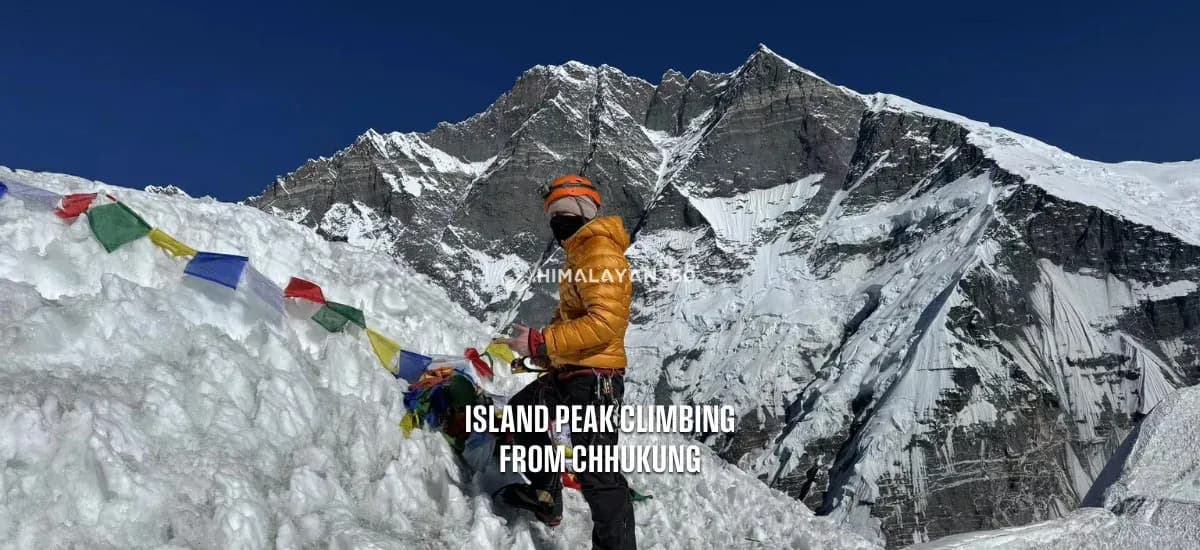
 Trek
Trek By air
 Pilgrimage
 Festivals
 Wildlife
 Luxury
 Yoga
Yoga Food
Food Heritage