
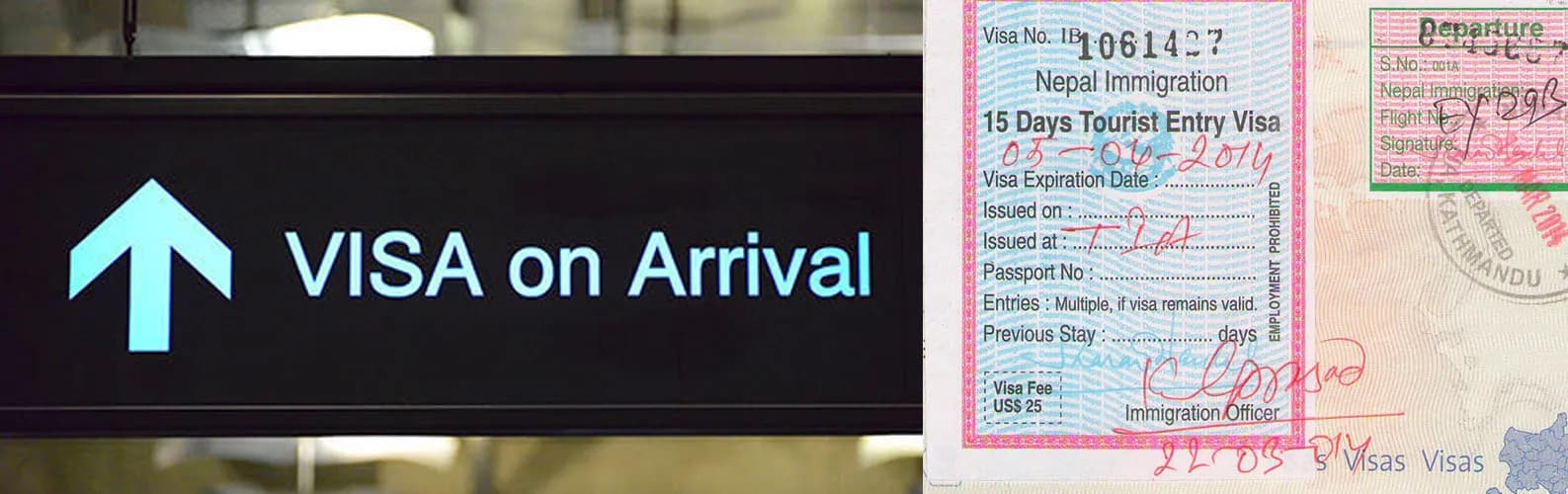
Most travellers do not need a visa to enter Nepal before they fly. The Department of Immigration, an office of the Government of Nepal, issues a tourist visa on arrival at Tribhuvan International Airport in Kathmandu and at the main land entry points, and the whole application process takes about twenty minutes once you are in the hall. Citizens of twelve countries are the exception and must obtain a Nepalese visa in advance, and Indian citizens need no visa at all.
Every visa issued on arrival is a multiple entry visa, so you can leave for a Tibet or Bhutan leg and come back on the same visa without paying twice.
Almost everyone who comes to visit Nepal handles the whole thing in one go at Kathmandu airport. Trekking permits and national park entry are a separate matter, bought later in Kathmandu or Pokhara, not at the immigration desk.
Who can get a visa on arrival
Nationals of almost every country qualify. Citizens of the following countries are required to obtain a visa in advance from a Nepalese embassy or consulate, on the recommendation of the Ministry of Home Affairs. Nepal's diplomatic missions abroad handle these applications and nothing can be done for them at the airport:
- Nigeria, Ghana, Zimbabwe, Swaziland, Cameroon, Somalia, Liberia, Ethiopia, Iraq, Palestine, Afghanistan, Syria
- Refugees with travel documents issued in place of a national passport
Passport holders from every other country can buy the visa at the desk. Your passport must have at least 6 months of validity remaining on the day you land. If you obtained your visa in advance from a diplomatic mission instead, you must enter Nepal within six months of the issue date, and your stay is counted from the day you actually arrive, not from the day the visa was issued.
A tourist visa is the only entry visa Nepal issues on arrival. If you are coming for study, work, research or a project, you still enter on one and then change its category at the immigration department once you are in Kathmandu.
Nepal visa fees
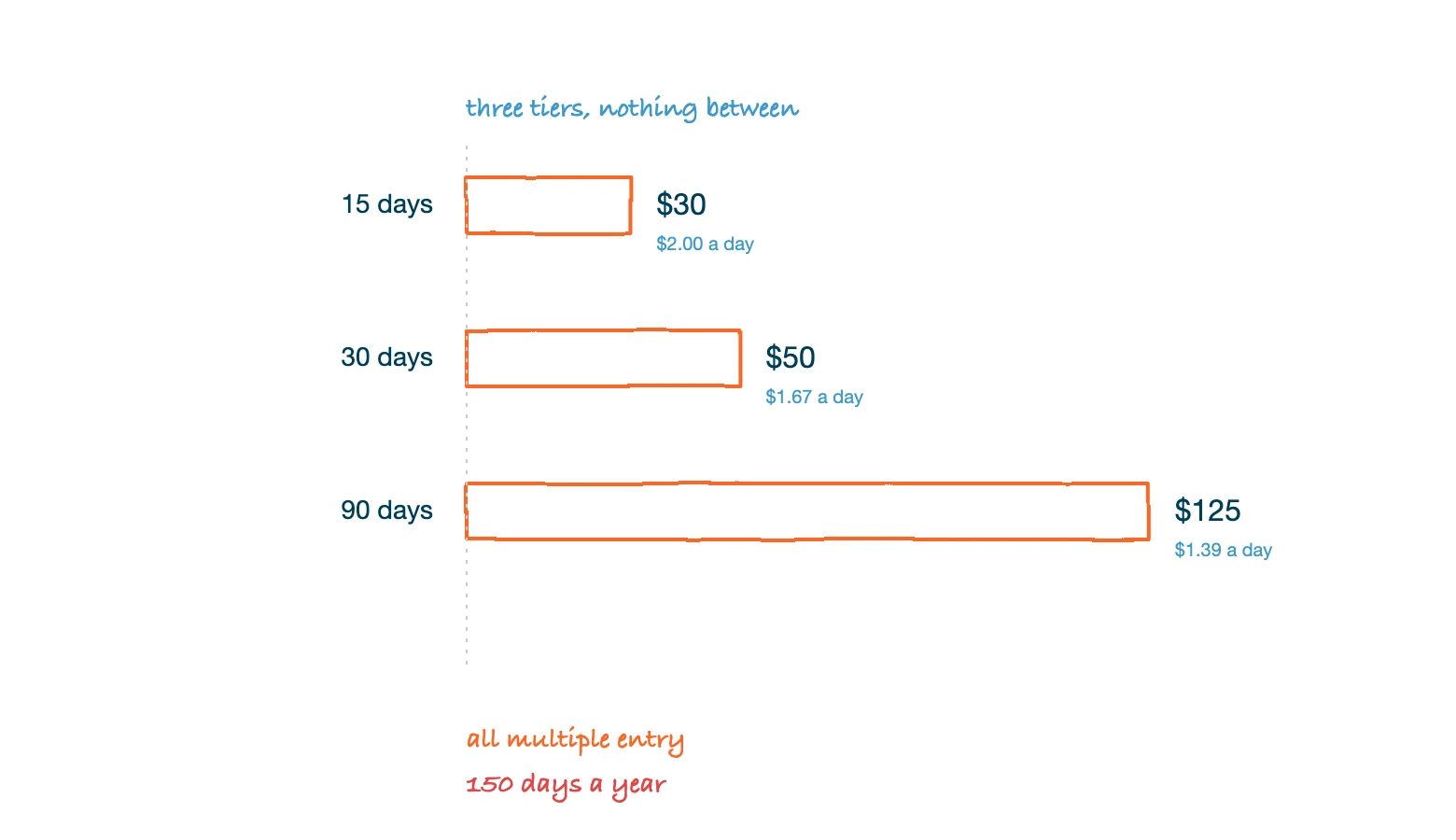
| Duration | Fee (USD) | Entry type |
|---|---|---|
| 15 days | 30 | Multiple |
| 30 days | 50 | Multiple |
| 90 days | 125 | Multiple |
Pay at the visa fee counter before you reach the immigration desk. The fee is set in US dollars and that is the currency to bring, so budget for it in cash before you leave home rather than counting on changing currency after you land. Cards are accepted in principle, but the terminals fail often enough that US dollars in cash is the reliable option, and the counter does not always have change. Bring the exact amount if you can.
The airport process, step by step
Arriving in Nepal by air, the sequence at Tribhuvan is the same three steps every time, and they have to be done in this order.
1. Fill the arrival card and the online visa application form. You can complete the application form at nepaliport.immigration.gov.np, the immigration department's online services portal, before you fly. It produces a receipt with a barcode. Print it and bring it. This pre-registration is not itself a visa; it only saves you the kiosk queue. The receipt expires after fifteen days, so do not fill it in months ahead. If you have not done it, use the kiosk machines in the arrivals hall, which run the same online visa application on screen.
2. Pay at the bank counter. Choose 15, 30 or 90 days and keep the receipt.
3. Go to the immigration desk with the barcoded form, the payment receipt and your passport. The officer issues the visa there.
The required documents at the desk are short: a passport with at least 6 months left on it, the barcoded slip or kiosk printout, the bank receipt, and an address in Nepal for the arrival card. Filling the form prior to arrival is helpful but not compulsory. You do not need passport-sized photos if you use the kiosk, which photographs you. Carry two anyway; the land borders sometimes still ask.
Indian citizens
Indian citizens do not require a visa to enter Nepal and pay no fee, under the 1950 Indo-Nepal Treaty of Peace and Friendship, which gives citizens of both countries freedom of movement across the border. The exemption covers the visa completely, but you do need proof of identity at the border or airport:
- An Indian passport, or a voter ID card issued by the Election Commission of India
- Indian citizens aged 10 to 18 must carry a passport, because a voter ID is not issued below 18
- Children under 10 travelling with parents are generally admitted on the parents' documents
A PAN card, Aadhaar card or driving licence is not accepted as proof of nationality at the border, which is the single most common reason Indian travellers are turned back at Kakarbhitta and Sunauli. No visa required is not the same as no document required, and that is the distinction that catches people out.
Gratis visas
A gratis visa is issued free of charge to:
- Children under 10 of any nationality
- SAARC citizens except Afghanistan, for up to 30 days, once per visa year. Afghan nationals need a recommendation from the Department of Immigration
- Non-Resident Nepali (NRN) card holders
- Officials from China, Brazil, Russia and Thailand, under reciprocal visa waiver agreements
Every gratis visa issued at the airport is still an ordinary tourist visa for entering Nepal for tourism, and the same extension rules apply. The exemption is from the fee, not from the paperwork: you fill the same arrival card and pass the same desk.
Land borders and overland entry points
The visa on arrival service also runs at the overland entry points: Kakarbhitta, Birgunj, Belahiya near Bhairahawa, Nepalgunj, Dhangadhi and Mahendranagar on the Indian side, and Rasuwagadhi and Kodari on the Tibet side. Two practical differences from the airport: these crossings take cash US dollars only, and they close earlier than the terminal does. Arrive overland with daylight to spare.
If you are combining Nepal with a Tibet leg, the Tibet Travel Permit is a separate document handled by your operator in Kathmandu, not by immigration. See how to get a Tibet travel permit.
Extending your visa
You may stay a maximum of 150 days in one visa year, which runs January to December. To extend your stay past the days you bought at the airport, apply in person at the Department of Immigration in Kathmandu or the immigration office in Pokhara, on working days:
- USD 45 for 15 days, then USD 3 per additional day
- Extensions are possible up to the 150-day annual ceiling
- Overstaying is charged at USD 5 per day plus the visa fee for the period, so extend before your visa lapses rather than after
Extensions in any other category are handled only at the head immigration office in Kathmandu. Extending a visa in Nepal is an in country job either way: no embassy abroad can add days to a visa that has already been issued.
What people get wrong
- Filling the online form too early. The barcode dies after fifteen days.
- Arriving with only a card. The fee counter's terminals are unreliable. Carry dollars.
- Assuming the 150 days is per visa. It is per calendar visa year, across all your visas.
- Indian travellers carrying only an Aadhaar or PAN card. Neither proves nationality at the border.
- Booking a tight onward connection. Nepal tourism peaks in October and April, and in those two months the immigration queue can run past an hour.
Himalayan 360 has run treks and tours in Nepal since 2014, and our office handles the paperwork for guests joining our trips. Match the visa length to the trip before you pay: a few days in the Kathmandu valley with an Everest scenic flight sits comfortably inside 15 days, while a long walk in the Himalayas with buffer days for weather usually does not. If you are still planning the trip itself, the best time to trek depends more on the season than the visa.
 Trek
Trek By air
 Pilgrimage
 Festivals
 Wildlife
 Luxury
 Yoga
Yoga Food
Food Heritage