Why Bird Watching in Nepal is a Unique Experience
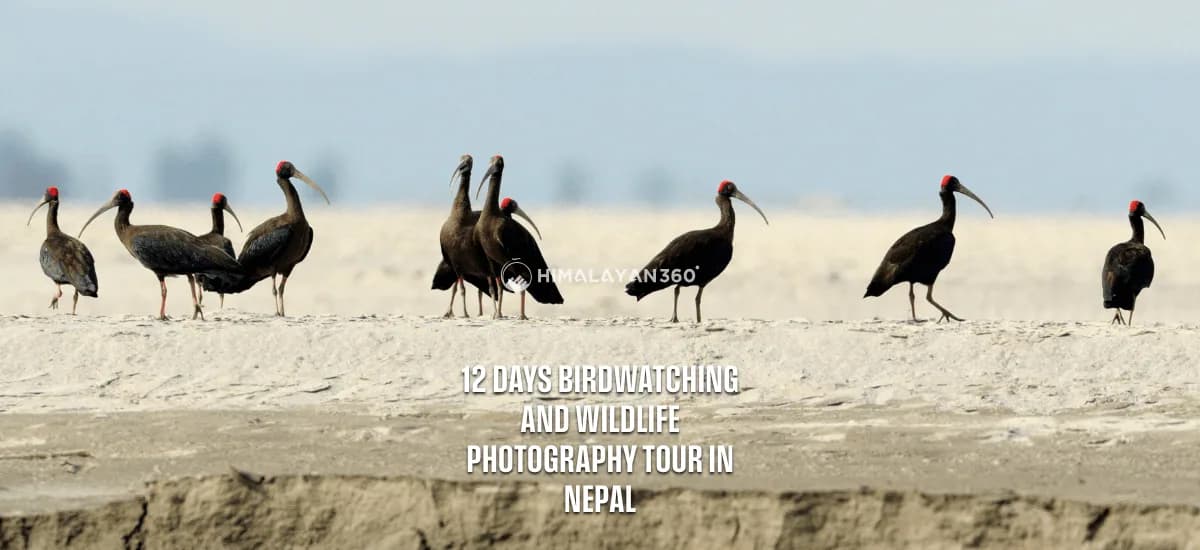
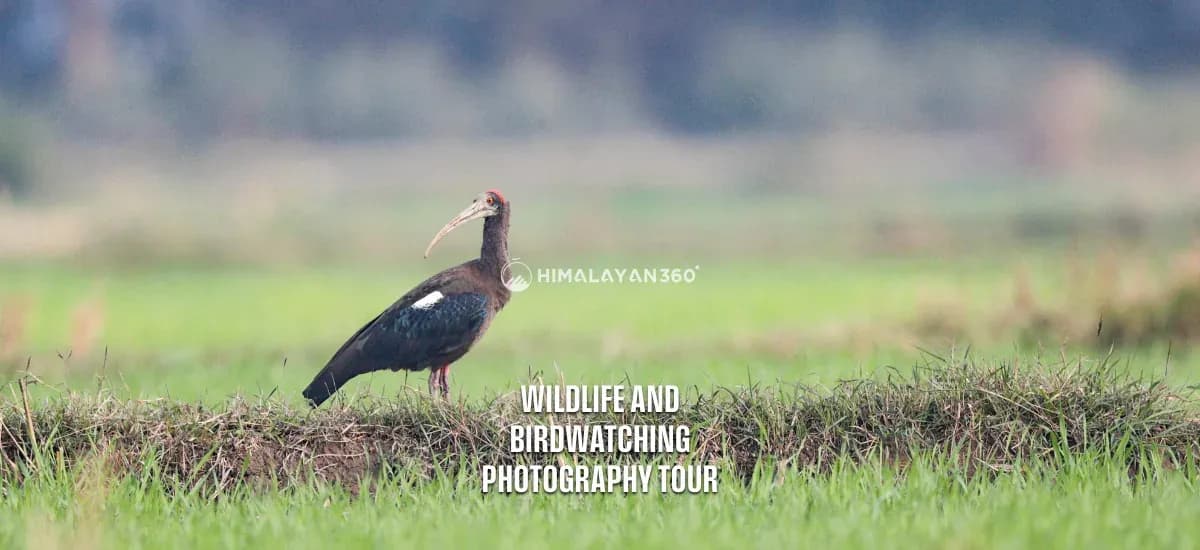
Despite occupying only 0.1% of the Earth’s landmass, Nepal is home to about 9% of bird species in the world, with over 915 recorded species. This huge variety makes the country one of the best destinations in the world to go and see birds. Here are some key points that make bird watching in Nepal a truly unique experience:
- In a short travel distance, you can explore wetlands, grasslands, broadleaf forests, temperate hills, and alpine landscapes, which are home to different bird communities.
- Nepal is the only place on Earth where the Spiny Babbler can be found.
- Endangered birds like Bengal Florican can be found in protected areas like Chitwan National Park and Koshi Tappu Wildlife Reserve.
- Nepal lies in the Central Asian Flyway, an important route for migrating birds.
- In winter, more than 150 bird species arrive from colder regions such as Siberia, China, Mongolia, and create a surreal environment for birdwatching.
- Wetlands such as Koshi Tappu attract many waterbirds like storks, herons, kingfishers, and migratory ducks, throughout the year
A Relief from your Monotonous Daily Routine in Peace with Nature
Everyone has their own way of refreshing their mind and breaking free from the predictable rhythm of daily life, work-life, monotonous daily routine, or whatever you may want to call it. For some, they find peace in nature and being able to watch a variety of birds and wildlife in their natural habitat, and simply breathing fresh air away from the noise. And if you belong to this group of nature lovers, we’ve created special birdwatching and wildlife tours designed just for you.
No matter you choose our 9-day, 12-day, or 14-day wildlife and birdwatching tour packages, we guarantee that you will have quality time in Nepal’s two protected areas: Chitwan National Park (Nepal’s first national park and a UNESCO World Heritage Site) and Bardia National Park (the largest national park in Nepal). By the time you come to the end of the trip, you will have gained what you expect from this trip, which is rare wildlife sightings, a refreshing escape, encounters with nature, and a deeper connection to the wild.
| Trip Name | Destination Covered | Duration | Cost |
| 12 Days Wildlife and Birdwatching Photography Tour | Bardia National Park, Lumbini grassland, Lumbini Wetland, Chitwan National Park | 12 | USD 1,999 |
| 14 Days Wildlife and Birdwatching Photography Tour | Bardia National Park, Lumbini grassland, Lumbini Wetland, Chitwan National Park, Koshi Tappu Wildlife Reserve | 14 | USD 2,441 |
| Wildlife and Birdwatching Photography Tour | Lumbini, Chitwan National Park | 9 | USD 1,388 |
Seal your Memories with Professional Photographs
Get a chance to capture the birds and wildlife in their natural habitat with this tour package like never before. Get a picture-perfect photo to post on Instagram, Facebook, or other social media pages, and bring a lifetime memory with you.
Wildlife Diversity from the Capital to Buddha’s Birthplace
Wildlife and bird watching photography tour is a 9 days trip full of adventure for anyone who wants to explore Nepal’s wild side. The tour starts in Kathmandu and moves to Lumbini, where you’ll wander through lush jungles and capture amazing photos of birds in their natural habitats. Next, you’ll visit the Vulture Restaurant and then head to Chitwan National Park. In Chitwan National Park, you’ll enjoy jeep safaris and guided walking tours with nature experts. You will have close encounters with birds, rhinos, and the vibrant life of the Terai jungles.
Additional information:
- Best time to visit: March, April, May, September, October, November, December
- Highlights: Jungle safaris in Chitwan National Park, bird-watching in Terai greenland, and wetlands
- Transportation: Road transport from Kathmandu to Lumbini, Lumbini to Chitwan, and Chitwan back to Kathmandu
- Permits / Fees: Chitwan National Park permit and other entry fees included
12 Days Wildlife and Birdwatching in the dense Nepalgunj Jungles
This 12 days bird watching and wildlife photography tour is perfect for serious wildlife and birdwatchers enthusiasts who want to fully explore Nepal’s Terai jungles and wetlands. The journey begins in Kathmandu, followed by a flight to Nepalgunj. You’ll spend three full days in Bardiya National Park, enjoying jeep safaris and guided bird-watching sessions to spot a variety of wildlife and birds. Next, the tour moves to the wetlands and greenlands of Lumbini, where you can photograph migratory birds such as Sarus Cranes, Mallards, Warblers, Northern Shovelers, and Northern Pintails. After Lumbini, you’ll continue to Chitwan National Park for three more days of wildlife exploration. Here, jeep safaris and walking tours with expert guides offer a chance to see the park’s rich biodiversity, including rhinos, tigers, elephants, and many bird species. You’ll also visit the famous Vulture Restaurant in Chitwan.
Additional information:
- Best time to visit: March, April, May, September, October, November, December
- Highlights: Jeep safaris in Bardiya and Chitwan National Parks, bird-watching in Lumbini wetlands and greenlands, walking tours, and Vulture Restaurant visit
- Transportation: Flight from Kathmandu to Nepalgunj. Road/jeep travel between parks and back to Kathmandu
- Permits / Fees: Bardiya and Chitwan National Park permits included, plus other entrance fees
- Ideal for: Intermediate photographers, bird-watchers, and multi-day nature seekers
Where Better than National Parks and Wildlife Reserves!
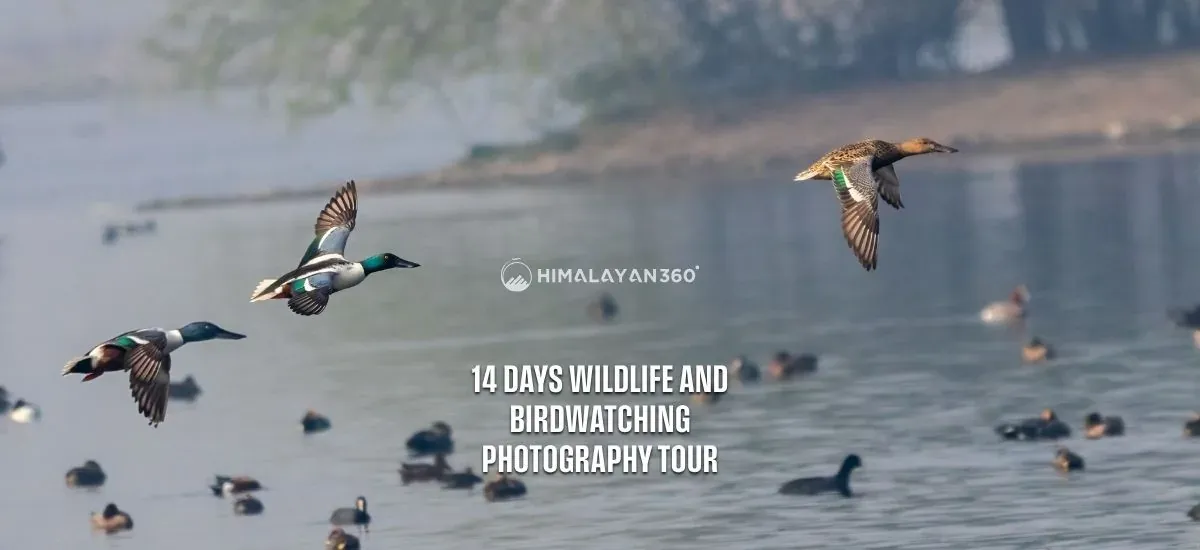
This 14 days wildlife and birdwatching photography tour begins in Kathmandu. It takes you to Bardiya National Park, then Lumbini, Chitwan National Park, and finally the eastern plains at Koshi Tappu Wildlife Reserve. Along the way, you’ll explore diverse habitats from dense forests to rich wetlands. Expect to photograph Bengal tigers, swamp deer, one-horned rhinos, and a wide variety of birds in their natural surroundings. This tour offers maximum wildlife encounters and photography opportunities. You’ll enjoy jeep safaris, walking tours, and guided bird-watching sessions across all the parks.
Additional information:
- Best time to visit: March, April, May, September, October, November, December
- Highlights: Endangered species like Bengal tigers and one-horned rhinos, swamp deer, expert naturalist guides, and multiple parks in one tour
- Transportation: Private vehicle drives and domestic flights (Kathmandu → Nepalgunj, Biratnagar → Kathmandu)
- Permits / Fees: Bardiya National Park, Chitwan National Park, Koshi Tappu Wildlife Reserve entry fees included
- Ideal for: Serious wildlife photographers, nature enthusiasts with time, and travelers seeking full immersion in Nepal’s natural beauty
Detailed Cost Analysis for Bird Watching and Wildlife Tours in Nepal
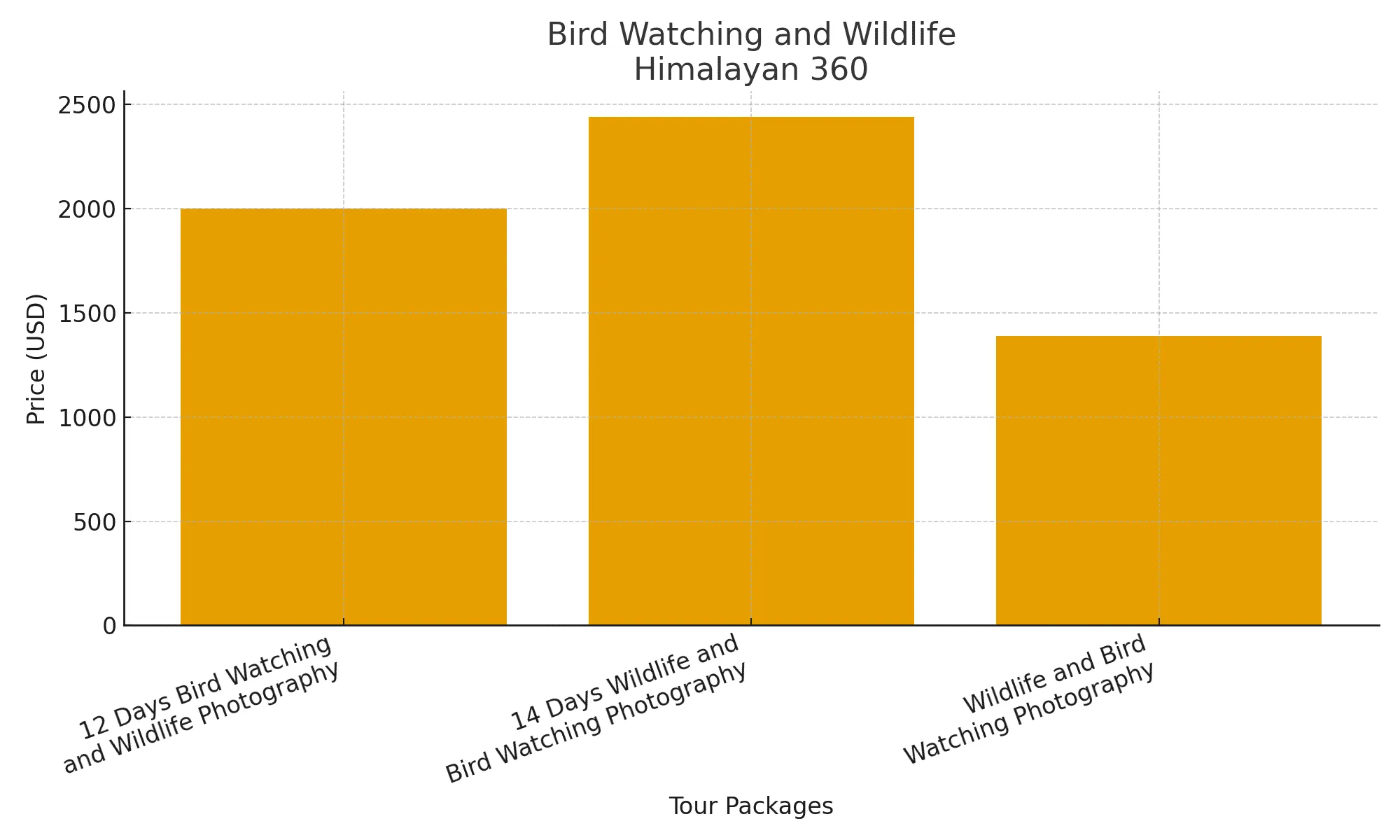
The bar graph above shows the bird-watching and wildlife photography tours offered by Himalayan 360. Among the three packages, the 14 Days Wildlife and Bird Watching Photography Tour is the most expensive, priced at USD 2,441. This tour is the longest and offers the most extensive wildlife and bird photography experiences, which explains its higher price. The 12 Days Bird Watching and Wildlife Photography Tour comes next at USD 1,999. It is slightly shorter but still provides a comprehensive experience, placing it in the mid-price range. Finally, the Wildlife and Bird Watching Photography Tour is the most affordable at USD 1,388. It is a shorter and more focused itinerary, suitable for budget-friendly travelers.
Best Time for Bird Watching and Wildlife Treks
The best time for bird watching and wildlife treks in Nepal is during spring (March–May) and autumn (September–November). During this time, the wildlife activity is more compared to other times of the year. The table below provides more information.
| Season | Best For | Main features |
| Spring (Mar–May) | Breeding & Blooms | Birds show bright breeding colors, rhododendrons bloom, and wildlife becomes active after hibernation |
| Autumn (Sep–Nov) | Migration | Best mountain views; migratory birds begin arriving from the north |
| Winter (Dec–Feb) | Waterfoul | Over 150 species of migratory birds arrive from Siberia/Mongolia to the Terai wetlands |
| Monsoon (Jun–Aug) | Greenery | Peak season for cuckoos and barbets. |
Conclusion
Bird watching and wildlife treks in Nepal are becoming very famous because more people are getting interested in them every day. From colorful birds and wildlife to dense forests and protected areas like Chitwan National Park, Bardia National Park, and Koshi Tappu Wildlife Reserve, the country provides endless opportunities for exploration and photography.

 14Days
 1,400m
 Easy
Easy