
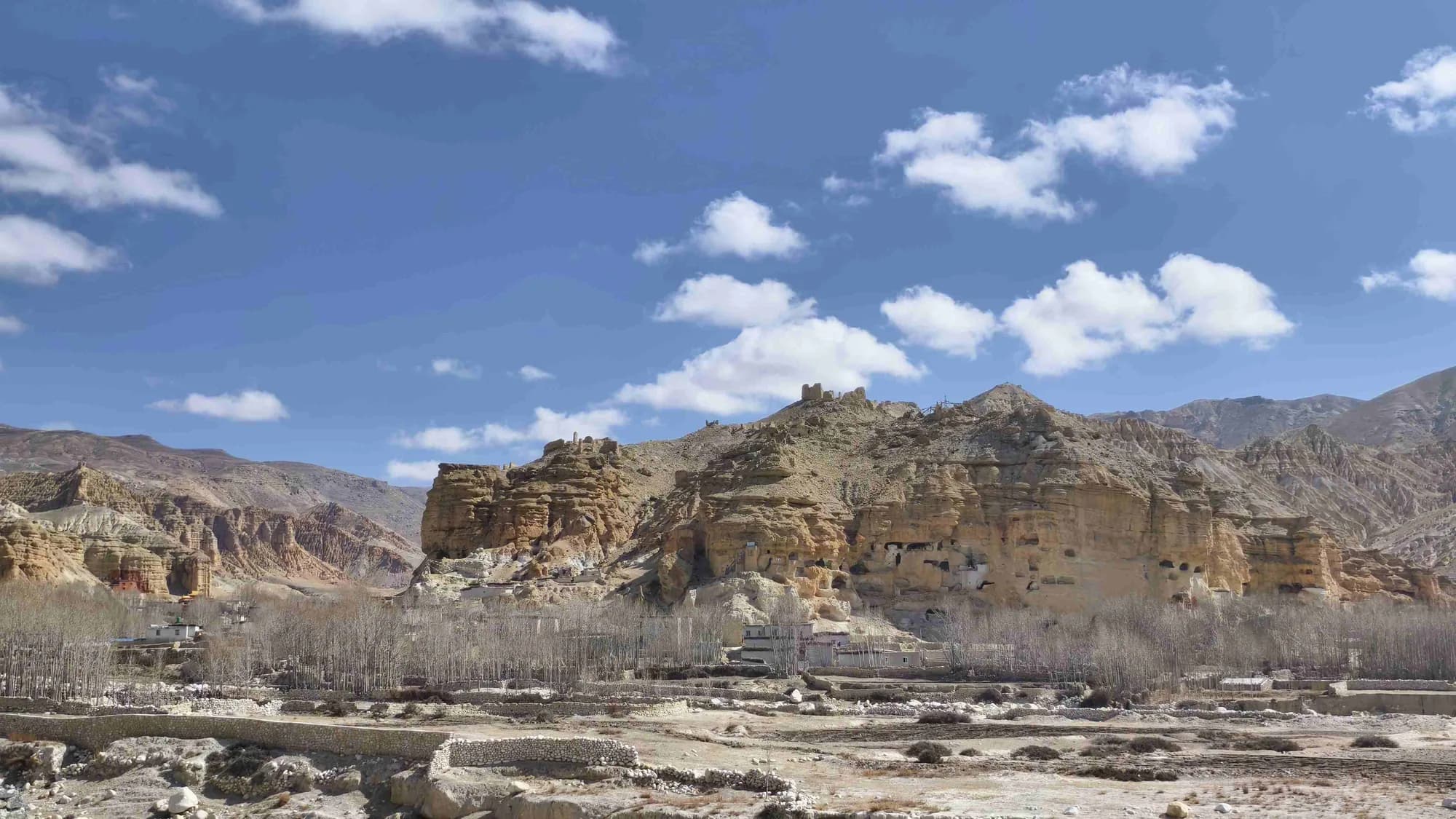
Ever wondered how it feels to walk on a frozen desert-like landscape, caves, and old Tibetan villages in the cold season? The Upper Mustang trek in winter (December to February) offers exactly that. Trekking in Upper Mustang during winter is possible. The region lies in the rain shadow of the Himalayas, which results in lower snowfall than in many other trekking areas of Nepal. However, winter trekking here is not easy. Trekkers must prepare for extreme cold temperatures, which can drop to -25°C at night.
Winter also brings several advantages to Upper Mustang. The trails are less crowded, with almost 70% fewer tourists and far fewer trekkers than in the main trekking season. Trekkers have the opportunity to interact more closely with a few remaining locals and witness winter festivals in Mustang, such as La Phewa and Toren La in January and February. In the sections below, we explain these benefits in detail. Keep reading to learn about winter trail conditions, temperature ranges, main difficulties, and practical tips for trekking in Upper Mustang from December to February.
What’s So Special About Trekking Upper Mustang in Winter?
Upper Mustang trek in December to January stands apart from any other season. The cold changes the land, the people, and the whole experience. The points below explain why winter turns this remote region into something special.
Desert Landscapes Covered with Snow
The first specialty of the trip to Mustang during winter is snow-covered desert landscapes. The region is famous for its red, ochre, and brown sedimentary cliffs. In winter, the snow covers its land and creates a “frosty beauty.” Due to the seasonal migration of locals and a lack of trekkers, the snow on the trails and within the walled city of Lo Manthang is undisturbed. So trekkers can walk on fresh, untouched snow without reaching extreme elevations.
Chance to Witness Winter-Specific Festivals like Lhosar
Winter in Upper Mustang provides an opportunity to witness local festivals. Lhosar (Tibetan New Year) falls in January or February. Families clean homes, prepare khapse, and perform rituals for good fortune. La Phewa festival occurs in January. It is a small community festival for health and prosperity. The Toren La festival includes archery contests and social gatherings. International trekkers may see small Christmas celebrations organized by agencies. And Holi occurs in late February or March, but is mostly celebrated in lower Mustang. The high Upper Mustang region focuses on local Buddhist traditions.
Off-Season Solitude on the Trails
While peak seasons like spring (for the Tiji Festival) and autumn see hundreds of trekkers, winter numbers drop significantly. You may walk for days without seeing another trekking group. Villages like Chele, Samar, and Ghiling stay almost empty as many locals migrate to lower altitudes. This creates a kind of living museum feel. Monasteries and mud-brick homes can be explored without crowds, and photographers can capture peaks like Dhaulagiri and Annapurna without any disturbance.
Cloudless Clear Skies for Stargazing
Winter skies during Mustang region treks become a perfect destination for stargazing and astrophotography due to its trans-Himalayan climate and remote geography. During the winter months, cold temperatures reduce atmospheric moisture by resulting in brighter star visibility than at any other time of year. Upper Mustang is one of the least populated and most remote regions in Nepal. Far from city lights, the skies are clear for astronomical observation and Milky Way photography.
Upper Mustang Weather and Temperatures in Winter
The weather in Upper Mustang in winter follows a continental “cold desert” climate. For the full year of monthly figures and the best months to walk, see our breakdown of Upper Mustang weather. While days are sunny with clear skies, nighttime temperatures drop below freezing, and heavy snowfall covers the landscape. Cold nights are strong enough to freeze water sources and river crossings. Heavy snowfall can block high passes and side hikes, which makes some traditional routes impassable without substantial gear. Here’s a clear table showing the temperatures during the winter season.
| Month | Avg Daytime Temperature | Avg Night Temperature |
| December | 5°C to 12°C | -10°C to 0°C |
| January | 0°C to 9°C | -25°C to -20°C |
| February | 5°C to 14°C | -15°C to -10°C |
Permits Requirements for Upper Mustang Winter Trekking
Upper Mustang is a restricted area trek, and permit rules apply in all seasons, including winter. The Nepalese government controls access to protect local culture and heritage. Winter trekking follows the same legal process as peak seasons. Here is a clear breakdown of permits.
| Permits | Cost | Validity | Issued By |
| Upper Mustang Restricted Area Permit (RAP) | USD 500 per person | 10 days | Nepal Immigration Office |
| Annapurna Conservation Area Permit (ACAP) | USD 21 per person | One entry | Nepal Tourism Board |
Note: Permits must be arranged before entering the region through a registered Nepali trekking agency, and independent trekking is not allowed at any time of year.
How Difficult is the Upper Mustang Trek in Winter
The Upper Mustang trek in winter is much harder than in spring or autumn. Night temperatures in January can fall to -20°C and sometimes reach -25°C, and day temperatures stay close to freezing. The strong Kali Gandaki valley winds increase cold stress on the body, and this effect becomes more serious because most trekking days are spent above 3,500M, where temperatures drop further. Passes like Nyi La (4,010M) and Marang La (4,230M) receive snow in winter, which can hide trails and slow walking speed. A local guide becomes essential for safe route finding.
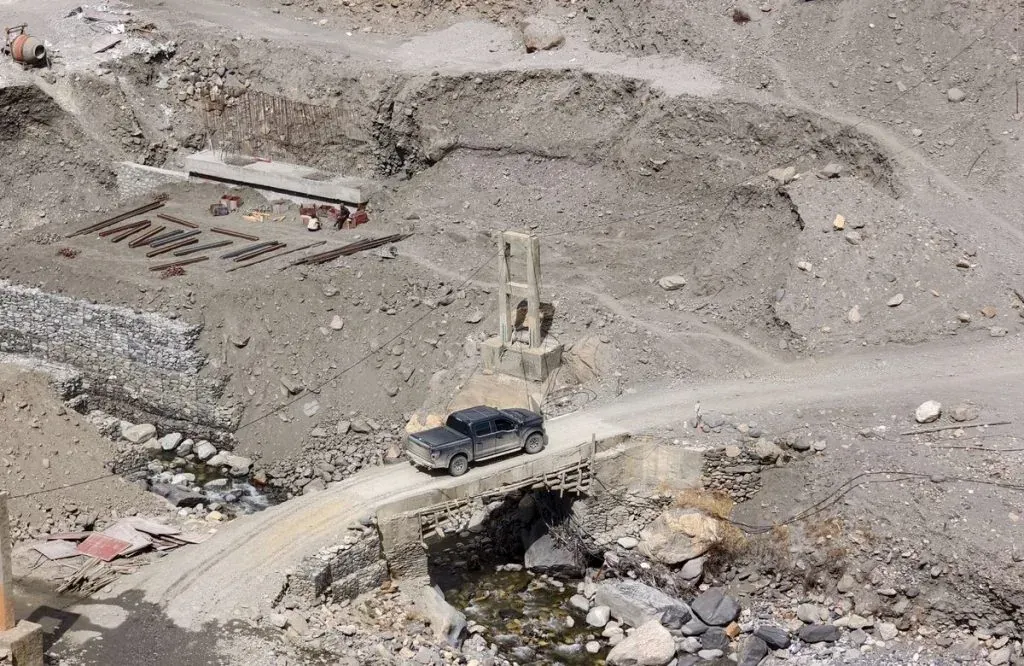
Logistics add another level of difficulty in winter. Most teahouses close as residents move to warmer cities like Jomsom and Marpha. Food options remain limited, and heating is basic. Despite the cold, the weather stays dry due to the rain shadow zone. Trails avoid mud and water crossings, and skies remain clear most days. Gradual altitude gain helps trekkers with acclimatization when the pace remains slow.
Lower Mustang Situation during Winter
Lower Mustang stays active during winter, while Upper Mustang enters a kind of winter “hibernation.” Towns like Jomsom, Marpha, and Muktinath remain accessible most of the season. Day temperatures range from 10°C to 15°C and nights fall between -1°C and -5°C in the lower valleys. Higher areas like Muktinath can reach -15°C. Snowfall occurs one to four times a month and can briefly block roads and trails. Despite this, views of Dhaulagiri (8,167M), Nilgiri (7,061M), and Annapurna (8,091M) are very clear from the Muktinath Area.
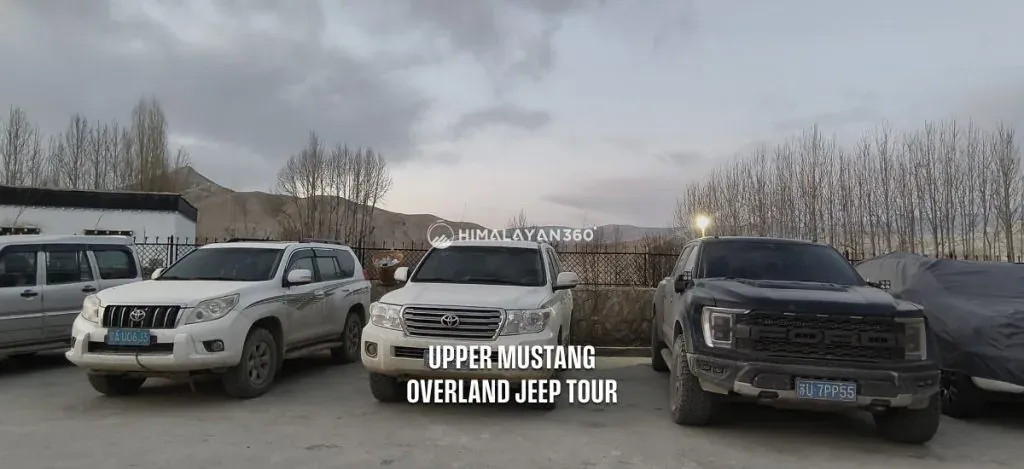
Services in Lower Mustang continue through winter. Many lodges and teahouses are open, and locals do not migrate in large numbers. The Upper Mustang overland jeep tour takes 3-4 days to reach Muktinath, but snowfall can delay the journey on the Kagbeni to Muktinath road. Pokhara to Jomsom flights often face delays or cancellations in winter. If you only plan to explore Lower Mustang, a standard ACAP permit is sufficient, and a Restricted Area Permit is not required south of Kagbeni.
Monasteries and Village Life in the Winter Months
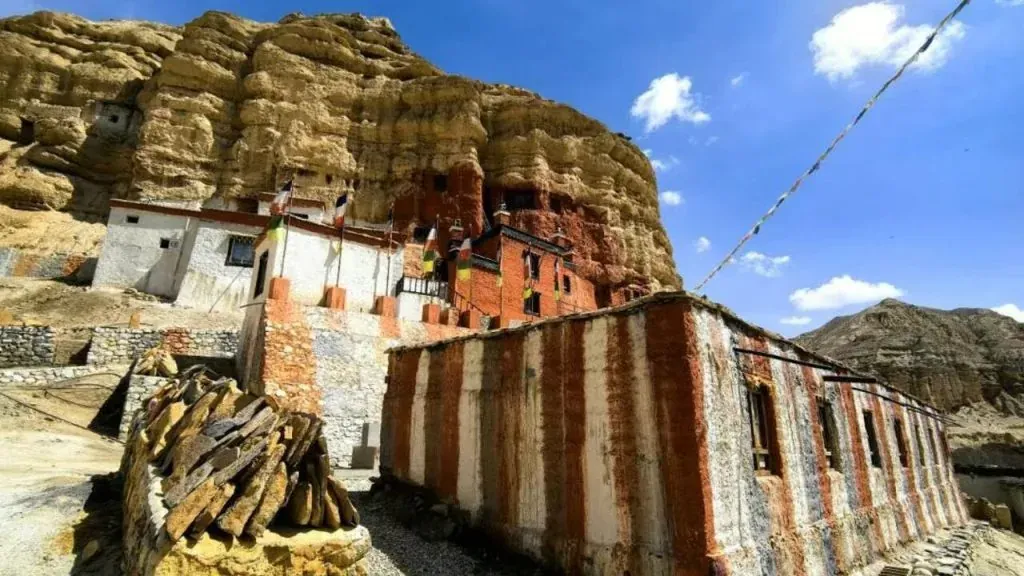
Winter is the one season when a monastery visit in Upper Mustang is genuinely quiet. During the main trekking season the courtyards fill with tour groups, but in December and January you may be the only visitor of the day. Cave sites such as Luri Gompa and hilltop sites such as Ghar Gompa sit just off the main trekking routes, and the walk up to them is short but exposed, so go in the morning before the Kali Gandaki valley wind gets up.
The trade-off is access. Caretakers often move down the valley with the rest of the village, so a monastery can be locked when you arrive. Ask your guide to send word ahead from the previous village rather than turning up and hoping. Lo Manthang, the walled capital of Upper Mustang and the seat of the old kingdom of Mustang, keeps more of its winter population than the smaller settlements, so it is the most reliable place to actually get inside a building.
What you get in return is village life without an audience: bread ovens going, yaks brought in at dusk, and snow-capped peaks standing over an empty square.
Can You Do the Mustang Jeep Tour in Winter?
Yes, and for most winter travellers it is the more sensible option. The road is open for most of the season and the vehicle removes the two hardest parts of a winter trek: the long hours outdoors in valley wind, and the nights in unheated teahouses at altitude.
The trade-offs are real. Snowfall can delay the Kagbeni to Muktinath stretch, and flights to Jomsom face frequent delays and cancellations in winter, so build buffer days in at both ends. Our comparison of the Mustang jeep tour and trekking covers the difference in cost, comfort and how much of the landscape you actually see.
Who Should and Should Not Go in Winter
Winter in Upper Mustang rewards a narrow group of travellers and punishes everyone else.
Winter suits you if you have trekked at altitude before, own or can rent a sleeping bag rated to -20°C, can absorb two or three spare days for weather delays, and want the villages and monasteries with nobody else in them. Photographers and stargazers get the clearest air of the year.
Choose another season if this is your first Himalayan trek, you are travelling on a fixed schedule with no slack, you need reliable hot showers and heated rooms, or you want the Tiji Festival and full village life, which belong to spring. In those cases the best time to visit Upper Mustang page sets out what each season in Upper Mustang offers and when the ideal time to go actually is.
How Upper Mustang Compares With Nepal's Other Winter Treks
Winter narrows the list of workable trekking routes in Nepal, and Upper Mustang narrows it in an unusual direction, because the limit here is cold rather than snow.
- Annapurna Circuit Trek: the closest comparison, and the one Upper Mustang beats in deep winter. The Circuit turns on Thorong La at 5,416M, which heavy snow can shut for days. Upper Mustang has no pass of that height to cross, so the route itself stays walkable when the Circuit does not.
- Everest Base Camp Trek: the Everest Base Camp trail also runs through winter and keeps far more lodges open than Upper Mustang, where most teahouses close. Choose Everest for reliable beds, Upper Mustang for emptiness.
- Ghorepani Poon Hill Trek: the low-altitude answer if you want snow-capped peaks and clear winter light without the -20C nights.
Across all three, the thing that makes trekking the Upper Mustang route different in winter is the dryness. Everywhere else you are managing snow underfoot; here you are managing the temperature after dark.
Tips for Winter Trek in Upper Mustang
- Layer for Extreme Cold: Wear moisture-wicking thermal base layers, a thick fleece mid-layer, and a heavy down jacket. Windproof and waterproof outer shells are essential.
- High-Quality Sleeping Bag: Bring a four-season sleeping bag rated for -15°C to -20°C. Many teahouses are unheated, so it will be your main source of warmth.
- Sturdy Footwear: Use waterproof trekking boots with strong ankle support. Consider crampons or microspikes for icy or snowy trails.
- Health and Skin Care: Carry a hot water bottle to keep warm and prevent water from freezing. Use SPF 50+ sunscreen and lip balm to protect against winter UV rays.
- Hire Mandatory Guides: Upper Mustang is a restricted area. Solo trekking is not allowed. Groups must include at least two trekkers and a licensed guide.
- Confirm Open Lodges: Most locals migrate in winter, leaving many teahouses closed. Your guide should confirm accommodations during winter in advance.
- Flexible Itinerary: Winter weather conditions can block high passes like Nyi La. Add extra contingency days to your schedule to stay safe.
Is the Upper Mustang Trek in Winter Worth It?
For a prepared trekker, yes. Trekking Upper Mustang in winter is one of the most unique experiences in Nepal. The trails are quiet, villages are not crowded, and the desert-like landscapes covered with snow create amazing scenery. Clear skies make stargazing and photography ideal, while winter festivals like Lhosar and Toren La add cultural beauty. The trek is challenging with extreme cold, high passes, and limited teahouses, so proper gear, permits, and a licensed guide are essential. For travelers seeking adventure and solitude, this journey ranks among the best tours in Nepal.
16 Days
Upper Mustang Trek
$1,666
5.0(2 reviews)
Starting in Nepal, there is a rare journey to the Upper Mustang Trek, leading to the last Forbidden Kingdom called Lo Manthang. Beyond the tall Himalayas and the reach of the monsoon, there lies a dry, desert-like land unlike much of Nepal. The trail was closed to outsiders until 1992, this area hold its old Tibetan culture and mysterious feeling. Along the way, there are ancient caravan trails, fortress villages, and monasteries built on cliffs, making it seem like a place frozen in time. As you travel through desert-like trails, you’ll pass through age-old villages like Kagbeni, traditional Mustangi homes, and mysterious cave monasteries. The journey winds past terraced fields, hidden valleys, and the banks of the Trishuli and Marsyangdi Rivers. Along the way, take in stunning views of Annapurna, Dhaulagiri, and Manaslu. The stark landscapes are dotted with fossil rocks and sacred chortens. Lo Manthang, a walled city rich in legend and tradition, is at the heart of the trek. This is more than a trek, it’s a walk through living history.


11 Days
Mustang Overland Jeep Tour
$1,699
5.0(5 reviews)
The Upper Mustang Overland Jeep Tour is a quick and accessible exploration of the Upper Mustang region without the effort of long trekking days. Upper Mustang is known as the “Last Forbidden Kingdom of Nepal”. It was closed to outsiders until the early 1992. Since then, it slowly opened up and has now become a renowned travel destination due to easy roadway access. Many people visit there to experience its ancient culture, dramatic landscapes, and quiet charm, which remains untouched by modern life. The region feels like a different world, with dry, desert-like hills, red cliffs, and villages that reflect a strong Tibetan Buddhist culture. The 11 days Upper Mustang Overland tour package via jeep takes you deep into Nepal’s remote north, right up to the border of Tibet. Your journey starts in Kathmandu and takes you through famous places like Pokhara, Tatopani, Jomsom, Kagbeni, and Marpha before reaching the ancient walled city of Lo Manthang. Along the way, you’ll explore monasteries, chortens, and prayer walls that share stories of the region’s spiritual heritage. You’ll also drive beside the Kali Gandaki River, known for its black fossils (shaligrams), and enjoy views of towering peaks like Nilgiri and Dhaulagiri. Other highlights include visits to mysterious sky caves, rare Himalayan landscapes, and colorful local villages where people still live by ancient customs. The region is rich in history, and the quiet beauty of Mustang makes it one of Nepal’s most unique and unforgettable destinations.
 Trek
Trek By air
 Pilgrimage
 Festivals
 Wildlife
 Luxury
 Yoga
Yoga Food
Food Heritage