
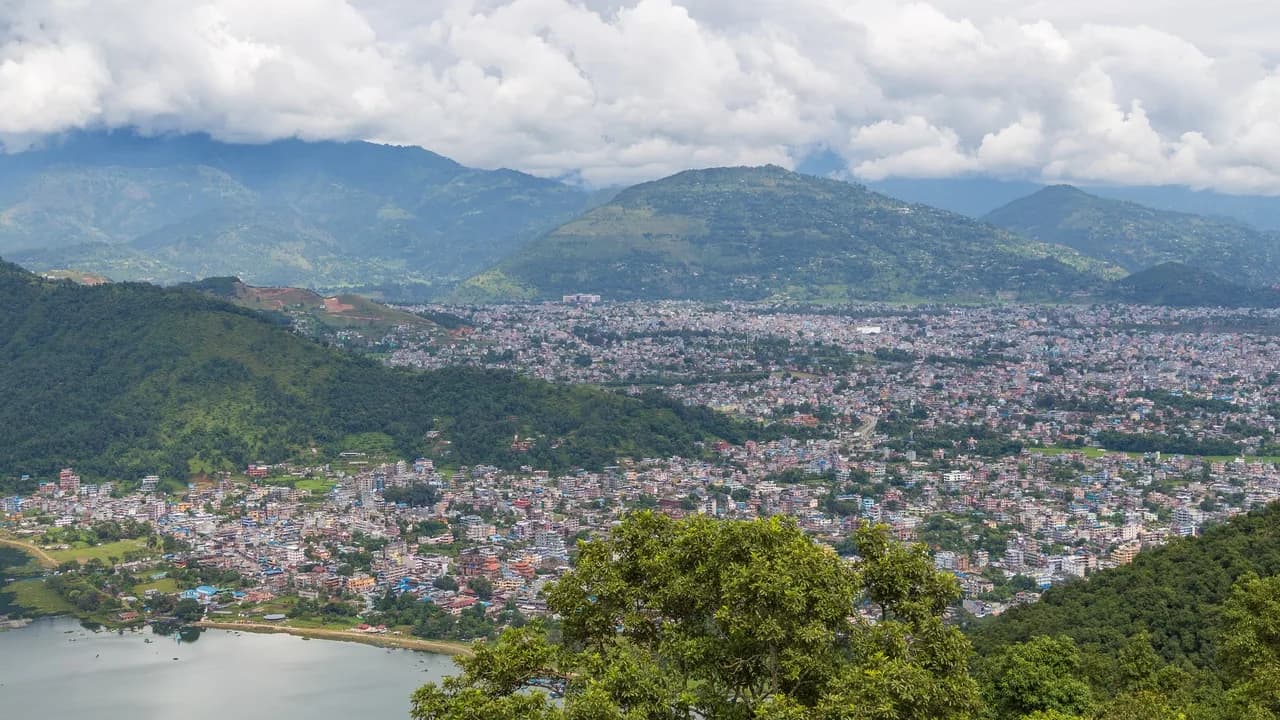
The second-most visited city in Nepal, Pokhara, welcomes thousands of domestic and international travelers every year. Places like Phewa Lake, Sarangkot, Davis Falls, Chamero (Bat) Cave, Gupteshwor Mahadev Cave, and Bindabasini Temple are among the best places to visit in Pokhara.
The best places to visit in Pokhara combine Himalayan views, boating spots, caves, and heritage sites. Green hills and open spaces bring people close to nature. Viewpoints like Sarangkot offer beautiful views of Annapurna, Machhapuchhre, and Dhaulagiri on clear mornings.
Pokhara in Nepal receives over 1 million visitors every year, including both domestic and international tourists. The Seti River cuts through the middle of the city in a narrow gorge, which is why Pokhara looks flat on a map and is not on the ground. Daily travel costs are budget-friendly, so it ranks high on the bucket list of travelers visiting Nepal. Local meals start around NPR 300–500, and simple hotels are available from NPR 1,500–3,000 per night.
Pokhara suits families, solo travelers, adventure lovers, and those seeking spiritual tours in Nepal. It is also the trailhead city for most of the Annapurna region treks, so many visitors see it twice, once before the walk and once after. These 13 places show the natural and cultural beauty of Pokhara city, from the lakes and the view of the Himalayas to the caves and temples worth a visit on a short stay. Below, we will talk briefly about these places and what makes each one special.
1. Phewa Lake
- Best Time to Visit: October to April
- Entry Fee & Opening Hours: No entry fee, open all day
- Things to Do: Boating, visiting Tal Barahi Temple, walking or cycling along the Lakeside, relaxing at cafés
- Best Photo Spot: Eastern lakeside in the early morning, the middle of the lake during a boat ride. near Tal Barahi Temple for lake views and mountains
- Transport access: Direct road access to Lakeside by car, taxi, or bike
Phewa Lake is located in the Pokhara Valley at an altitude of 742 m above sea level. It is the second largest lake in Nepal, fed by mountain streams off the surrounding mountains, and the lakeside town that grew along the shores of Phewa Lake is now the tourist hub of Pokhara. The lake is famous for the reflection of Machhapuchhre (Fishtail) and Annapurna peaks. Visitors can take boat rides in rowboats, paddleboats, or motorboats. During festivals like Dashain, Tihar, and Chhath, special ceremonies, cultural programs, and evening aarti take place on the lakeside and at Tal Barahi Temple, and you can be a part of them.
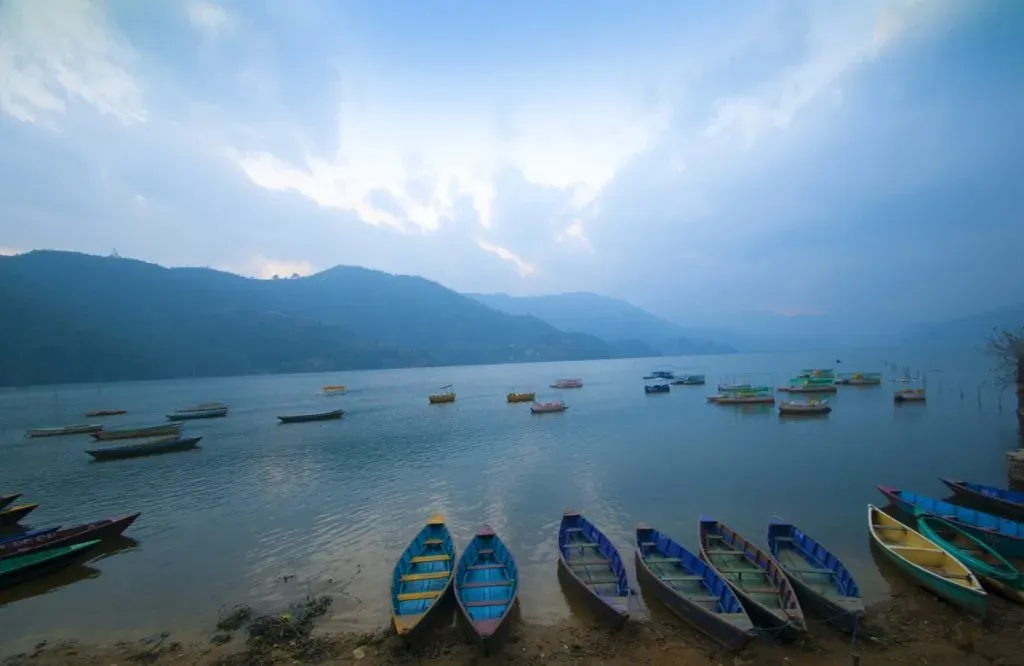
Local Legend about Fewa Lake: There was once a city called Phewa where the lake now lies. A very old woman came begging for food, but most people turned her away. Only one poor elderly couple shared their rice and vegetables. The woman was a goddess in human form. She warned the couples to flee to another hill. Soon after, the city was drowned, forming Phewa Lake, while the couple survived.
2. Begnas Lake
- Best Time to Visit: October to March
- Entry Fee & Opening Hours: No entry fee, open all day.
- Things to Do: Boating (rowboats, paddle boats, and motorboats), fishing, lakeside walks, cycling, birdwatching, and relaxing
- Best Photo Spot: Northern and western shores for reflections of Machhapuchhre (Fishtail) and Annapurna South, sunrise and sunset from the surrounding area
- Transport Access: Accessible by car or taxi, about 8 km east of Pokhara city center
Begnas Lake, located at an altitude of 650 m, can be an alternative to Phewa Lake. In the mornings, its waters reflect Machhapuchhre and Annapurna South very clearly. Boating is another popular activity here, with rowboats, paddle boats, and motorboats available. Lakeside walking and cycling paths provide birdwatching opportunities, with fewer tourists than Phewa.
Facilities around Begnas Lake are simple but sufficient. Small family-run cafés and restaurants offer local meals and tea at lower prices than Lakeside Pokhara. Fishing is common, and the lake is an important source of freshwater fish for villagers. Cultural visits during local festivals remain low, with small gatherings near lakeside temples rather than large events.
3. Davis’s Fall (Patale Chhango)
- Best Time to Visit: October to March (post monsoon months)
- Entry Fee & Opening Hours: Open from 6:00 AM to 6:00 PM daily. Entry fees are approximately NPR 30–100 for foreigners and NPR 20–50 for SAARC/Nepali nationals.
- Things to Do: View the waterfall from fenced observation decks, take photos, throw coins for luck in the “Wishing Pool”,
- Best Photo Spot: The observation deck provides the best view of the water plunging into the gorge.
- Transport access: Located in Chhorepatan, about 2 km southwest of Lakeside
Locally known as Patale Chhango, which translates to the “Waterfall of the Underworld,” Davis Falls is known for its natural mystery, which attracts both scientists and spiritual visitors. Unlike most waterfalls that flow into a river, this waterfall is sourced by Phewa Lake and drops into a deep hole about 100 feet below. The water does not disappear but flows through an underground tunnel that is about 500 feet long.
The Legend of “Davis”
The name comes from a tragic event on July 31, 1961. A Swiss woman known as Mrs. Davis was bathing in the Pardi Khola with her husband when a sudden rise in water swept her away. She was pulled into the underground tunnel. Her body was found days later in the Phusre River. Following the incident, the site was named in her memory at her father’s request.
4. Gupteshwor Mahadev Cave
- Best Time to Visit: dry season (October to April)
- Entry Fee & Opening Hours: NPR 100–200 for Nepali citizens and up to NPR 500 for foreign visitors, daily open from 6:00 AM to 6:00 PM
- Things to Do: Explore natural limestone formations, visit the Shiva temple/shrine, walk to the end of the cave for a view of the bottom of Devi’s Fall
- Best Photo Spot: Viewing area near the cave exit. Photography is restricted inside the main shrine area
- Transport Access: Direct road access, can be reached by taxi, private vehicle, or local bus from Pokhara Lakeside
Gupteshwor Mahadev Cave lies in southern Pokhara at an altitude of about 820 m above sea level. The cave, rumored to be the longest in Nepal, houses a Shiva lingam (a natural rock formation worshipped as Lord Shiva) and other Hindu shrines.
Visitors should be prepared for the wet and slippery conditions by wearing comfortable shoes. The cave is located directly opposite Devi’s Fall, which makes it easy to visit both attractions in one combined trip. For a full experience of the area, consider combining the cave visit with a trip to the nearby World Peace Pagoda and a Tibetan refugee camp.
5. World Peace Pagoda (Shanti Stupa)
- Best Time to Visit: Spring (March to May) and autumn (September to November)
- Entry Fee & Opening Hours: No entry fee, opens at 6:00 AM and closes 6:00 PM
- Things to Do: Meditation, walk clockwise around the two tiers of the stupa, observe the four golden statues of the Buddha, witness the Annapurna mountain range, Dhaulagiri, and Machhapuchhre (Fishtail Mountain).
- Best Photo Spot: The stupa’s upper tier, the western side of the stupa
- Transport Access: Reachable by vehicle up to the base. Final access requires climbing stone steps.
The World Peace Pagoda, or Shanti Stupa, is a white Buddhist monument located at the top of Anadu Hill. Built by Japanese monks, it is one of over 80 such pagodas worldwide and the first in Nepal. Visitors are requested to respect the sanctity of the site by removing their shoes and maintaining silence.
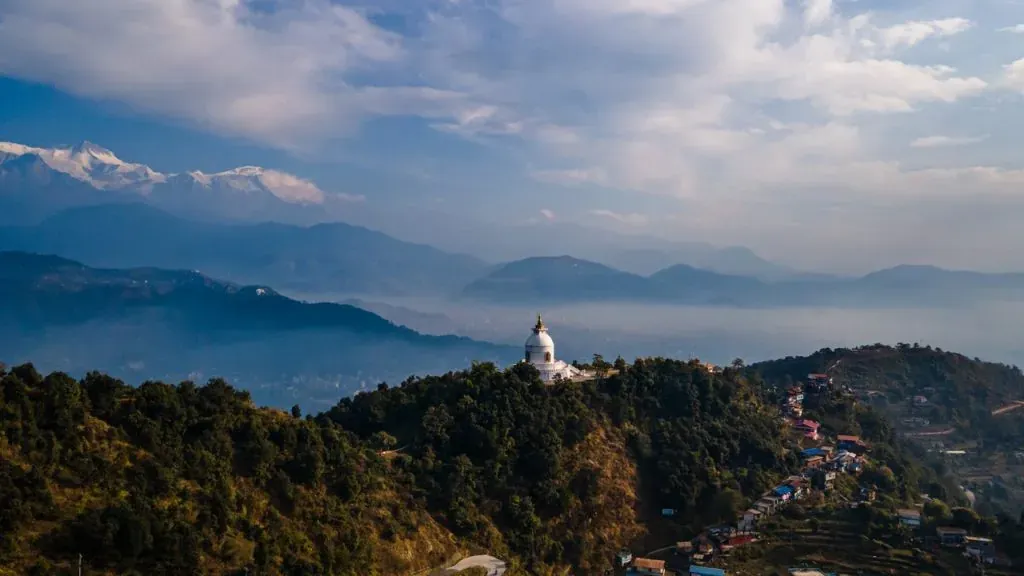
The journey to the pagoda is just as enjoyable as the destination itself. Many visitors opt for a boat ride across Phewa Lake and then hike through the forest to reach the destination. Whether you choose to hike or drive, the views of the Annapurna range and the entire Pokhara Valley make the trip worthwhile. The peaks you are looking at from here are the same ones the Annapurna Base Camp Trek walks into.
6. Chamero Cave (Bat Cave)
- Best Time to Visit: Spring (March to May) and autumn (September to November)
- Entry Fee & Opening Hours:NPR 50 for Nepali citizens, NPR 80 for SAARC nation visitors, and NPR 150 for other foreign tourists. Open daily from 9:00 AM to 5:00 PM.
- Things to Do: Observe thousands of bats, explore the limestone formations, and experience the narrow exit
- Best Photo Spot: Just inside the entrance, where bats are visible on the ceiling and walls
- Transport Access: 9–10 km northwest of Pokhara Lakeside near Batulechaur
Chamero Gufa, known to most visitors as the Bat Cave, offers a slightly rugged adventure for visitors interested in nature and geology. Unlike more developed tourist caves, it retains a raw, natural feel, complete with thousands of Horseshoe bats. Visitors are given a basic torch at the entrance, or they can use their own mobile torch. Wearing shoes with a good grip is recommended due to the slippery ground.
The cave is visited in conjunction with the Mahendra Cave, creating a convenient two-part sightseeing excursion. The area around the entrance has small stalls and tea shops where visitors can relax after their exploration. The experience can be improved with a local guide, who can point out interesting formations and safer passage.
7. Sarangkot
- Best Time to Visit: October to April
- Entry Fee & Opening Hours: NPR 50 to NPR 100 per person, opens around 5:00 AM to 8:00 PM
- Things to Do: Watch the sunrise/sunset, paragliding, zip-lining, annapurna cable car, hiking/trekking
- Best Photo Spot: The observation deck (view tower) at the summit, paragliding takeoff area
- Transport Access: Reachable by road from Pokhara. About 30 minutes by car or taxi.
Sarangkot is a premier viewpoint and one of the top tourist places near Pokhara, with panoramic views over the Annapurna range and views of the city and Phewa Lake below. It is famous for its sunrise over the Annapurna Machhapuchhre (Fishtail Mountain) and Dhaulagiri mountain ranges. Beyond the views, Sarangkot has evolved into an adventure hub. It serves as the main launch site for paragliding and the location of one of the world’s most extreme zip lines. The ridge west of Sarangkot is also where the road to Kande runs, which is the start of the Mardi Himal Trek.
Visitors should plan to arrive well before sunrise to secure a good viewing spot at the crowded viewpoint and to see the changing pre-dawn colors. The local weather can be unpredictable, so checking the forecast for a clear morning is essential as well.
8. Kahun Danda
- Best Time to Visit: Dry season (October to May)
- Entry Fee & Opening Hours: No entry fee. Open all day.
- Things to Do: Sunrise & Sunset viewing, hiking, visiting Kahun Kot Durga Temple, Matepani Gumba, and Bhadrakali Temple.
- Best Photo Spot: The Kahun Danda View Tower at the summit
- Transport Access: Reachable by car or taxi from Pokhara within 30–45 minutes, or by hiking from the New Seti Bridge (Yellow Bridge) near Nadipur
Kahun Danda is located at an altitude of about 1,450 m and is considered a less crowded alternative to Sarangkot. The hilltop is famous for its “Dharahara” view tower from where visitors can look out over the Pokhara city, the Phewa Lake on one side, and the Annapurna peaks on the northern horizon.
The best time to see the Annapurna range from Kahun Danda is early morning during the dry season, when the skies are clear. The trails are full of blooming rhododendrons and wildflowers as well. Because it is less commercialized than Sarangkot, facilities are limited, but small local cafés and resting spots are found along the routes.
9. Pumdikot Shiva Statue Pokhara
- Best Time to Visit: Spring (March-May) and autumn (September-November)
- Entry Fee & Opening Hours: No entry fee. Opens from 6:00 AM to 6:00 PM
- Things to Do: View the 51-foot-tall Lord Shiva statue, Pokhara Valley, Phewa Lake, and explore the temple area.
- Best Photo Spot: From the base and viewpoint area near the statue
- Transport Access: Reachable by car or taxi from Pokhara in about 25–30 minutes, followed by a short uphill walk from the parking to the statue area.
The Pumdikot Shiva Statue, dedicated to Lord Shiva, is a new landmark for religious pilgrims and tourists seeking natural beauty in Pokhara. Located at an altitude of 1,500 m, the site provides a beautiful atmosphere for prayer with the Annapurna range as a backdrop. The monumental statue is surrounded by 108 Shiva lingams, which honor Lord Shiva.
The best visiting hours are early morning or late afternoon to avoid tourist groups and school trips. From here, visitors can see Pokhara city, Phewa Lake, and Himalayan peaks on clear days. The area is popular for photography, meditation, and prayer.
10. Bindabasini Temple
- Best Time to Visit: Can be visited year-round
- Entry Fee & Opening Hours: No entry fee. Open daily from 5:00 AM to 9:00 PM
- Things to Do: Worship and rituals, explore the temple area, mountain viewing,
- Best Photo Spot: The observation balcony at the northern edge of the temple
- Transport Access: Located in the Old Bazaar area (Miruwa), about 4 km north of Lakeside. Easily accessible by car, taxi, or local bus
Bindabasini Temple is a spiritual center of Pokhara and a popular stop for travelers interested in cultural tours in Nepal. Built in the 17th century, the white pagoda-style structure is dedicated to Goddess Durga. It is uniquely notable because the deity is represented by a _Saligram (_a sacred fossil found in the Kaligandaki River) rather than a traditional carved statue. The area is mostly active during festivals like Dashain, Tihar, and Teej.
Beyond its religious importance, the temple is one of the most accessible viewpoints in the city for observing the Himalayas. Because it is located between the old market and the road to Sarangkot, Pokhara Valley, and the peaks of the Annapurna range are clearly seen from here.
11. Jangchub Choeling Monastery
- Best Time to Visit: All year round
- Entry Fee & Opening Hours: No entry fee. Open daily from 6:00 AM to 6:00 PM.
- Things to Do: Attend a Puja ceremony, explore the shrine hall and the Tibetan settlement, and interact with resident monks
- Best Photo Spot: Outside the main prayer hall, interior photography is restricted during rituals
- Transport Access: Taxi/private Car, public transport, or walk from the Lakeside area for an hour
Jangchub Choeling Monastery is one of the oldest Tibetan Buddhist monasteries in Pokhara, established in 1967 by the 14th Dalai Lama to shelter and educate monks. The monastery is more than just a place of worship; it’s a cultural and educational institution that is home to hundreds of monks who study philosophy, poetry, and grammar.
Located within Tashi Palkhel, the largest Tibetan refugee camp in Pokhara, a visit to the monastery can be combined with exploring the local community. The area around the monastery has numerous shops where visitors can purchase handmade Tibetan handicrafts like carpets, jewelry, and carvings by directly supporting the livelihoods of the refugees.
12. International Mountain Museum
- Best Time to Visit: All year round
- Entry Fee & Opening Hours: NPR 500-600 for foreigners and SAARC nationals, and NPR 100 for Nepali. Open daily from 9:00 AM to 5:00 PM
- Things to Do: Explore exhibits, view historical gear, visit the Hall of Fame, try a climbing wall
- Best Photo Spot: Exhibit halls and outdoor courtyards
- Transport Access: Taxi/ride-share, walking, public transport
The International Mountain Museum is an informative institution dedicated to the mountains of Nepal and the world. It stores the history, geography, people, and mountaineering achievements related to the tallest peaks. The museum reserves historical artifacts such as the original climbing gear used by the first Everest summiteers, Sir Edmund Hillary and Tenzing Norgay Sherpa.
Unlike natural viewpoints, which are weather-dependent, the museum offers the same experience regardless of cloud cover or rain. It’s a great place to spend a few hours learning about the ethnic groups that live in the mountain regions and the environmental challenges they face.
13. Pokhara Disneyland
- Best Time to Visit: Open year-round
- Entry Fee & Opening Hours: No entry fee. Open daily from 12:00 PM to 10:00 PM.
- Things to Do: Enjoy the Rides, Play Games, Go Skating, Dine & Relax, enjoy Phewa Lake and the Annapurna range view are the things to do in Pokhara Disneyland.
- Best Photo Spot: Near the main entrance with colorful rides in the background at night
- Transport Access: Walking, taxi, or public transport
Pokhara Disneyland is a family-friendly amusement park located at an altitude of about 800 m. While it is not affiliated with the international Disney brand and safety standards might be different from Western parks, it provides an enjoyable, budget-friendly experience for all ages.
The park has various rides, including a Ferris wheel, bumper cars, a Columbus ride, a dragon ride, a 360-degree rotation ride, arcade games, billiards, and inflatable games.
How Many Days Do You Need in Pokhara?
Most of these 13 places fall into four clusters, and each cluster is roughly a half day. Two days covers the city, four covers it comfortably with a spare morning for weather.
| Day | Cluster | What it covers |
| Day 1 | Lakeside and Anadu Hill | Phewa Lake and Tal Barahi Temple by boat, then walk or drive up to the World Peace Pagoda. Evening at Pokhara Disneyland or the Lakeside cafes |
| Day 2 | South of Lakeside | Davis’s Fall and Gupteshwor Mahadev Cave, which face each other in Chhorepatan, then the International Mountain Museum and the Pumdikot Shiva Statue |
| Day 3 | Sarangkot and the old town | Pre-dawn drive to Sarangkot for the sunrise, then Bindabasini Temple in the Old Bazaar on the way back down. Afternoon at Jangchub Choeling Monastery and the Tashi Palkhel settlement |
| Day 4 | The quiet edges | Begnas Lake, 8KM east of the centre, and Kahun Danda for a sunset with almost nobody on it. Chamero Cave and Mahendra Cave sit together in the northwest |
Pairing sites that share a neighbourhood saves the most time here. Davis’s Fall and Gupteshwor Cave are directly opposite one another, Chamero Cave is normally visited alongside Mahendra Cave, and Bindabasini Temple sits on the road up to Sarangkot.
Treks and Tours That Start From Pokhara
Pokhara is the gateway to the Annapurna region, so most visitors are here either side of a trek. These are the routes that start and finish in the city:
- Mardi Himal Trek: 4 to 7 days on a single ridge to Mardi Himal Base Camp at 4,500M, under the face of Machhapuchhre. The trailhead at Kande is 30 to 60 minutes by road. There is also a shorter 5 Days Mardi Himal Trek.
- Ghorepani Poon Hill Trek: the classic short trek for sunrise over Annapurna and Dhaulagiri, and the easiest first Himalayan walk from Pokhara.
- Annapurna Base Camp Trek: the full sanctuary, around 110KM and 7 to 12 days, into the amphitheatre of peaks you can see from the World Peace Pagoda.
- Kapuche Lake and Kori Danda Trek: a short trek to Nepal’s lowest glacial lake, for travellers who want something the crowds have not found yet.
- Sikles Eco Home Stay Trek: village homestays in one of the largest Gurung settlements in the region, an easy few days rather than a climb.
- Annapurna Base Camp Heli Tour: base camp and back in a morning, for travellers who cannot spare the walking days.
- Muktinath Jeep Tour: north through the Kali Gandaki valley to the Muktinath temple, popular with pilgrims and with travellers who want Mustang without a trek.
Where to Stay in Pokhara
Where you sleep decides how much of your day you spend in a taxi, so pick the area before you pick the hotel. Hotels in Pokhara cluster in four places, and each one suits a different trip.
- Lakeside (Baidam). The tourist hub of Pokhara and the default choice. Everything is walkable: boats, restaurants in Pokhara's main strip, trekking shops and bus pickups. Noisiest at night, and the closest base for a first visit.
- Damside (Pardi). The quiet end of the same lake, five minutes south. Fewer bars, better value, and still an easy walk to the shores of Phewa Lake.
- Old Bazaar and the north. Near Bindabasini Temple, this is the working heart of Pokhara rather than a tourist strip. Good if you want the city Nepalis use, and it puts you on the road up to Sarangkot.
- Begnas Lake. Around 8KM east, with almost no traffic and a genuine view of the Himalayas from the water. Best for a slow second half of a trip, not for a two-day visit.
Simple hotels start around NPR 1,500 to 3,000 per night, and rooms are hardest to find in October and November, so book ahead if your trip lands in the peak trekking season. If you are heading onto a trek, most Lakeside hotels will store a bag while you are on the trail.
Best Restaurants in Pokhara to Eat, Chill, and Relax
Pokhara offers a wide variety of places to eat, chill, and relax, most of which are found around the Lakeside area. Visitors can enjoy authentic Nepali cuisine, international dishes, or fresh vegan meals. Thakali Kitchen is highly recommended for its classic Thakali dal bhat sets served on traditional metal plates. Duna Tapari Restaurant offers meals on stitched leaf plates. For international flavors, some restaurants Fresh Elements serves Italian, Indian, and other dishes made from fresh farm-sourced ingredients.
For chilling and relaxing, Pokhara has numerous cafes and garden bars. Perky Beans Cafe is perfect for coffee or American-style pancakes. The Am/pm organic cafe is known for organic food and good Wi-Fi. French Creperie offers outdoor seating, crepes, and organic coffee. Garden and lakeside bars like Utopia Garden & Snacks Bar, Krazy Gecko, and Bamboo Bar provide peaceful settings for meals, drinks, and sunsets.
How to Get to Pokhara and How to Reach the Lakeside
Pokhara is around 200KM west of Kathmandu, and there are two ways to reach Pokhara from the capital. Tourist buses run the route daily and take most of a day, and our guide to the Kathmandu to Pokhara bus service covers the operators, the fares and where the buses leave from. The alternative is a 25-minute domestic flight into Pokhara airport, which puts you in Lakeside inside half an hour of landing.
If you are heading on to Besisahar for the Annapurna Circuit afterwards, our Kathmandu to Besisahar guide covers that leg too.
Pokhara Travel Tips for 2026
- Mandatory Digital Registration (2026): Register on the Foreign Nationals Management Information System (FNMIS) online platform and download the linked app.
- Travel Insurance: Get travel insurance for medical coverage, emergency evacuation, and adventure activities like paragliding or bungee jumping.
- Currency: ATMs are available around Lakeside. Carry small bills for remote areas, and credit cards are accepted at major hotels and restaurants.
- Connectivity: Buy a local SIM card (Ncell or Nepal Telecom) for reliable data and calls. Our guide to getting a new SIM card in Nepal covers the documents you need and where to buy one.
- Photography: Ask for permission before photographing people. Avoid taking photos inside temples or monastery prayer halls.
- Responsible Tourism: Minimize plastic use, carry a refillable water bottle, and dispose of waste properly.
 Trek
Trek By air
 Pilgrimage
 Festivals
 Wildlife
 Luxury
 Yoga
Yoga Food
Food Heritage