
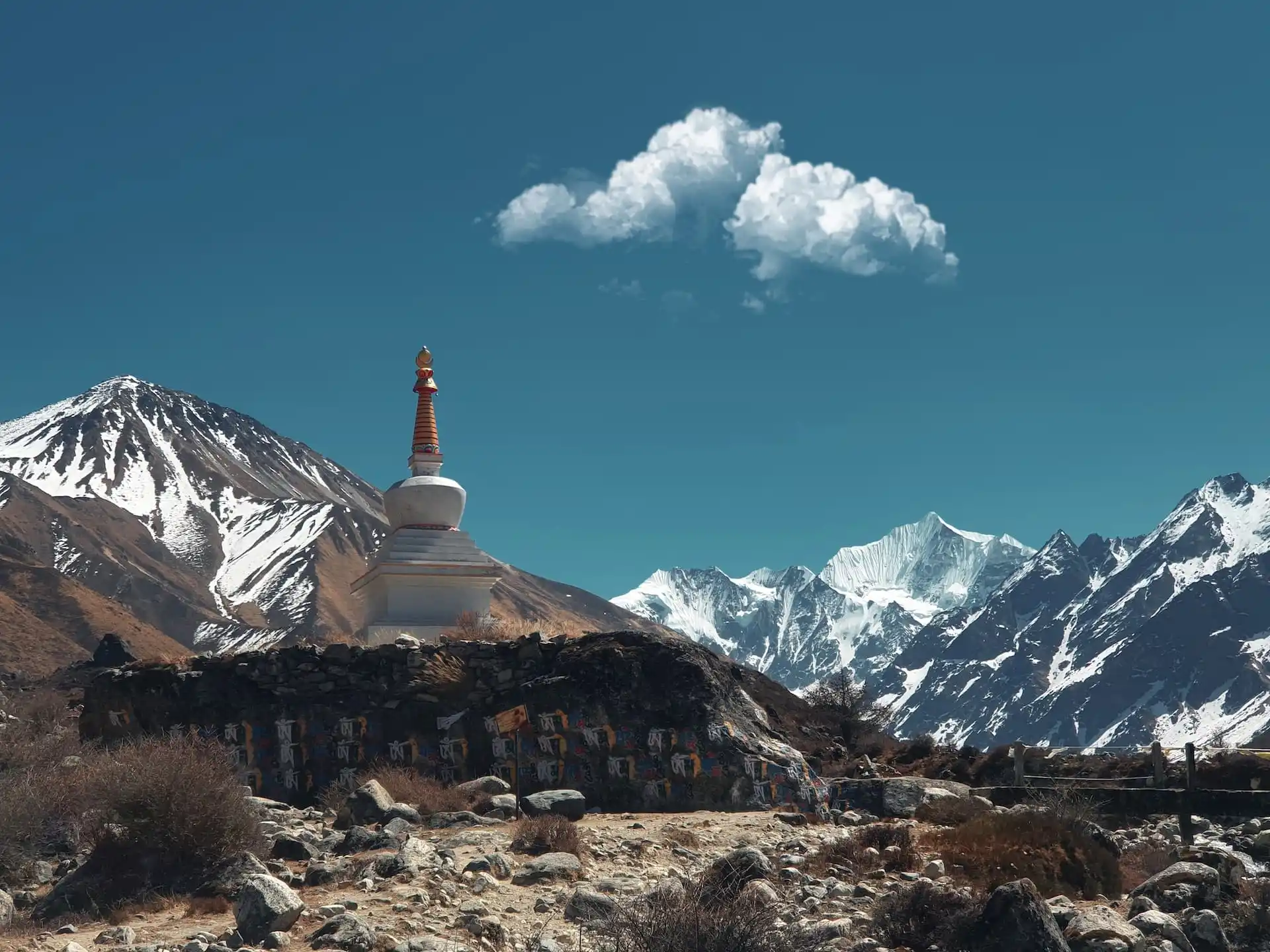
Planning to enter the land of glaciers and the Tamang culture? Before you lace up your hiking boots, make sure your Langtang Valley trek permit is sorted. You’ll need two main permits: the TIMS (Trekkers Information Management System) card and the Langtang National Park permit, which together cost around NPR 4,000 (about USD 30) per person.
Both permits for Langtang valley routes are checked more than once on the trail, and the Langtang valley trek permit fees are the same whether you walk for five days or fifteen. There are only ever two permits for Langtang itself, and a third is added only if you enter the Langtang region from the Helambu side. What that paperwork buys you is legal access to the Langtang trekking trail from Syabrubesi to Kyanjin Gompa and the views of Langtang Lirung that come with it.
These permits aren’t just formalities; they’re essential for your safety and for protecting the natural beauty of the Langtang region. They also help authorities monitor the safety practices and respond quickly in case of emergencies. The government uses them to regulate tourism, support local communities, and fund conservation efforts. Keep on reading it, we’ll explain everything clearly below:
Langtang Valley Trek Permit Cost at a Glance
| Permit | Foreign nationals | SAARC nationals | Where to get it |
| Langtang National Park Entry Permit | NPR 3,000 | NPR 1,500 | Nepal Tourism Board, Kathmandu, or the Dhunche checkpoint |
| TIMS Card | NPR 1,000 (blue) | NPR 600 (pink) | TAAN office, Kathmandu or Pokhara |
| Shivapuri Nagarjun Entry Permit (Helambu start or finish only) | NPR 500 | NPR 100 | Park gate at Budhanilkantha |
| Standard Syabrubesi route total | NPR 4,000 (about USD 30) | NPR 2,100 | Filed by your trekking agency |
Nepali citizens pay NPR 100 for the park entry permit and NPR 50 at Shivapuri Nagarjun. Neither the park permit nor the TIMS card can be bought online, and neither is issued to a trekker without a licensed guide. Both are valid for one month from the date of issue.
The Langtang National Park permit costs NPR 3,000 for a foreign trekker and the TIMS card NPR 1,000, so the entry permit and the TIMS card together come to NPR 4,000. That is the entire cost of Langtang paperwork on the standard route, and it is a small line next to the rest of the trek cost. Nothing about the permit and the TIMS card scales with the number of nights you spend inside the national park, so a longer itinerary does not raise the fee.
Two Permits Required for the Langtang Valley Trek
The Langtang Valley trek requires a TIMS Card and a Langtang National Park Entry Permit. Those are the two permits required for the Langtang trek in every version of it that is sold. If you’re starting from the Helambu side, you will need to cover Shivapuri National Park as well. A permit must be carried in its original printed form rather than as a photo on a phone, and a permit is required for every trekker in the party. Let’s break down each of these things clearly.
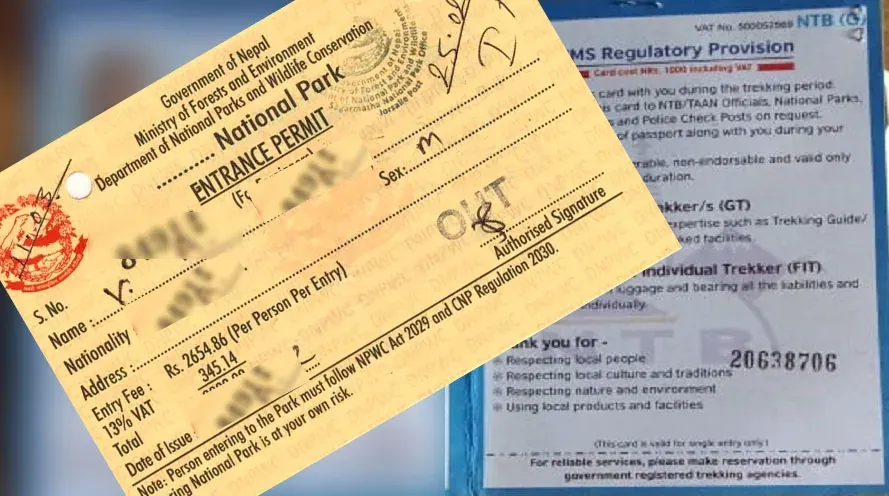
TIMS (Trekkers Information Management System) Card
The TIMS Card is one of the most important documents you’ll need before heading into the Langtang region of Nepal. There are two types of TIMS cards: blue for those in organized groups, and pink for SAARC nationals. Previously, there was a green card for individual trekkers too, but it was discontinued in April 2023 following the ban on solo trekking. The rule was introduced by the Nepal Tourism Board and TAAN (Trekker’s Agency Association of Nepal) for trekkers’ safety and proper tracking.
One can easily get a TIMS card and other permits from offices in Kathmandu, Pokhara, or the TAAN office. However, it doesn’t mean that you, as an individual trekker, can simply walk in and get a TIMS card for yourself. The process now requires you to work with a trekking agency, which will handle the application and provide you with a guide. Below is a table showing the cost breakdown.
| TIMS Card Type | Price (USD) | Price (NPR) |
| Blue Card (Organized Group Trekkers) | ~10 | 1,000 |
| Pink Card (SAARC Country Trekkers) | ~6 | 600 |
Purpose of the TIMS Card
- Helps track trekkers for safety and emergency support.
- Maintain a central database of trekking activity in Nepal.
- Regulates solo and group trekking for better management.
- Supports sustainable tourism.
- Helps prevent illegal trekking and ensures the welfare of the guides and porters.
Langtang National Park Entry Permits
The Langtang National Park Entry Permit is your official pass to enter one of the oldest and most beautiful protected areas in Nepal, Langtang National Park. Established in the early 1990s, this permit makes sure that you’re part of a sustainable trekking system. It can be obtained easily in Kathmandu, at the park entry checkpoint in Dhunche, or from the Nepal Tourism Board office.
The cost of the Langtang National Park Entry Permit varies by nationality. For foreign trekkers, the Langtang National Park entry permit costs NPR 3,000 (approximately USD 27–30) including 13% VAT as per government regulations. SAARC nationals pay NPR 1,500 (approximately USD 15).
| Nationality | Price (USD) | Price (NPR) |
| Nepali Citizens | ~0.75 | 100 |
| SAARC Nationals | ~15 | 1,500 |
| Foreign Nationals | ~27-30 | 3,000 |
Purpose of the Langtang NP Entry Permits
- Supports the protection of endangered wildlife and alpine ecosystems.
- Helps in trail maintenance, park infrastructure, and waste management.
- Regulates visitor entry to reduce environmental impact.
- Preserves cultural heritage sites.
- Confirms tourism is controlled inside a protected conservation area.
Shivapuri Nagarjun National Park Entry Fee
While most Langtang trek begins from Syabrubesi, some adventurous people choose the alternative route through the Helambu trail. It starts from the edge of Kathmandu at Shivapuri National Park. If you’re taking this route, you’ll need to get the Shivapuri Nagarjuna National Park Entry Permit before entering the protected area.
You can obtain this permit at the park entrance gate in Budhanilkantha, just outside Kathmandu. The cost is fairly low, around USD 4-5, depending on nationality, and including government tax. Here is a table that shows the total cost distribution.
| Nationality | Price (USD) | Price (NPR) |
| Nepali Citizens | ~0.3 | 50 |
| SAARC Nationals | ~1 | 100 |
| Foreign Nationals | ~4-5 | 500 |
Where and How to Get the Permit for a Trek in the Langtang Region
There are three counters that issue this paperwork, and which one applies to you depends on how you booked. Most trekkers never see any of them: the agency files both applications in Kathmandu against a scan of your passport, and the papers are handed to you the evening before you start your trek.
You can get the Langtang paperwork from any of the three, and none of it takes longer than a morning.
- Nepal Tourism Board, Kathmandu. Both documents are issued here, and this is where an agency goes to obtain a TIMS card and the park pass in the same visit.
- Dhunche. The entry point of Langtang National Park at Dhunche can issue the park entry permit on the day, which is the fallback for a late booking. You cannot obtain the TIMS card there.
- Budhanilkantha park gate. Relevant only if your route begins inside Shivapuri Nagarjun, in which case you buy the Shivapuri National Park entry permit as you walk in.
Timing matters more than the cost of permits. Both documents are dated from the day of issue, so getting the Langtang paperwork weeks before you fly wastes part of the month it is valid for. One working day in Kathmandu is enough to get the permit sorted. Checkpoints begin before the starting point of the Langtang trek, because Dhunche sits on the road above Syabrubesi, so the Langtang valley permit is inspected before you take a single step on the trail.
Which Permit Covers Which Langtang Trek Route
One question comes up constantly: whether Gosaikunda, the Tamang Heritage Trail and the Langtang Valley each need their own paperwork. They do not. All three trails sit inside the same protected area, so one Langtang National Park Entry Permit plus one TIMS card covers all of them. The permits for the Langtang valley are, in practice, the permits for the Langtang region as a whole: the TIMS and Langtang National Park pair works for a trek in Langtang whichever trail you choose. What changes is whether your route touches Shivapuri Nagarjun National Park at the Kathmandu end.
| Route | Park entry permit | TIMS card | Shivapuri Nagarjun permit |
| Langtang Valley (Syabrubesi to Kyanjin Gompa) | Required | Required | Not needed |
| Tamang Heritage Trail | Required | Required | Not needed |
| Gosaikunda via Dhunche or Thulo Syabru | Required | Required | Not needed |
| Gosaikunda to Helambu via Lauribina La | Required | Required | Required |
The permit is issued per continuous entry rather than per trail, so combining the Langtang Valley with Gosaikunda on one trip does not double the cost. A Langtang region trek that strings several trails together is priced the same way.
Gosaikunda Trek and Langtang Gosaikunda Permits
The Langtang Gosaikunda trek is sold as a single itinerary for exactly that reason: one park pass carries you from Syabrubesi to the lakes and back, and no separate Gosaikunda trek permit exists. Only a Helambu trek finish, where you leave the park at the Kathmandu end, adds the extra fee.
How the Permits Fit Into the Total Langtang Trek Cost
At NPR 4,000 the permits are the smallest line on the bill. Transport, food, lodging and the guide account for almost all of the trek cost, and the full breakdown of those is in our Langtang trek route guide. If you want to also explore the Langtang region beyond the valley floor, the wider list is in major attractions in the Langtang region. If you want the full walking plan those permits buy you, our Langtang trek route guide covers the itinerary, altitudes and daily stages.
Documents Needed to Apply for Langtang Valley Trek Permits
Before trekking in the Langtang region, you must complete two permit applications: national park permits and TIMS. Both applications require basic personal documents for keeping records and safety management. Here are the documents that are required:
- A valid passport copy (clear photo page copy)
- Two recent passport-size photos that are color printed.
- Personal details: full name, date of birth, gender, nationality, passport number, and contact info
- Itinerary information: Intended route, trekking duration, starting and ending points (for TIMS)
- Guide or porter details for the TIMS application, which is required for foreign trekkers since March 2023, including the guide’s name and registration if applicable.
Note: For trekking regions other than Langtang, such as the Annapurna Circuit trek or Manaslu Circuit trek, where a TIMS card is also required, the same set of documents is needed during permit application.
Rules and Regulations You Should Know about Langtang Valley Trek Permits
Before starting your trek in the Langtang region, it’s essential to understand the permit-related rules. Here are some of the rules that you need to know:
- Both the TIMS card and Langtang National Park Entry Permit are usually valid for one month from the date of issue. This means you are allowed to stay in the region for up to 30 days.
- Official checkpoints are located at Dhunche, Syabrubesi, and Ghodatabela along the trek. Permits and passports may be checked, and in some cases, backpack inspections are done by Nepal Army personnel.
- Carry original permits and a passport throughout the trek. You may be asked to show them at multiple points along the trail.
- Starting February 17, 2025, TAAN and Langtang trekking rules say that all trekkers (both foreign and Nepali) must be accompanied by a licensed trekking guide. You cannot get permits without them.
- Solo trekking in the Langtang region is no longer allowed. So get ready with a small group or at least two companies, along with a guide.
Trekking is not an easy task, and the complexities of these rules, regulations, and permits may hinder your overall experience. At Himalayan360, we have supportive teams and experienced guides who will make your trip hasslefree. If you are planning for Langtang Valley Trek then choose a good travel package of your choice to get full fun in your experience. We are just one click away from you, message us anytime, it’ll be out pleasure to help you in ways we possibly can.
Penalties If You Trek Without a Permit in Langtang
Trekking in the Langtang Valley without the required permits can result in a fine of up to NPR 12,000 (around USD 90-100) or even being turned back from the trail. According to the regulations set by the Department of National Park and Wildlife Conservation (DNPWC) and TAAN, this penalty applies to anyone caught without either the TIMS Card or the Langtang National Park Entry permit. In recent years, multiple checkpoints have increased inspections. Park authorities and even the Nepal Army frequently check permits, and there have been cases of trekkers being fined on the spot or denied further entry.
Since then, enforcement has become stricter. While some still try to enter in an informal way, it is strongly discouraged. Apart from financial penalties, you also risk trip delays, forced returns, and complications with local authorities. Starting the Langtang Valley trek without the paperwork is therefore a false economy, and carrying permits during the trek costs you nothing but pocket space. These rules just don’t apply to the Langtang trek; they are enforced on other popular routes as well, like Annapurna Base Camp and the Everest Base Camp trek. To avoid unnecessary trouble, always secure your permits in advance and carry them with you throughout the journey.
8 Days
Langtang Valley Trek
$449
5.0(10 reviews)
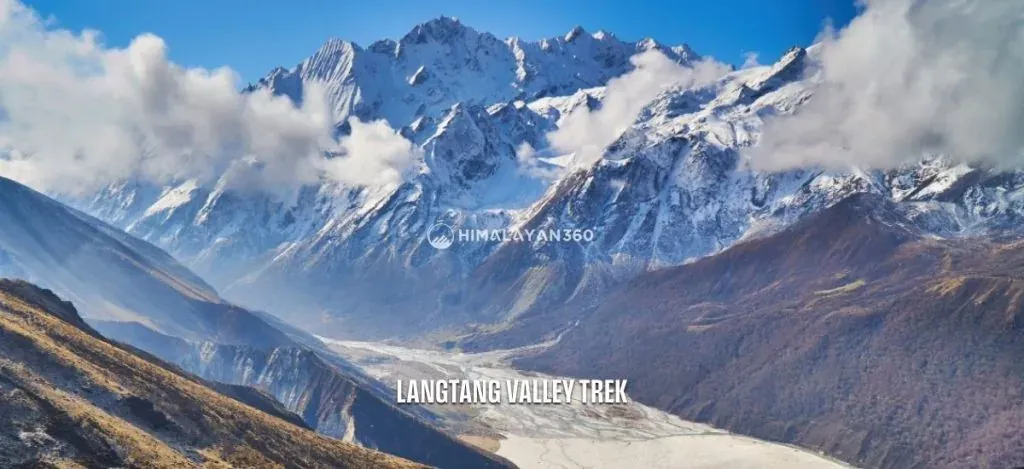
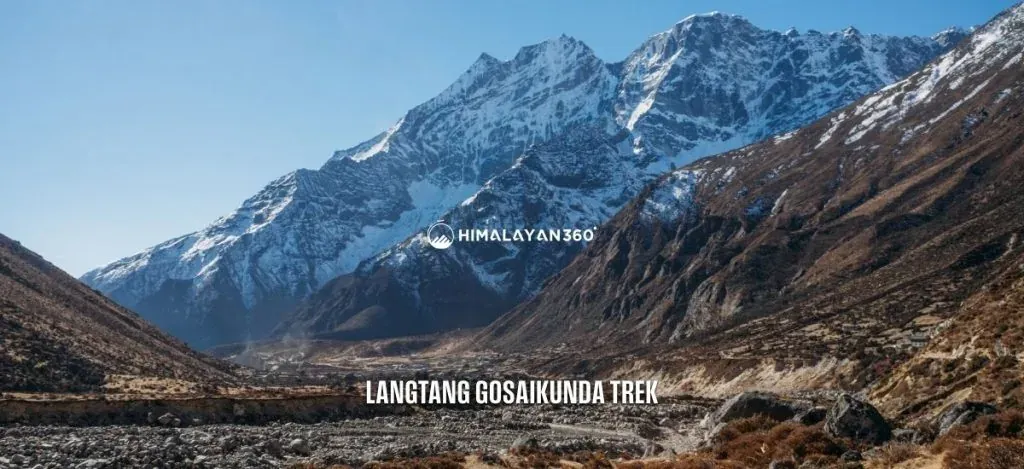
Have you ever dreamed of trekking in the Himalayas but worried that overcrowded trails will ruin the adventure? The 8-days Langtang Valley Trek is the perfect solution to this dilemma. Located just north of Kathmandu, the trek can be reached within a 6-hour drive, with no flights required. Fully rebuilt after 2015 earthquake and safer than ever, this trek offers a Tamang Himalayan experience rather than a Sherpa-focused one, while directly supporting the economic growth of the local community. This trek is fully focused on nature. You will cross the Langtang Khola and Bhote Koshi rivers using simple suspension bridges made of steel or wood, with minimal modern modification You can also see Langtang Lirung (7,234M), Dorje Lakpa (6,966M), Gangchempo (6,388M), Yala Peak (5,500M), and many other snow-covered mountains throughout the journey. The trekking route also connects with high Himalayan passes used by local traders and yak herders for many years. Villages in the Langtang valley still follow old Buddhist traditions. During festivals like Sonam Lhosar (Jan–Feb) and Buddha Jayanti (May), local people gather for prayers, dancing, singing, and family celebrations. Trekkers can see yak farming, the cheese-making process, and traditional stone and clay houses that portray the lifestyle of the high Himalayas. The route from Syabrubesi to Lama Hotel and Langtang Village up to Kyanjin Gompa lies inside Langtang National Park, the first Himalayan national park of Nepal, established in 1976. The park covers around 1,710 sq km and protects forests, rivers, glaciers, and alpine grasslands. The region is inhabited by red pandas, Himalayan black bears, musk deer, snow leopards, and over 250 species of birds including Himalayan Monal (the national bird of Nepal). If you want capture mountain views without going on a long expedition, the Langtang Valley Trek is one of the best choices in Nepal. Pack your boots, charge your camera, and get ready to walk in one of the most loved Himalayan valleys.
13 Days
Langtang Gosainkunda Trek
$659
5.0(11 reviews)
The Langtang Gosaikunda Trek offers an all-in-one experience through the village of Langtang to the sacred Gosaikunda Lake. Starting with a drive from Kathmandu to Syaprubesi, the trek is near Kathmandu, just 115km away within the Langtang National Park of Rasuwa district. It is ideal for those who prefer to experience mid-hills and high altitudes. It is also suitable for first-time trekkers as it only reaches up to 4,610 meters. The trek offers everything from deep gorges, pine and rhododendron forests, rocky terrain to yak pastures, monasteries, terraced farms, rural villages, Buddhist culture, and icy glaciers. The prominent highlight of this journey is a panorama of the Langtang range. The peaks included are Mount Dorje Lakpa, Langshisha Ri, Kyunga Ri, Changbu, Gangchenpo, Yansa Tsenji, and the Langtang Lirung. In 2015, the earthquake triggered an avalanche, causing massive loss to this valley. Many people died, and the trekking route was also closed until 2017. Hence, it is less commercialized. The community worked hard during these years and rebuilt the valley, keeping the essence of centuries-old monasteries. Now, in the present, it stands as a beautiful and strong valley yet to be discovered.
The History of the Trekking Permit Fee in Nepal
Nepal first introduced the trekking permit system in the early 1970s when the Himalayas started gaining popularity. The government wanted to control the growing number of foreign trekkers who were going to remote and culturally protected areas. Permits helped monitor tourist activities, control entry into restricted regions, and make sure that travelers respected local customs and boundaries. As trekking became more popular in regions like Langtang, Everest and Annapurna, the system encouraged local communities in tourism management and trekker safety.
The Langtang trek permit as it exists today, a park pass plus a TIMS card, is a product of that history rather than a single decision. A major decision came in 2008, with the launch of the TIMS Card by the Nepal Tourism Board and TAAN (Trekker’s Agency Association of Nepal) for tracking trekkers and reducing illegal entries. In 2023, a new rule was enforced, making licensed guides mandatory for foreign trekkers in most regions except Langtang, which was later done in 2025 to focus on safety and organized trekking.
Conclusion: Plan Ahead, Trek Responsibly
A trek to the Langtang Valley is an unforgettable adventure, but it starts with the right paperwork. No other trek in Nepal at this altitude is this cheap to enter, and the fees are what make your trek possible for the villages along the trail. Permits like the TIMS card and the Langtang National Park permit are more than just entry passes. They provide safety, help in managing the trails, and support local communities. Carrying valid permits also keeps you on the right side of the law and avoids unwanted fines or delays.
The planning of the trek is simplest when the permits, the guide and the transport are booked together. If you book your trek as a Langtang Valley trek package, the agency that supplies the guide for the Langtang Valley also files the applications, and the only thing left for you to do is bring the passport. That is also the shortest route to reliable information on the Langtang rules, which have changed twice since 2023.
By planning ahead and trekking responsibly, you’re not just enjoying natural beauty, you’re helping to protect it. Every permit fee contributes to conservation and sustainable tourism. So, get your permits, follow the rules, respect the environment, and enjoy the journey in the right way.
 Trek
Trek By air
 Pilgrimage
 Festivals
 Wildlife
 Luxury
 Yoga
Yoga Food
Food Heritage