
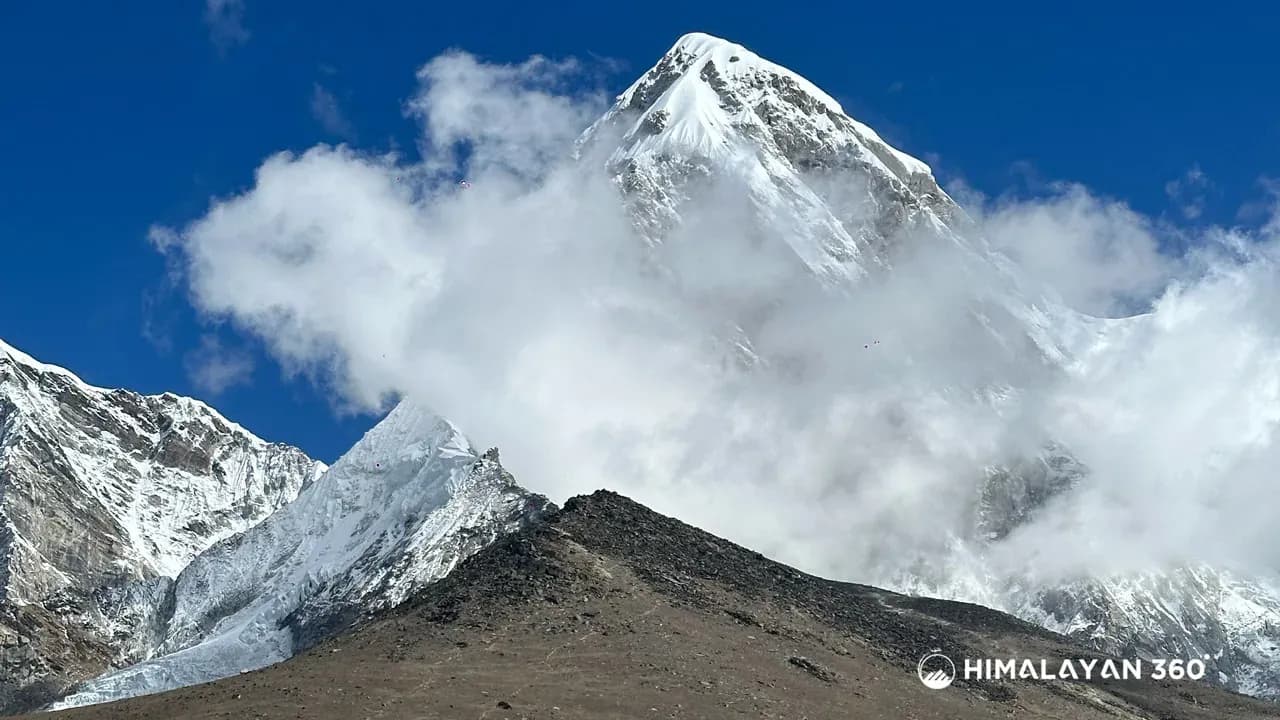
Gorakshep (5,164 m) is the last village on the Everest Base Camp trail and the highest place most trekkers sleep on the route. It lies in the Solukhumbu district of northeast Nepal, in the Khumbu region, one stage above Lobuche. Everest Base Camp is about 3 km further on, a 2 to 3 hour walk, and the climb to Kala Patthar (5,545 m) starts from the village itself.
They often say Gorakshep is the place where your legs ask for rest, but your heart pushes you forward. Long ago it was only a yak grazing area. This is the last settlement of any kind on the route, and it now has a handful of teahouses serving food, beds and shelter at a height where extreme cold and altitude fatigue slow every step. Trekkers arrive tired, sleep badly, and leave again before dawn, which is why what happens in this small place matters more than its size suggests.
| Altitude | 5,164 m |
| Location | Solukhumbu district, Khumbu region, northeast Nepal |
| Previous stop on the trail | Lobuche |
| To Everest Base Camp | About 3 km, 2 to 3 hours each way |
| To Kala Patthar | Starts from the village, about 3 hours up to 5,545 m |
| Accommodation | A small number of basic teahouses and lodges |
| Historic role | The original Everest Base Camp in the 1950s |
Significance of Gorakshep in Trekking and Climbing Everest
Gorakashep holds an important place in the history of Everest. It was once the original Everest Base Camp in the 1950s before expeditions moved closer to the Khumbu Icefall. The flat land, formed from an old glacial lake known as Gorakshep Lake, made it a suitable place to prepare for early climbing teams. Even today, it is remembered as a historic platform for some of the first successful climbs of Everest.
That move is the reason the geography confuses people. The original base camp for Everest expeditions stood on this flat ground, and the camp was moved closer to the icefall so that climbers started their route from the glacier itself rather than from a village stage below it. Once the base camp moved, the current Everest Base Camp became a seasonal tent city on the moraine with no permanent buildings, while Gorakshep kept the teahouses. The current base camp has no lodges at all. What you sleep in is the original base camp. What you walk to is the current one.
For trekkers, Gorakshep is the last place with beds before EBC and also a key acclimatization stop for people going to the Everest Three High Pass trek or the base camp itself. Even experienced climbers use Gorakshep as a checkpoint to monitor altitude sickness symptoms like headache, nausea, and vomiting. Its location on the flat area makes it easier to rest, eat, and regain strength before the final ascent. This makes Gorakshep both a practical and essential part of the Everest journey.
Where Is Gorakshep and How Do You Reach Gorakshep?
Gorakshep is located in the Solukhumbu district of Nepal, in the upper Khumbu, and there is no road, airstrip or shortcut to it. Gorakshep village is a small huddle of buildings on open ground, and the village is a small settlement in the truest sense: a line of lodges, a yak pen and nothing else. To reach Gorakshep you walk, and everyone who arrives has walked in from Lukla on the trail to Everest Base Camp, which means a week or more of trekking in Nepal with the acclimatization stops that the altitude demands. Trekking to Gorakshep is not a destination in itself; the village of Gorakshep is a stage, and it exists because the trek to Everest Base Camp needs one more roof after Lobuche.
The Geography of Gorakshep
The geography of Gorakshep is simple once you stand in it: a flat sandy basin, the bed of the old Gorakshep Lake, pinched between the Khumbu Glacier on one side and the slopes of Kala Patthar and Pumori on the other. That flat ground is the only reason a settlement exists this high.
Lobuche to Gorakshep, the Last Stage In
The Lobuche to Gorakshep stage is the last one on the way in. Leaving Lobuche at 4,910 m, the trek from Lobuche to Gorakshep follows the lateral moraine of the Khumbu Glacier, passes the pyramid signpost and Thangma Riju, then rises and drops over loose moraine before the village appears on its pan of sand. It is short in distance and long in effort, because every small climb costs something at this height. Most groups arrive around late morning and leave their packs at a teahouse before going on.
That timing is deliberate. Walking to Gorakshep and continuing on the way to Everest Base Camp the same afternoon is the standard pattern on the Everest Base Camp trek route, because this village holds the only beds close enough to make it possible. It is the last stop before Everest Base Camp itself, the only part of the Everest Base Camp route with a roof this high, which is why it works as the gateway to Everest Base Camp rather than as a place anyone would choose to linger. Anyone walking the Everest Base Camp route stops here, and the stop before reaching Everest Base Camp is always this one. Some trekkers skip the walk out at the end and fly down instead, either on an Everest Base Camp trek with helicopter return or a straight Everest Base Camp helicopter tour. Neither removes the need to acclimatize on the way up.
Staying in Gorakshep: Accommodation and Facilities
Gorakshep is a small village of a handful of teahouses, and that is the whole of it. There is no shop worth the name, no bank, no pharmacy and no health post. The facilities in Gorakshep are whatever the lodge owners carry up or generate on site, which is why everything costs more and works less well than it did two stages below. Amenities at Gorakshep include beds, blankets, cooked food, a heated dining room in the evening and paid charging, and that is the end of the list. Nothing else is available at any price.
Staying in Gorakshep is therefore a matter of one night done well rather than a night enjoyed. The teahouses in Gorakshep provide a bed, blankets, a stove in the dining room and hot food, and the tea houses in Gorakshep are also where the drying, charging and eating all happen because the rooms themselves are unheated. There is no luxury Everest Base Camp trek option at this height. Whatever grade of lodge you booked lower down, the lodges in Gorakshep give everyone the same plywood room, and the ones who sleep best are the ones who got in early and claimed a spot near the dining stove for the evening.
Gorak shep has a small number of teahouses and lodges to serve trekkers. Rooms are basic but clean, with wooden beds and warm blankets. Most rooms can fit 2 to 3 people. Some lodges have small windows, while others are open to the cold Himalayan air. Hot showers are limited and usually available for USD 2-3. Electricity is available in most teahouses, but it may come and go depending on the weather. A few lodges provide Wi-Fi, but it is slow and not always reliable.
Meals at Gorak shep are simple and nutritious. Dal Bhat, noodles, soups, and fried rice are common here. Tea, coffee, and soft drinks are available throughout the day. Prices are slightly higher than in lower altitude villages like Lukla or Namche Bazaar, usually around USD 1-2, because of the remote location. Overall, the quality of rooms, food, and facilities is basic but sufficient for rest and energy recovery. Food and lodging here are much the same as everywhere else on the route, giving trekkers a consistent experience on the trail.
Two things people ask about before they arrive. Phone network in Gorakshep is patchy and unreliable, and paid teahouse Wi-Fi is slow enough that messages get through and little else, so tell people at home not to expect a call from the highest night of the trek. And there are no medical facilities in Gorakshep at all: no clinic, no doctor and no pharmacy. The nearest permanent aid post along the Everest Base Camp trail is well below at Pheriche, which is one more reason the correct answer to worsening symptoms up here is to walk down rather than to wait.
The weather in Gorakshep is cold in every season. The village sits above the treeline on open ground beside a glacier, so nights are hard frosts even in spring and autumn, and afternoon wind picks up off the moraine most days. Bring everything you own into the room at night, including water bottles and boot liners, and expect to sleep in your down jacket rather than on top of it.
Altitude Sickness in Gorakshep and Sleeping at 5,164 m
Gorakshep is the highest night of the Everest Base Camp trek, and that single fact shapes the whole stop. Altitude sickness in Gorakshep is not a rare event; it is the normal reason people turn round here, and it is the one thing worth planning for before you spend the night in Gorakshep. Trekkers arrive from Lobuche already tired, walk along the Everest Base Camp trail to the camp and back the same afternoon, then try to sleep at 5,164 m before a pre-dawn start for Kala Patthar. Broken sleep, a dull headache and no appetite are common here and are not, by themselves, a reason to turn back.
What matters is the direction of travel. Symptoms that ease with rest and fluids are ordinary. Symptoms that are worse the next morning than they were the night before are not, and the correct response is to go down rather than up. Practical points for the night at Gorakshep:
- Tell your guide about every symptom, even one you think is trivial. Guides read the pattern across the group and have seen it before.
- Keep drinking. Cold and effort make it easy to under-drink at exactly the altitude where dehydration hurts most.
- Do not sleep higher than you feel. Nobody has to go up Kala Patthar. It is a view, not a summit, and it will still be there on another trip.
- Watch for the serious signs: breathlessness while sitting still, a wet cough, confusion, or an inability to walk in a straight line. These are emergencies and need immediate descent.
If you have not planned the acclimatization side of the trek yet, our guide to altitude sickness prevention covers the ascent rates, rest days and warning signs that decide whether Gorakshep is a good night or a bad one.
A High Viewpoint to Experience Mystical Mountains at Gorakshep
Gorakshep is the perfect spot to see some of the highest mountains in the world. From here, you can get a close view of the peaks that surround the Everest region. The flat area of the village makes it easier to spot mountains and plan short hikes to nearby viewpoints like Kala Patthar. The peaks seen from Gorakshep on a clear morning are as follows:
- Mount Everest (8,848M): The tallest mountain in the world, clearly visible from Gorakshep and nearby Kala Patthar.
- Lhotse (8,516M): The fourth-highest peak in the world, located just south of Everest
- Nuptse (7,861M): A well-known ridge near Everest, seen clearly from Gorakshep
- Pumori (7,161M): Located in the west of Everest, it is famous among climbers and trekkers for its sharp peak
- Lingtren (6,749M): A smaller peak near Nuptse, visible from the flat village area
- Khumbutse (6,636M): Lies on the border of Nepal and Tibet, north of Gorakshep
These mountains make Gorakshep an important base for trekkers who want to experience the Himalayas up close. The village offers easy access to these viewpoints without heavy climbing.
Things to Do Around Gorakshep
There are really only three things to do in Gorakshep, and all three are walks that start at the door. Most people discover Gorakshep in the same order: arrive, drop the pack, walk out to the camp, come back for the night. The peak above Gorakshep is Kala Patthar, a famous viewpoint for sunrise and close views of Everest; the glacier below it is the Khumbu, a massive ice flow; and the camp beyond it is Everest Base Camp, the main goal for most trekkers. Those major attractions around Gorakshep are the whole reason anyone sleeps at this altitude, and this is the last stop on the Everest Base Camp trail from which all three are reachable in a day. That is what makes Gorakshep the gateway to the final adventure.
Trekkers’ Favourite: Everest Base Camp
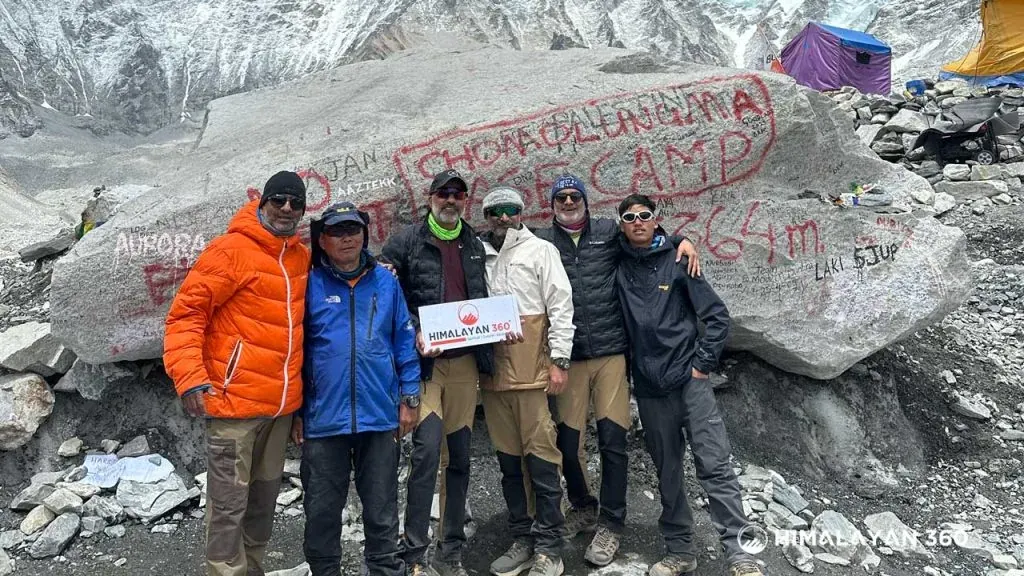
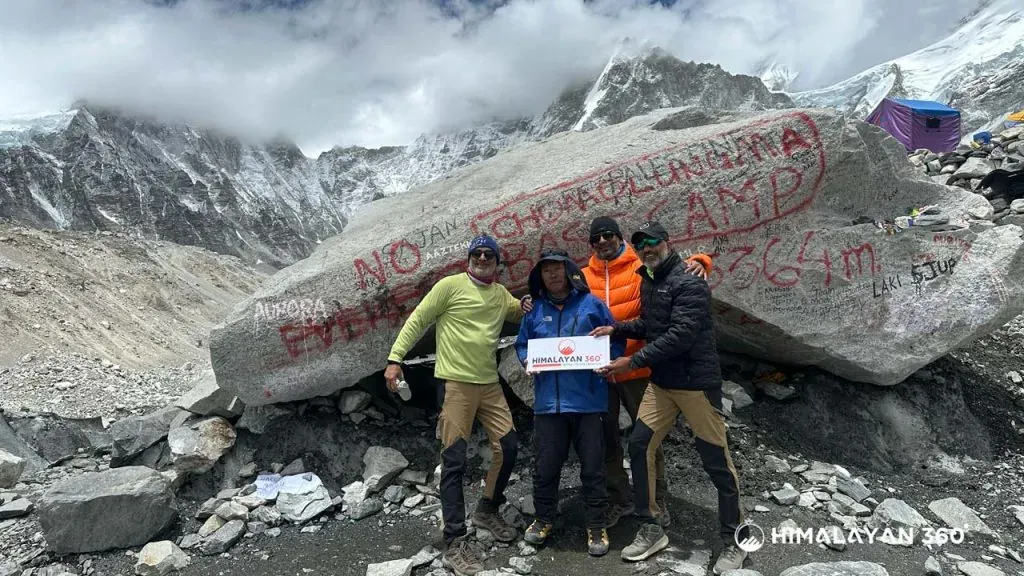
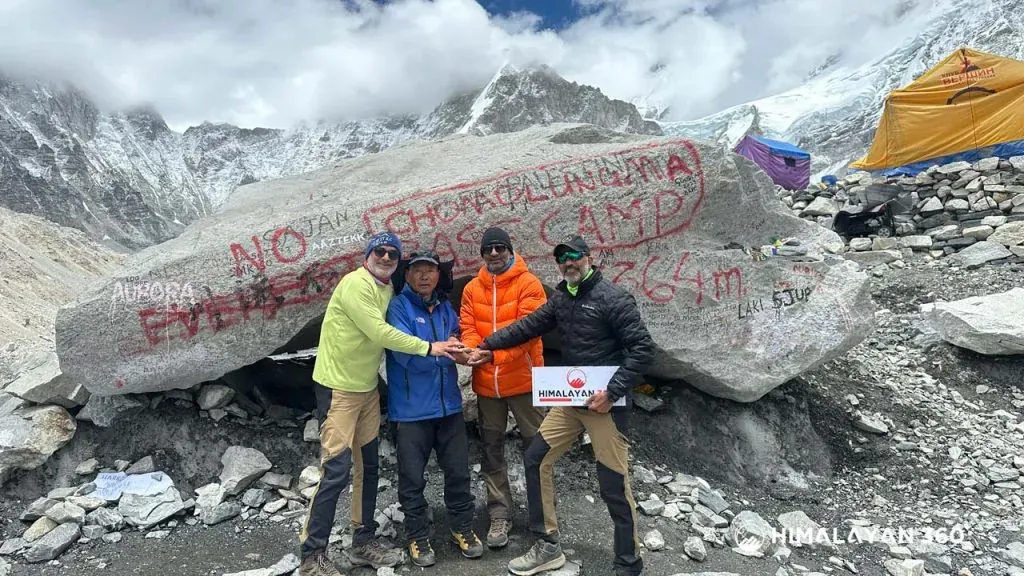
The distance from Gorakshep to EBC is about 3 km, and from Gorak Shep it takes 2 to 3 hours to cover it over rocky trails beside the Khumbu Glacier. Standing 3 km from Everest Base Camp with your pack already off is what the whole stage is for, and the walk back is the return to Gorakshep for the night. At 5,364M, this is the final point of the Everest Base Camp trek and the place where climbers prepare for their summit push. The walk is tough due to the high altitude, with oxygen present at only about 50% of that at sea level. Sherpa guides have been leading climbers here since the 1950s, when the camp became famous during the first Everest expedition.
A Memorable Photo Session at Kalapatthar
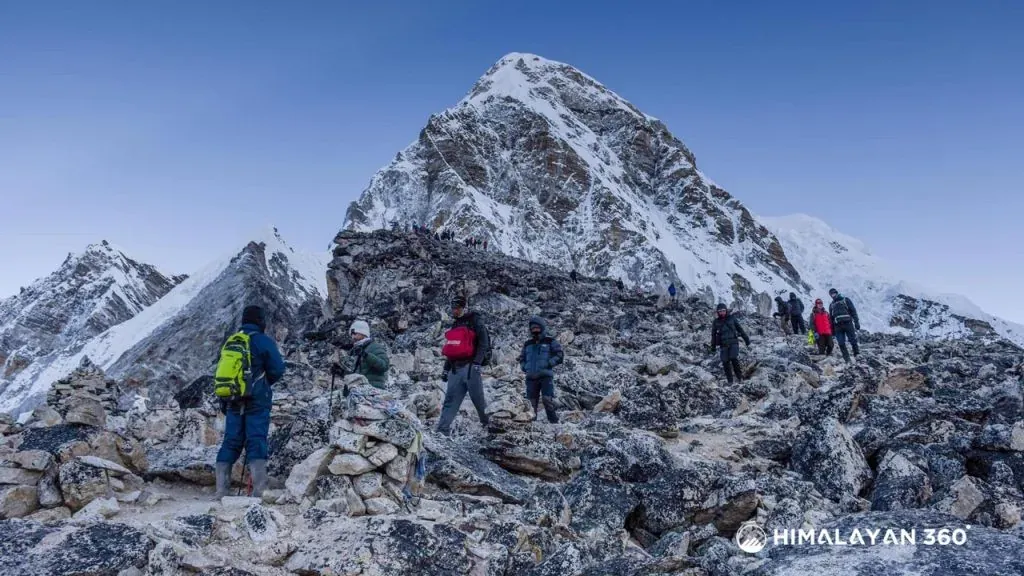
Kala Patthar, at an elevation of 5,545M, starts directly from Gorakshep and is often called the last stop for trekkers before heading back down. The climb usually takes about 3 hours uphill, and temperatures here can drop below -20°C in the mornings. This makes it one of the coldest points of the trek with very low temperatures. The attraction of Gorakshep that most people remember is this one rather than the base camp itself, because from the top of Kala Patthar Everest is finally in full view. The name Kala Patthar means “black rock” in Nepali, and it became popular when the trekkers in the 1960s and 70s found the best accessible point to see Everest up close.
Frozen Beauty at the Khumbu Glacier
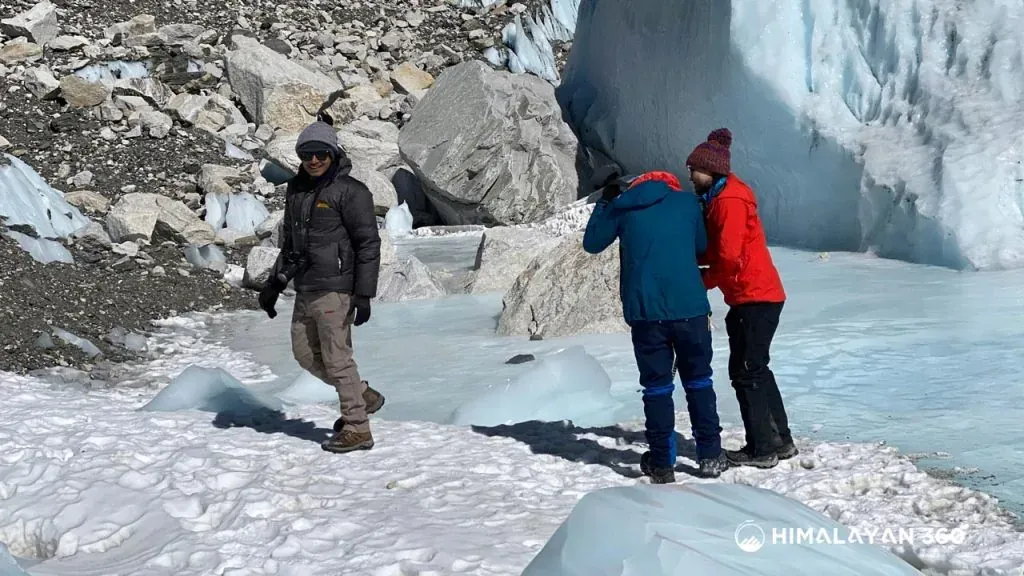
The Khumbu Glacier spreads more than 17KM from the side of Mount Everest, flowing down past Everest Base Camp. From Gorakshep village, trekkers walk along its rocky edges to reach the camp. The glacier is almost 600M thick in some sections and is the highest glacier in the world, with the elevations ranging from approximately 4,900M. The lower part of the glacier is famous for the Khumbu Icefall, one of the most dangerous sections for climbers. Standing at the foot of this glacier, you’ll encounter both the beauty and challenges of the Everest region.
Conclusion
Gorakshep is the final stop before Everest Base Camp is reached on foot, and Gorakshep is important for that reason alone. Gorakshep is also the start of the Kala Patthar climb, so the base camp experience and the best view of Everest both run through the same handful of lodges. People heading to Everest Base Camp come here to rest, acclimatize and gather strength, and every trek from Gorakshep to Everest Base Camp or Kala Patthar begins and ends here. From Gorakshep, Everest Base Camp, Kala Patthar, and the Khumbu Glacier are all within reach.
The village may be small, but it is an important gateway to the adventure of a lifetime.
Trips We Offer


14 Days
Everest Base Camp Trek
$1,260
5.0(2 reviews)
Everest Base Camp Trek is every trekker’s dream adventure. It takes you right to the foot of the world’s tallest mountain, Mount Everest (8,848.86 m) at 5,364 meters. One of the best experiences is the early morning hike to Kala Patthar (5,545 meters), where you get incredible views of Everest, Lhotse (8,516 m), Nuptse (7,861 m), and other giant peaks. The best time to do the EBC trek is during Spring (March-May) and Autumn (September-November). You’ll follow the classic route through the Khumbu Valley, starting with green forests and terraced hills. As you go higher, the landscape changes to rocky alpine paths and glaciers. Along the way, you’ll cross famous suspension bridges, see flowing rivers, and walk near the massive Khumbu Glacier. Important landmarks include Namche Bazaar (a lively mountain town), Tengboche Monastery (a peaceful place with amazing mountain views), and memorial sites that honor climbers from the past. You will also pass through traditional Sherpa villages, offering a unique opportunity to experience the Nepali Sherpa culture and spirituality. Your trek begins with a thrilling flight from Kathmandu or Manthali to Lukla (2,840 meters), where the trail starts. From Lukla, you’ll take an easy walk to Phakding and then head to Namche Bazaar. After that, you will move on to Tengboche, Dingboche, and Lobuche, where the terrain gets rougher. The final part of the trek is the exciting hike to Everest Base Camp and the sunrise hike to Kala Patthar. At the end of the trek, you will carry unforgettable memories and a trekking experience that will last a lifetime.
Everest Base Camp Trek With Helicopter Return


11 Days
Everest Base Camp Trek With Helicopter Return
$2,150
The Everest Base Camp Trek with Helicopter Return is the perfect way to experience the adventure and comfort in Nepal’s most iconic Everest trekking region while saving time and energy. Normally, the full round-trip to Everest Base Camp from Lukla takes about 12 days to 16 days, covering 130 kilometers. But with this Everest Base Camp Trek with a Helicopter Return Trip, you hike only about 65 kilometers to reach Everest Base Camp. Instead of trekking back, you take a helicopter from Gorak Shep to return to Kathmandu. This means you skip the long, tiring return walk without missing any of the important sights. The EBC Trek with Helicopter Return Route is more than just a shortcut and a luxury. It adds a new level of experience. From above the sky, you’ll see the Khumbu Glacier, mountain valleys, and the very trails you walked on. Flying over Mount Everest and nearby peaks gives you unforgettable aerial views that most trekkers don’t get. Not to mention, even with a shorter trek, you still get the full Everest experience. You will pass through Sagarmatha National Park, where you’ll spot wildlife and beautiful alpine landscapes. You’ll also visit lively Sherpa villages like Namche Bazaar and Tengboche, explore ancient monasteries, and enjoy warm local hospitality. In less time, you’ll stand at Everest Base Camp and take in the incredible Himalayas, ending your journey with a smooth and memorable helicopter flight home. This trek is a great choice for people who are short on time or want to reduce the physical stress of a full round-trip hike to EBC.
 Trek
Trek By air
 Pilgrimage
 Festivals
 Wildlife
 Luxury
 Yoga
Yoga Food
Food Heritage