
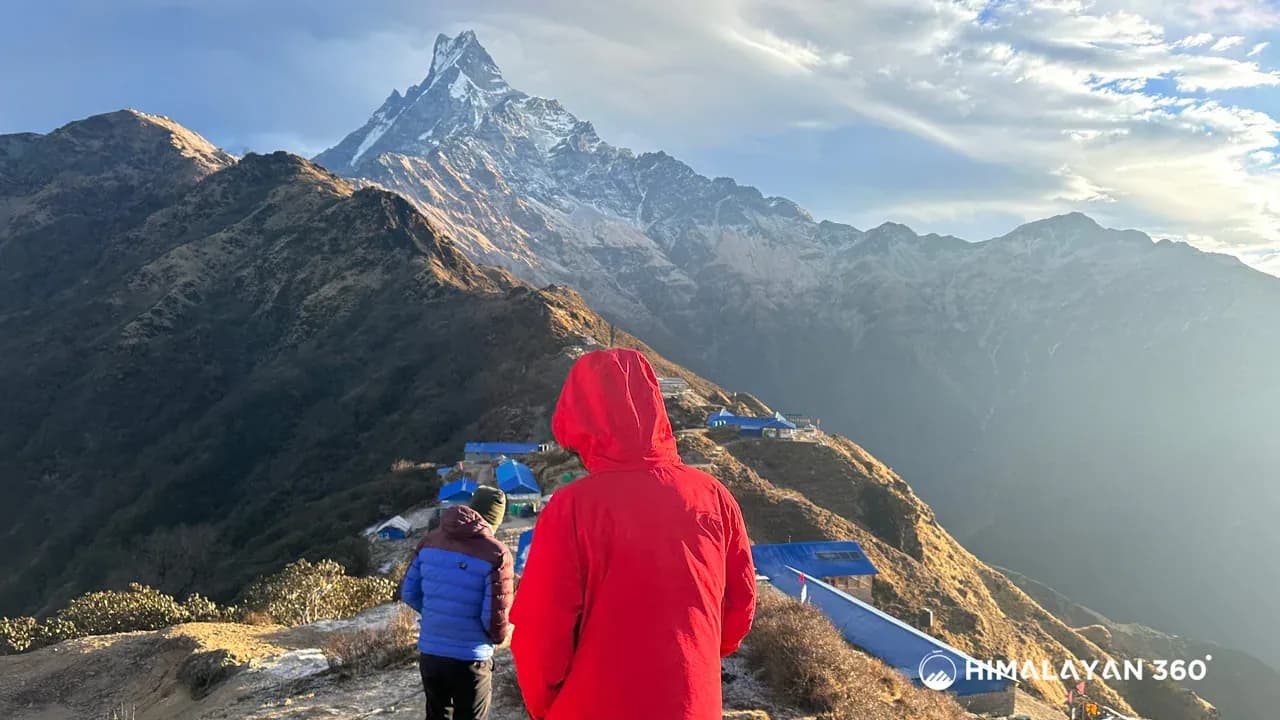
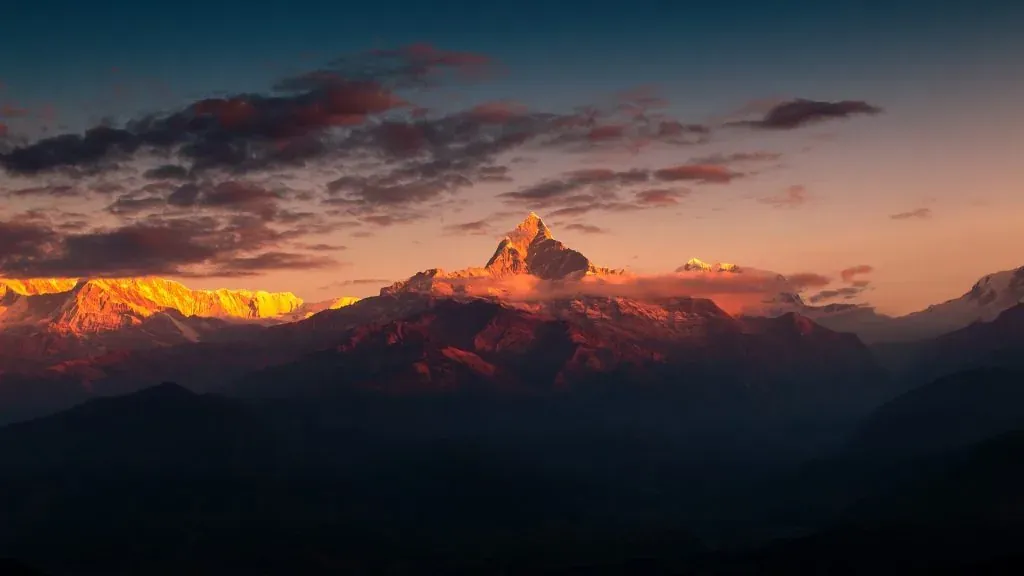
The Mardi Himal Trek is a moderate 4 to 7 day teahouse trek in Nepal's Annapurna region that climbs a single forested ridge to Mardi Himal Base Camp at 4,500M, directly beneath the south face of Machhapuchhre (Fishtail). On foot the route covers roughly 40KM, it starts at Kande, 30 to 60 minutes by road from Pokhara, and it needs two permits: an ACAP card and a TIMS card.
Opened to trekkers in 2012, Mardi Himal is the newest and least crowded of the main Annapurna routes, and the Mardi Himal trek is one of the few short walks in Nepal that puts you under an 8,000M massif in under a week. That is why it works as a short alternative to the Annapurna Base Camp and Everest Base Camp treks, and as a first trek from Pokhara. This guide covers the route with altitudes, every itinerary from 4 to 14 days, difficulty, cost, permits, the best months to walk it, and how it compares with Annapurna Base Camp.
Mardi Himal Trek at a Glance
| Highest point | Mardi Himal Base Camp, 4,500M (14,763FT) |
| Walking distance | Around 40KM, and 41 to 57KM depending on where you exit |
| Duration | 4 to 7 days on the trail, 5 to 10 days Kathmandu to Kathmandu |
| Difficulty | Moderate. 5 to 7 hours of walking a day |
| Start point | Kande, 30 to 60 minutes by road from Pokhara |
| Usual exit | Siding village, then jeep to Pokhara |
| Accommodation | Teahouses and lodges, homestays on the longer routes |
| Permits | ACAP (NPR 3,000) and TIMS card (NPR 2,000) |
| Best seasons | March to May and September to November |
| Peak height | Mardi Himal, 5,587M (18,330FT) |
| Opened to trekkers | 2012 |
The trek sits in the Annapurna region inside the Annapurna Conservation Area, east of the Annapurna Base Camp trail. It follows one ridge the whole way, so navigation is simple and every camp is a named stop rather than a village junction.
Mardi Himal Trek Route and Altitude Profile
The route gains around 2,400M from the trailhead to base camp, spread over three walking days on the standard schedule. Knowing the altitude of each stop matters more than knowing the village names, because the jump from Forest Camp to High Camp is where most people first feel the thin air.
| Stage | Altitude | Distance | Walking time |
| Kande to Pitam Deurali | 2,100M / 6,880FT | 6KM | 4 hours |
| Pitam Deurali to Forest Camp | 2,600M / 8,530FT | 6KM | 5 hours |
| Low Camp | About 3,000M | On the way to High Camp | |
| Forest Camp to High Camp | 3,600M / 11,811FT | 8.5KM | 6 hours |
| High Camp to Mardi Himal Base Camp and down to Badal Danda | 4,500M / 14,763FT, then 3,250M | 12.4KM | 7 hours |
| Badal Danda to Siding, jeep to Pokhara | Descent | 5.2KM | 4 hours |
The lower half of the ridge is dense rhododendron forest mixed with oak and bamboo, which is why Forest Camp and Low Camp feel closed in. In spring the rhododendron forest below Low Camp is in flower, and it is the reason many walkers rate the climb to reach Low Camp above the ridge itself. Above Low Camp the trees stop and the ridge opens out, so the last two days are exposed walking with Machhapuchhre filling the view ahead.
How Long Is the Trek and How Far Do You Walk
Four days is the shortest realistic version and seven days is the most common. Counting the Kathmandu to Pokhara legs at each end, most trekkers block out 5 to 10 days. Walking distance is 41 to 57KM, and the spread depends entirely on one decision: whether you retrace the same ridge back down to Kande, or drop off the side of it and walk out through Siding village.
Coming out through Siding is shorter on the trail and adds a jeep ride, and it is the route our 7 Days Mardi Himal Trek uses. If your leave is tight, the 5 Days Mardi Himal Trek drives in to Kande and out from Siding, which cuts two walking days without cutting base camp.
Mardi Himal Trek Itinerary Options
Five itineraries are given below, from a fast four-day push to a fourteen-day village-to-village route with homestays. All of them reach the same high point.
Mardi Himal Trek 4 Days Itinerary
- Day 1: Drive to Siding and trek to Low Camp
- Day 2: Trek to High Camp
- Day 3: Hike up to the viewpoint and trek back to Badal Danda
- Day 4: Trek back to Siding and drive to Pokhara
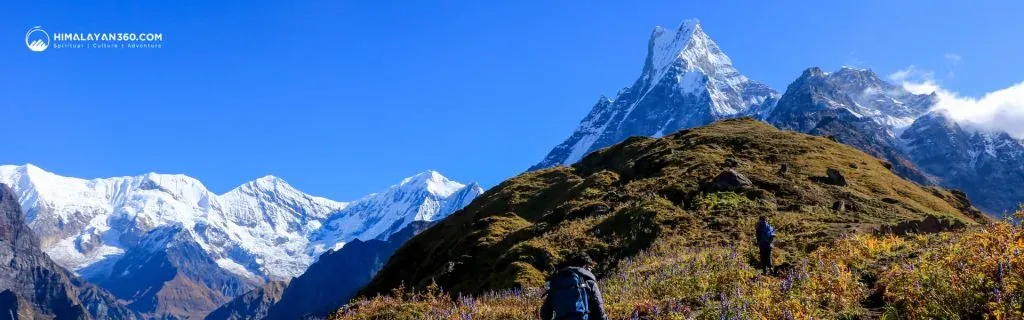
This version drives to the far end of the ridge and climbs it from the Siding side. It is the fastest way to stand at the viewpoint, and it is also the least forgiving on acclimatisation, so it suits trekkers who have been at altitude recently.
Mardi Himal Trek 5 Days Itinerary
- Day 1: Drive from Pokhara to Kande and trek to Deurali
- Day 2: Trek from Deurali to Rest Camp
- Day 3: Trek from Rest Camp to High Camp
- Day 4: Hike from High Camp to Mardi Himal Base Camp, back to High Camp, then down to Badal Danda
- Day 5: Trek down to Siding and drive back to Pokhara
Mardi Himal Trek 6 Days Itinerary
- Day 1: Drive from Pokhara to Kande and trek to Deurali
- Day 2: Trek from Deurali to Rest Camp
- Day 3: Trek from Rest Camp to High Camp
- Day 4: Hike from High Camp to Mardi Himal Base Camp and back to High Camp
- Day 5: Trek from High Camp to Siding homestay
- Day 6: Trek from Siding to Lumre and drive back to Pokhara
The extra night at High Camp is the difference between the five and six day plans. It gives you a second chance at a clear morning if base camp is clouded in on the first attempt.
Mardi Himal Trek 8 Days Itinerary
- Day 1: Drive from Pokhara to Kande and trek to Australian Camp
- Day 2: Trek from Australian Camp to Forest Camp
- Day 3: Trek from Forest Camp to High Camp
- Day 4: Hike from High Camp to Mardi Himal Base Camp and back to High Camp
- Day 5: Trek from High Camp to Siding homestay
- Day 6: Trek from Siding homestay to Ghalel homestay
- Day 7: Trek from Ghalel homestay to Lwang homestay
- Day 8: Drive back to Pokhara
Mardi Himal 14 Days Itinerary With Homestays
- Day 1: Arrival in Kathmandu
- Day 2: Drive to Pokhara
- Day 3: Drive to Kande and trek to Deurali
- Day 4: Trek to Rest Camp
- Day 5: Trek to High Camp
- Day 6: Morning hike to the viewpoint and trek back to Badal Danda
- Day 7: Trek to Siding homestay
- Day 8: Trek to Ghalel homestay
- Day 9: Trek to Lwang homestay
- Day 10: Trek to Dhampus homestay
- Day 11: Trek to Astam village eco-lodge
- Day 12: Drive to Pokhara
- Day 13: Drive to Kathmandu
- Day 14: Fly back home
The fourteen-day route spends more nights in Gurung and Magar homes than in teahouses. It is the version to pick if the villages matter to you as much as the ridge.
How Difficult Is the Mardi Himal Trek
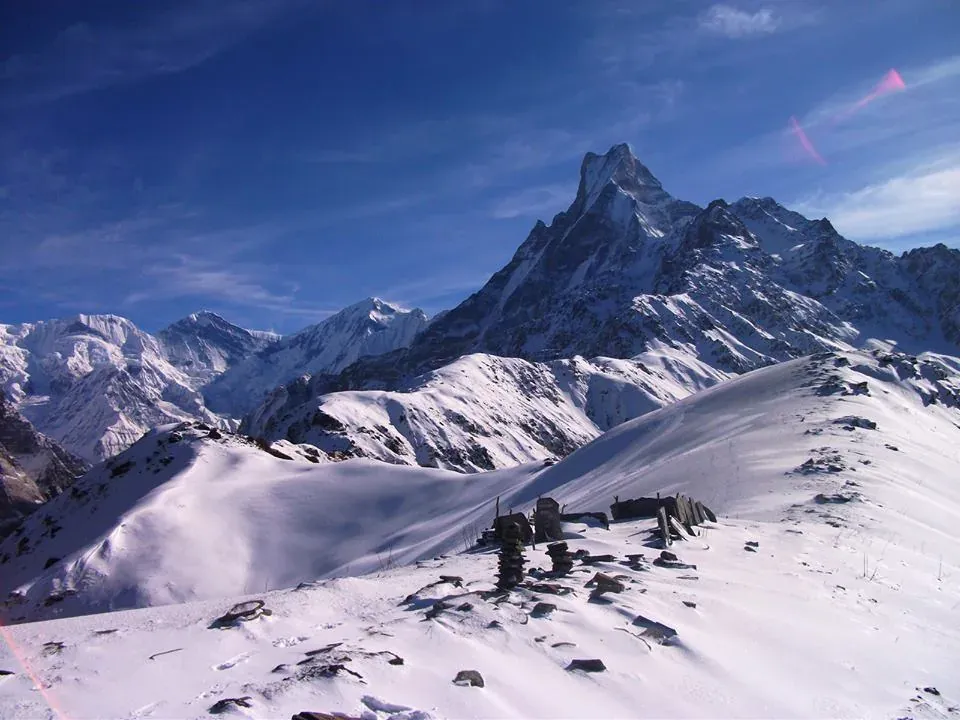
Mardi Himal is a moderate trek. There is no technical ground, no pass to cross and no rope work, but there are steep ascents and descents and you walk 5 to 7 hours a day on a trail that is rocky in its upper half. A month of cardio and hill walking beforehand is enough preparation for most people.
Three things make it harder than the day count suggests:
- The climb from Forest Camp to High Camp gains 1,000M in one day. This is the section where headaches start.
- The pre-dawn start above High Camp. Most trekkers leave in the dark to catch sunrise from the Mardi Himal viewpoint, which means the coldest and steepest walking of the trip happens before breakfast.
- The descent to Siding loses altitude fast on a knee-punishing trail. Poles help more here than anywhere else on the route.
- Base camp at 4,500M is higher than Annapurna Base Camp, which is at 4,130M, so the altitude risk is real even though the trek is short.
Walk the base camp push slowly, sleep at High Camp rather than pushing to base camp and back in one long block if you can avoid it, and treat any headache, nausea or dizziness as a reason to descend. Our guide to altitude sickness prevention covers the symptoms and the response in detail.
How Much Does the Mardi Himal Trek Cost: A Cost Breakdown
A Mardi Himal trek costs between USD 150 and USD 1,000 per person. That range is wide because it covers everything from a self-arranged walk with a shared jeep in and out, to a fully organised trip with a guide, porter, permits, transport and accommodation included.
The cost drivers are:
- Duration. Every extra day adds teahouse and food costs and a day of guide and porter wages.
- Season. March to May and September to November are the busy months and rooms are harder to bargain for.
- Guide and porter. The single largest line item on an organised trip.
- Transport. A private jeep to Kande costs more than the shared jeep, and a flight between Kathmandu and Pokhara costs more than the tourist bus.
- Group size. Vehicle and guide costs are shared, so a group of six pays much less per head than a solo trekker.
Our organised departures start from USD 566 per person on the 7 Days Mardi Himal Trek and from USD 294 per person on the 5 Days Mardi Himal Trek at the largest group size, with permits, guide, transport, accommodation and meals on the trail included.
Permits Required for the Mardi Himal Trek
Two permits are required, and both are checked on the trail.
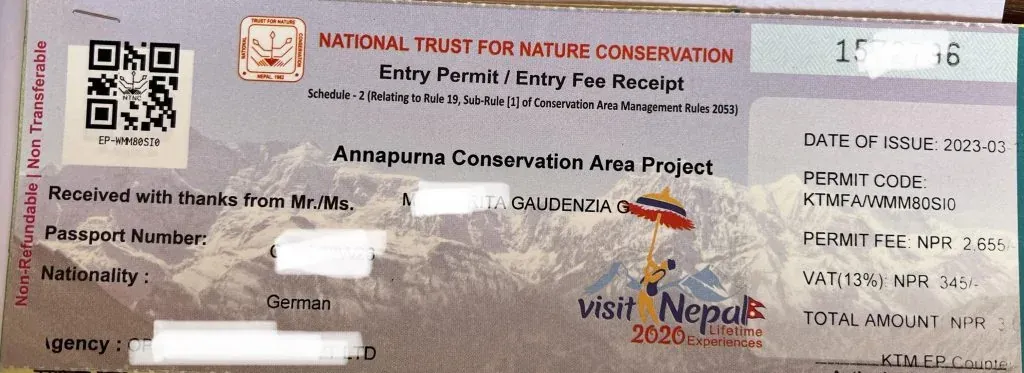
- Annapurna Conservation Area Permit (ACAP): mandatory for every trekker in the Annapurna region. It costs NPR 3,000 (about USD 26) per person and is issued in Kathmandu, in Pokhara, or at the ACAP office in Besisahar.
- Trekkers' Information Management System (TIMS) card: issued by the Trekking Agency Association of Nepal (TAAN) and the Nepal Tourism Board, and it costs NPR 2,000 (about USD 17) per person. It is available in Kathmandu and Pokhara.
Neither permit is issued on the trail, so both have to be arranged before you drive to Kande. If you book a guided trip, the agency files them for you and you only need passport copies and photographs.
Best Time for the Mardi Himal Trek
March to May and September to November are the two good windows. Skies are clear, days are mild and the ridge above Low Camp is walkable without snow gear.
| Season | Conditions | Worth it? |
| Spring, March to May | Clear, warm days and cool nights. Rhododendron in flower on the lower ridge | Best |
| Monsoon, June to August | Slippery, muddy trail and cloud on the viewpoints | Poor |
| Autumn, September to November | Clear skies and mild temperatures, the most reliable views | Best |
| Winter, December to February | Possible but cold, with snow above Low Camp | Experienced trekkers only |
Weather on the ridge changes quickly in every season, so carry a warm layer and a waterproof shell even in the two best months.
Accommodation on the Mardi Himal Trail: Teahouses, Food and Connectivity
Mardi Himal is a teahouse trek. Every stop from Deurali upward has lodges with beds, blankets and a dining room, and the facilities get simpler as you climb. Lower down you will find private rooms and hot showers. At Forest Camp and High Camp the rooms are shared and basic, and the dining room stove is the only heat.
Food is Nepali with some Western dishes: dal bhat, momos, noodles and soups, with vegetarian and non-vegetarian options. Meat gets scarcer and more expensive the higher you go, so most trekkers switch to dal bhat above Low Camp.
Wi-Fi exists in Pokhara and Deurali and is unreliable or absent from Forest Camp upward. Plan for no connection for two to three days. If you want a working data connection down in the valley, see our guide to getting a new SIM card in Nepal.
The forest section holds Himalayan pheasants, musk deer and langur monkeys, though sightings depend on the season and the time of day.
What to Pack for the Mardi Himal Trek
The ridge is short but it spans forest and high alpine ground in three days, so pack for the top rather than the trailhead.
- Layers, not bulk. A base layer, a fleece and a windproof shell handle almost every day on the trail. The wind on the open ridge above Low Camp is what makes it cold, not the air temperature.
- A warm layer for the sunrise walk. The push from High Camp starts in the dark and you will stand still at the viewpoint. A down jacket, gloves and a hat matter more here than anywhere else along the trek.
- Broken-in boots and poles. The descent to Siding is long and steep, and poles save your knees on it.
- A headtorch. Non-negotiable for the pre-dawn start, and useful in lodges where the power drops out.
- A sleeping bag or liner. Teahouses provide blankets, but rooms at Forest Camp and High Camp are unheated.
- Sun protection and cash. The ridge is exposed, and there is no ATM after Pokhara.
Winter walkers should add microspikes for the icy stretch above Low Camp. In the monsoon, swap some of the warm gear for a proper waterproof and expect leeches in the forest.
Mardi Himal Trek vs Annapurna Base Camp Trek
These are the two obvious short-to-medium treks out of Pokhara, and they are not interchangeable.
| Aspect | Mardi Himal Trek | Annapurna Base Camp Trek |
| Maximum altitude | 4,500M at Mardi Himal Base Camp | 4,130M at Annapurna Base Camp |
| Duration | 4 to 7 days | 7 to 12 days |
| Distance | Around 40KM | Around 110KM |
| Difficulty | Moderate, gradual ascents with some steep climbs | Moderate to challenging, steep ascents and descents |
| Crowds | Quieter, opened only in 2012 | Popular and busy in season |
| Views | Mardi Himal, Machhapuchhre and Annapurna South from one ridge | A full amphitheatre of Annapurna peaks |
Mardi Himal is higher but shorter, and it is the better choice on a tight schedule or a first Himalayan trek. The Annapurna Base Camp Trek is the better choice if you want the sanctuary itself and have nine or more days. The two can also be combined, as can Mardi Himal and the Ghorepani Poon Hill Trek, since all three start from Pokhara.
Getting to the Trailhead from Kathmandu and Pokhara
Everything starts in Pokhara. From Kathmandu it is a 25-minute domestic flight or a day on the road, and our guide to the Kathmandu to Pokhara bus service covers the tourist bus options and fares.
From Pokhara, Kande is 30 to 60 minutes by road. A private jeep is faster and a shared jeep is cheaper. From Kande everything is on foot until you come out at Siding and take a jeep back down. If you have a spare day at either end, the best places to visit in Pokhara are all within a short taxi ride of Lakeside.
Mardi Himal Trek Map
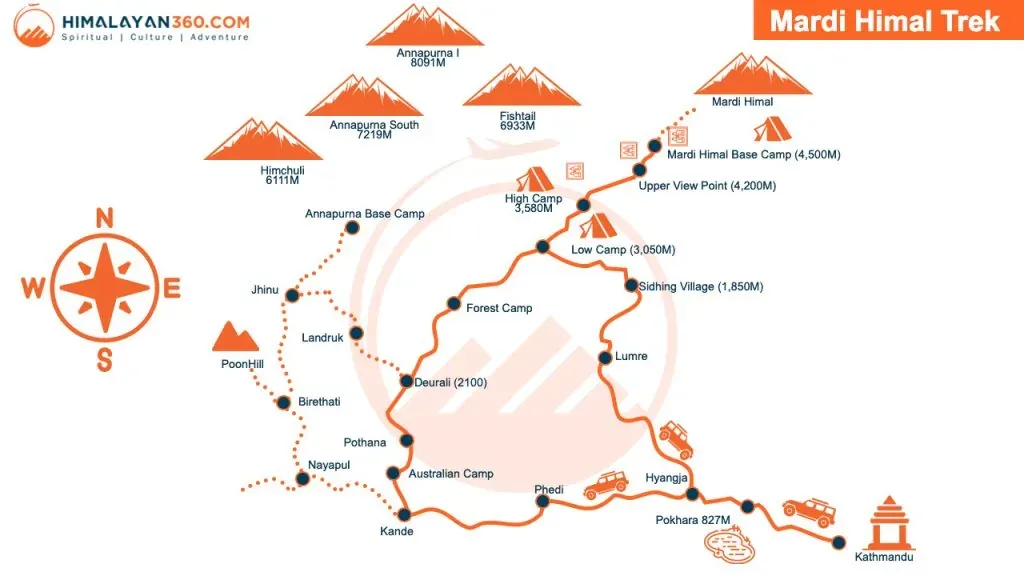
The trail leaves Kande, climbs past Australian Camp and Pitam Deurali, then follows the ridge north through Forest Camp, Low Camp and High Camp. Above High Camp the ridge narrows to the Mardi Himal viewpoint and then to Mardi Himal Base Camp at 4,500M, where the view opens onto Mardi Himal, Machhapuchhre, Annapurna South and Hiunchuli. Most trekkers then descend southeast to Badal Danda and out through Siding rather than retracing the ridge.
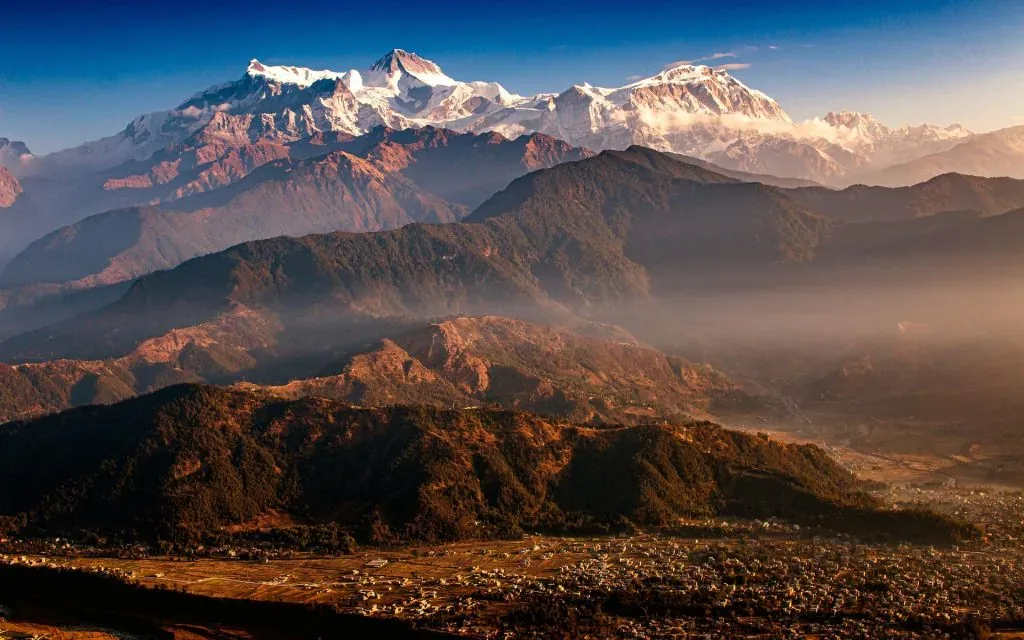
Ready to walk it? See the 7 Days Mardi Himal Trek for the full itinerary and departure dates, or the 5 Days Mardi Himal Trek if you are short on time.
 Trek
Trek By air
 Pilgrimage
 Festivals
 Wildlife
 Luxury
 Yoga
Yoga Food
Food Heritage