
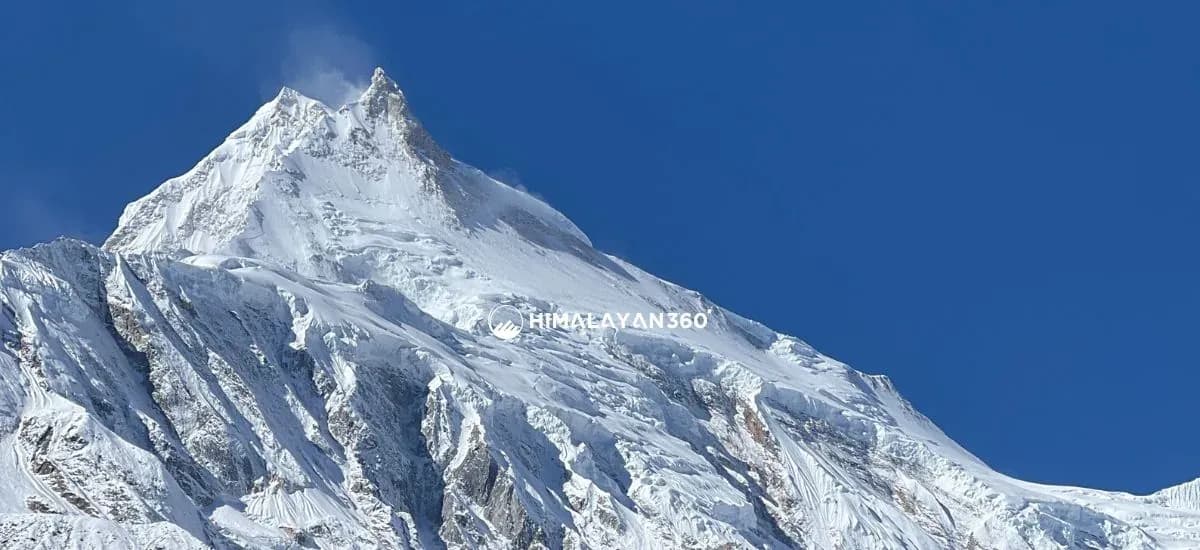
Manaslu is called the Killer Mountain because it has one of the highest fatality rates among the 8,000 m peaks in the world. The nickname “Killer Mountain” is attached to Manaslu because of its death rate, with approximately 9 deaths per every 100 successful summits and over 89 confirmed climber deaths since its first ascent in 1956.
Manaslu is one of the fourteen 8,000M peaks and the eighth-highest mountain in the world at 8,163 m, the 8th tallest mountain on the planet. It is not the highest peak in the world, not the tallest mountain in the world, and not even the tallest peak in Nepal. Mt Manaslu is known instead for what it costs the people who try to climb it. But the occurrence of unpredictable avalanches, violent weather, and dangerous terrain has made it one of the deadliest mountains on Earth. Manaslu is known as Killer Mountain among climbers for that reason, and the killer mountain in Nepal that most people mean, though the Manaslu Circuit Trek beneath it is one of the safest well-known trekking routes in the country, prized for its remote and less-crowded experience.
What Does Manaslu Mean and Where is Mount Manaslu Located?
The name Manaslu comes from the Sanskrit word manasa, meaning “intellect” or “soul,” which is why Manaslu is known locally as the “Mountain of the Spirit”, rendered as “Mountain of Spirits” in some translations. There is a sad irony in this name. A mountain seen as a place of spiritual power has taken the lives of many skilled climbers who tried to climb the mountain and underestimated it. Manaslu is called the Killer Mountain by the outside world and the Mountain of the Spirit by the people who live beneath it.
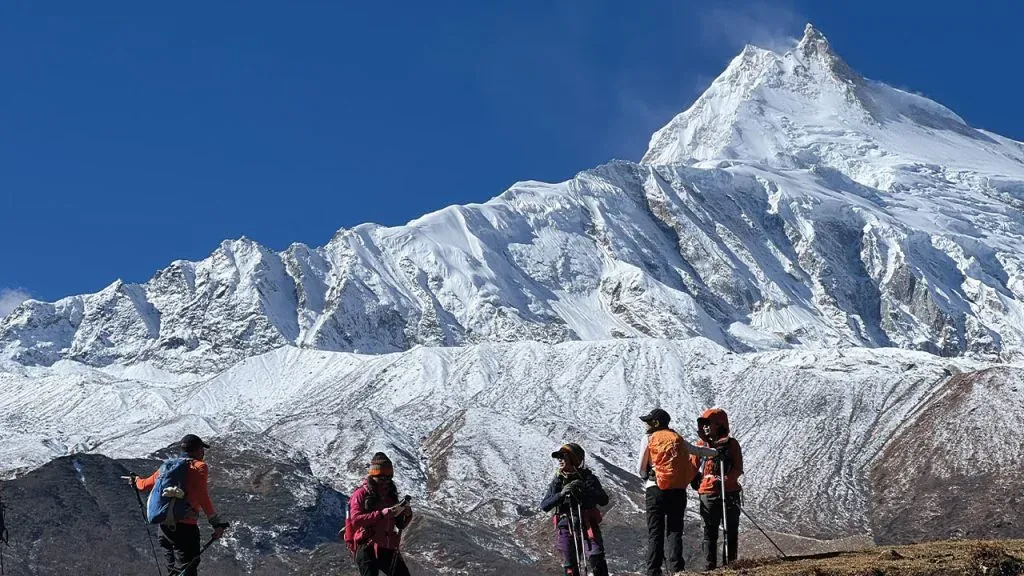
Manaslu is located in the Manaslu Himal, part of the Mansiri Himal mountain range above the Budhi Gandaki Valley in Gorkha and Manang districts of central Nepal, in the Gorkha District of Nepal that gives the Manaslu region its name. From there, the mountain was first summited on May 9, 1956, by Japanese climber Toshio Imanishi and Gyalzen Norbu. Before this success, many attempts had failed. Japanese teams kept returning again and again until they finally reached the summit.
Because of this connection, people say, “Just as the British see Everest as their mountain, Manaslu has always been a Japanese mountain.”
What Makes Manaslu the Killer Mountain of Nepal?
What makes Manaslu so deadly is heavy snowfall, avalanches, unpredictable weather, and dangerous crevasses that can trap even experienced climbers. Its sheer hillsides and remote location also make rescue efforts very difficult and slow. Below, we have explained these dangers clearly.
Avalanches and Icefalls
The biggest danger on Manaslu is avalanches, mainly caused by a huge ice formation called the Manaslu Serac. This large block of ice hangs over the mountain, and climbers going from Camp 3 to Camp 4 must pass directly below it, with no way to avoid it. It can break without warning by sending massive amounts of ice and snow crashing down onto the camps.
This becomes even more dangerous because avalanches often happen at night or early in the morning, when climbers are asleep in their tents. This means they are most at risk at the exact time when they cannot react or escape.
Inconsistent Weather Conditions
Manaslu is in a part of the Himalayas where the weather can change very quickly. It can become extremely cold, winds can go over 100 km/h, and storms can arrive without warning. The short climbing seasons in spring and autumn can suddenly close, and even experts find the weather hard to predict.
For climbers going for the summit from Camp 4, the weather can look clear at night but turn dangerous within a few hours. If this happens above 7,500 m, it can become very serious and life-threatening.
Advanced Terrain and Glacier Fracture Zones
The climb to Manaslu’s summit is not seen as the hardest among the 8,000-meter peaks, but that perception has contributed to deaths. Some climbers underestimate the mountain because it seems easier than peaks like K2 or Annapurna and come unprepared.
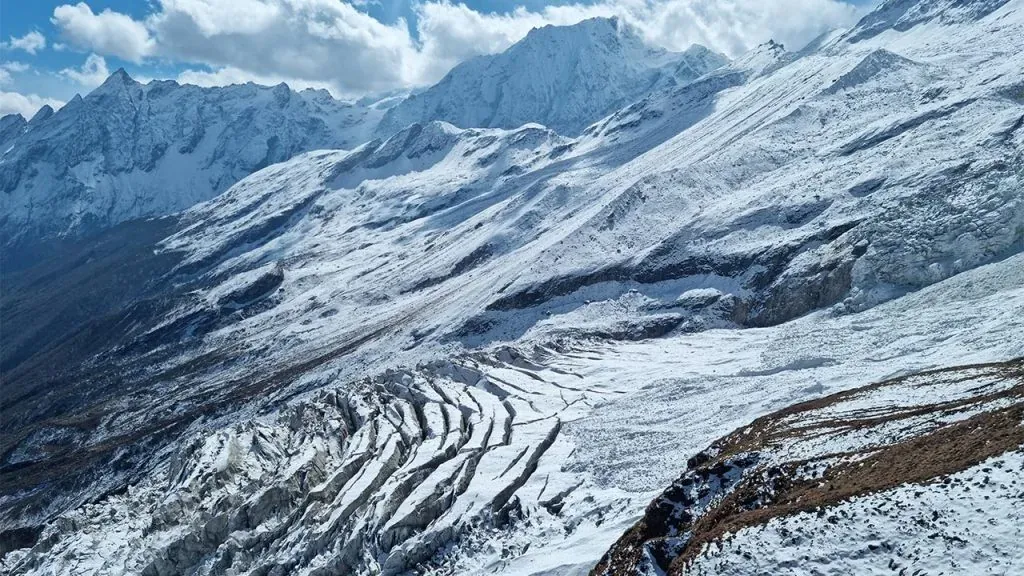
The route still has large crevasse fields to cross, steep ice and varied terrain to climb, and places where one slip can be deadly. These hazardous glacier zones need careful movement, proper equipment, and constant awareness.
Altitude and Acute Mountain Sickness
At 8,163 m, Manaslu puts climbers in the death zone, where the body cannot adjust to the altitude and starts to break down. Altitude sickness is a constant risk here, in the form of acute mountain sickness, high-altitude pulmonary edema (HAPE), and high-altitude cerebral edema (HACE).
Because Manaslu is far away in Gorkha, helicopter rescues from high camps are delayed by bad weather, which can turn treatable problems into life-threatening situations.
The Deadliest Moments in the History of Manaslu
Manaslu has a long history of deadly climbs, with avalanches, falls, and storms taking the lives of many climbers. Some of the worst tragedies happened when the Manaslu Serac collapsed and when bad weather struck climbers above 7,500 m. Below, we have explained these moments clearly.
The 2012 Avalanche Disaster
The deadliest event in Manaslu history happened on September 23, 2012. Early in the morning, an avalanche hit Camp 3 while climbers were sleeping. It destroyed about 25 tents and swept several climbers down the mountain. 11 people died, with some reports saying up to 13, including climbers from France, Germany, Italy, Spain, and Nepal. Three bodies were never found and are still buried under the snow.
One expedition report described it as “a tragic loss,” saying that survivors were hurt and stuck on the mountain, and they needed help while avalanches kept happening. The 2012 disaster is still the deadliest day on Manaslu.
The 2022 Season
Ten years after the 2012 disaster, Manaslu showed again how dangerous it can be. On September 26, 2022, an avalanche near Camp 4 killed at least one climber and seriously injured about 12 others.
That season also saw the death of Hilaree Nelson, a world-famous ski mountaineer, who fell into a crevasse while descending. Her passing shocked climbers around the world and showed that even experience and preparation cannot guarantee safety on Manaslu.
1972 South Korean Expedition Avalanche
On April 10, 1972, a big avalanche hit Camp III of a South Korean expedition on Manaslu, at about 6,500 m. The avalanche happened just after midnight while climbers were sleeping. The disaster killed 15 people, including 4 Koreans, who were the expedition leader Kim Ho-sup, 1 Japanese climber, Kazunari Yasuhisa, and 10 Nepalese Sherpas.
Only three people at Camp III survived: Kim Yae-sup, the 21-year-old brother of the leader, and two Sherpas. They were swept almost 800–1,000 m down the mountain but managed to dig themselves out. Seven other expedition members survived because they were not at Camp III when the avalanche struck.
1983 Spanish Expedition Disappearance
In 1983, a Spanish expedition from Catalonia tried to climb the Northeast Face of Manaslu. Although not as widely known as the 1972 or 2012 disasters, this climb ended tragically and became part of the deadly mountain history.
During the expedition, two experienced climbers, Pere Aymerich and Enric Font, were caught in an avalanche while descending from a summit attempt. Both disappeared high on the mountain, and their bodies were never recovered.
Facts About Manaslu Mountain and Notable Climbing Milestones
Manaslu has a history of mountaineering achievements, from first ascents to record-breaking climbs. Here are some of the most notable milestones:
- British explorer H.W. Tilman and J.O.M. Roberts conducted the first modern survey of the mountain in 1950
- On 9 May 1956, Toshio Imanishi (Japan) and Gyalzen Norbu Sherpa reached the summit for the first time
- A Japanese women team led by Kyoko Sato became the first women to ever summit an 8,000 m in May 4, 1974
- The legendary Reinhold Messner completed a solo climb of the toughest south-west face in 1972
- On January 12, 1984, Polish climbers Maciej Berbeka and Ryszard Gajewski became the first to summit Manaslu in winter at -30°C
Survivor Stories from Manaslu Tragedy
Here are some stories from the 1972 and 2012 Manaslu disasters.
- Kim Yae-sup (1972 survivor): The 21-year-old Korean climber was awake after midnight, making tea when he heard a thunderous roar. Within seconds, the avalanche swept him and his companions about 800–1,000 m down the mountain.
- Glen Plake (2012 survivor): The American freeskier was reading in his tent when he heard a loud roar he thought was wind. An avalanche then swept him 300 m over an ice ridge, but he survived inside his sleeping bag. Sadly, his climbing partners, Rémy Lécluse and Greh Costa, went missing.
- Jim Morrison (2022 survivor): After reaching the summit with Hilaree Nelson, Morrison skied first and saw Nelson trigger a small avalanche that swept her down a 5,000-foot slope. Morrison safely reached base camp and spent two days searching from the air before finding her body.
Permits Required for the Manaslu Circuit Trek
Many climbers who attempt Mount Manaslu also walk part of the Manaslu Circuit Trek or the Manaslu Base Camp trek to acclimatise, and the Manaslu Circuit Trek is one of the routes that shares the same permit system. Because the area is remote and at high altitude, they must get special Manaslu Circuit Trek permits. Here’s a simple table showing the main permits and their costs in USD.
| Permit Name | Cost |
|---|---|
| Manaslu Restricted Area Permit (MRAP) | USD 100 for the first 7 days from September to November, USD 75 from December to August |
| Manaslu Conservation Area Permit (MCAP) | NPR 3,000 (about USD 22) per person |
| Annapurna Conservation Area Permit (ACAP) | NPR 3,000 (about USD 22) per person |
A TIMS card is not required on the Manaslu Circuit. All three permits must be filed by a registered trekking agency, and a licensed guide is compulsory in the restricted area.
Climbing Manaslu: the Expedition Route and Base Camp
A Manaslu expedition works from the north-east face, and the shape of the route explains where the deaths happen. Manaslu Base Camp sits above Samagaun, the same 4,800M point trekkers walk up to on the Manaslu Circuit acclimatisation day, and four higher camps are strung out above it.
- Base Camp to Camp 1. Glacier travel and the first crevasse fields.
- Camps 1 to 3. The steepest ice on the route, and the section climbers most often describe as harder than the equivalent ground on Everest.
- Camp 3 to Camp 4. The Corridor, directly beneath the Manaslu Serac. There is no line that avoids it.
- Camp 4 to the summit of Manaslu. Long snow slopes and a fore-summit that expeditions now bypass with fixed rope to the true top of Mount Manaslu.
Most people who climb Mount Manaslu do so in autumn, and many treat summiting the mountain as preparation for Mount Everest. A climb in Nepal at 8,000M starts here more often than anywhere else, which is why Mount Manaslu climbing has grown so fast. Mountain climbing on a peak in Nepal at this scale is a logistics exercise as much as a physical one, and the Manaslu climb is no exception: bottled oxygen, Sherpa support and a settled weather window decide most summits. Manaslu climbing permits are issued separately from trekking permits, by the Department of Tourism rather than by the Department of Immigration.
Why You Should Not Fear the Manaslu Climb
Many people fear Manaslu because of its deadly reputation, but modern climbing improvements and support have made it much safer than in the past. Here are some reasons you don’t need to fear Manaslu:
- Fixed Rope to True Summit – Recent expeditions use fixed ropes to safely reach the actual summit by avoiding the dangerous fore-summit.
- Better Weather Forecasting – Accurate satellite weather forecasts help climbers choose the safest time to move and avoid sudden storms.
- Rapid Rescue Options – Helicopters can now evacuate injured climbers from Base Camp and even higher camps quickly.
- High Summit Success Rate – Manaslu has one of the highest success rates among 8,000 m peaks.
- Experienced Sherpa Support – Many climbers have 1:1 Sherpa support to handle logistics and carry oxygen.
- Less Technical Difficulty – The standard route has long snow slopes, so it is easier compared to mountains like K2 and Annapurna.
Manaslu vs Other Killer Mountains of the World
The death rate of the Manaslu is counted differently by different sources. Between 1956 and 2022, about 89–90 climbers have died on the mountain. Out of roughly 2,172 attempts to reach the summit, only around 60% succeed, and if climbers use supplemental oxygen, the success rate drops to about 50%.
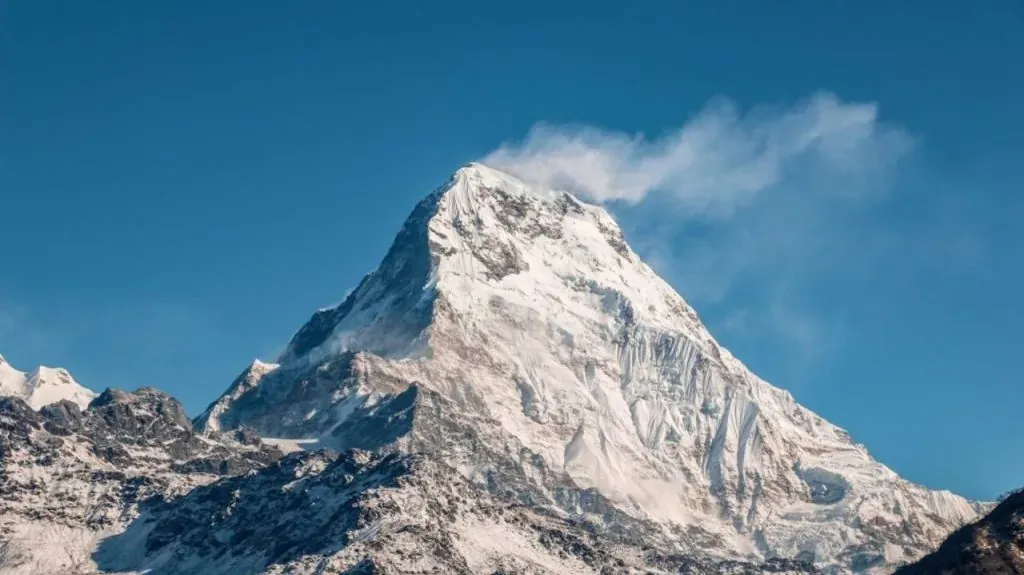
By May 2008, there had been 297 successful summits and 53 deaths, a fatality rate of about 17.85%, which made Manaslu the fourth deadliest 8,000-meter peak after Annapurna, Nanga Parbat and K2. By 2012, the death toll had risen to 64 out of 672 summit attempts.
The reason you will see very different percentages quoted for Manaslu is that the denominator has changed. Deaths have accumulated slowly, roughly 90 in total, while successful summits have multiplied to around 3,750 by late 2024 as commercial expeditions moved onto the mountain. Measured across the whole history of the peak the rate is close to 9 deaths per 100 summits, measured only in recent years it is nearer 2.4% to 2.7%, and measured in 2008 it was 17.85%. All three numbers describe the same mountain at different points in its climbing history. The table below compares Manaslu with the other peaks it is usually ranked against.
| Mountain | Height (m) | Approx. Deaths | Fatality Rate |
|---|---|---|---|
| Annapurna | 8,091 | 72+ | ~27% |
| K2 | 8,611 | 90+ | ~23% |
| Nanga Parbat | 8,126 | 90+ | ~21% |
| Manaslu | 8,163 | 89+ | ~9-18% |
| Everest | 8,849 | 300+ | ~1.2% |
Plan Your Manaslu Adventure & Trek the Killer Mountain’s Shadow
The Manaslu summit is one of the most rewarding and most dangerous places in Nepal, and the mountain has become a fixture on the list of 8,000M peaks people climb before Everest. Manaslu peak is one of the most amazing but dangerous mountains, with a history full of daring climbs, deadly avalanches, and the high-risk “death zone.” Its reputation as “why Manaslu is called killer mountain” is real, but modern safety measures, experienced guides, better forecasting, and well-organized Manaslu expeditions have transformed it into an achievable adventure in Nepal. Trekking to Manaslu below the summit, on the Manaslu trek that circles the peak inside the Manaslu area protected by the conservation project, needs none of that equipment and carries none of that risk. It is closer in effort to the Everest Base Camp trek than to any climb.


14 Days
Manaslu Circuit Trek
$920
5.0(7 reviews)
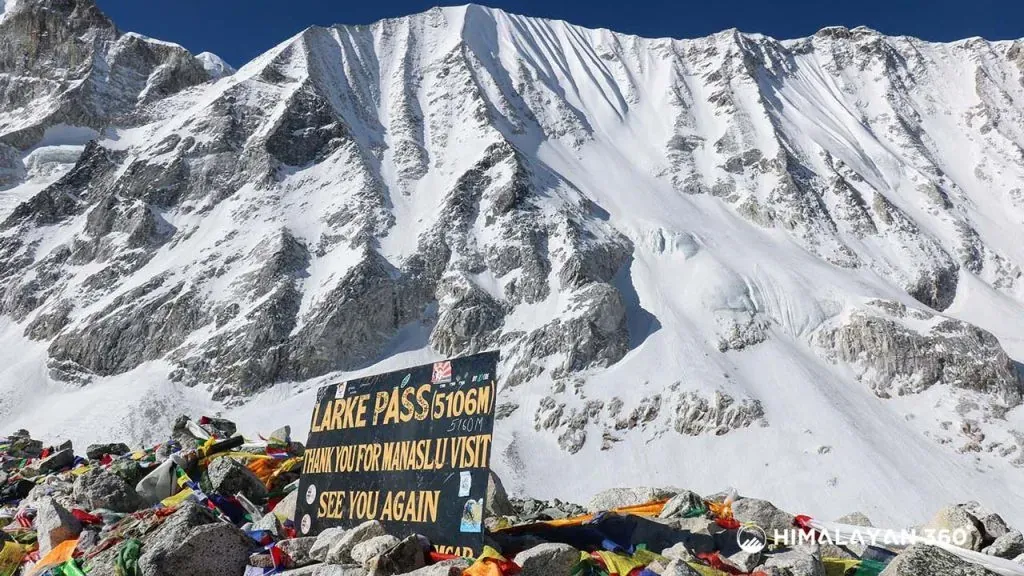
The Manaslu Circuit Trek is a stunning 13-18 day teahouse trek in Nepal, circling the world’s 8th highest mountain (Manaslu 8,163m), and covers about 144KM (89 Miles). The trek journey starts at Machha Khola and slowly climbs through farmlands and small villages. As you move higher, you reach mountain valleys like Samagaon and Samdo. The biggest highlight is crossing the Larkya La Pass (5,160M), where you can see amazing views of Manaslu, Himalchuli, and Ngadi Chuli. The trek also offers a local culture experience. Villages such as Samagaon, Namrung, Lho, and Deng show strong Tibetan traditions. You will see monasteries, prayer flags, and mani walls along the way. Depending on the season, you may also witness festivals like Lhosar (Tibetan New Year) or Saga Dawa, which celebrates Buddha’s life. In these villages, people farm millet, herd yaks, and live in ways passed down for centuries. This gives trekkers a close look at a culture that is still very traditional. The Manaslu Circuit trek trail also takes you through different natural landscapes. In the lower region at Jagat and Soti Khola, you will walk through green forests alive with rhododendron, magnolia, and bamboo. As you go higher past Philim, Namrung, and Samdo, the forest changes into oak, maple, and conifers, with waterfalls along the way. Near Samagaon and Larkya La, the land becomes rocky and snowy, with only small plants like moss and lichens. The changing landscape offer the true trekking experience throughout the Manaslu Circuit trek. Likewise, one special thing about the trek to Manaslu Circuit region is that it is a restricted area. Trekkers need special permits, which help protect the environment and keep the trail less crowded. You will need to compulsorily hire a trekking guide. You can find simple teahouses and lodges in main villages, but the trek still feels wild and quiet compared to other popular routes in Nepal. The best time for Manaslu Circuit trek is during the Spring (March to May) and Autumn (September to October) seasons.


20 Days
Manaslu Tsum Valley Trek
$1,330
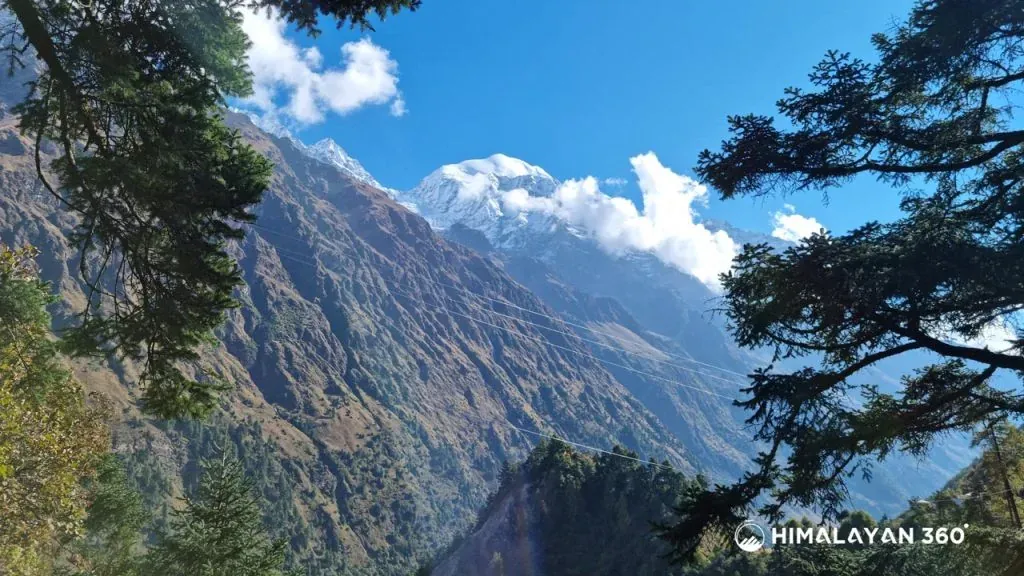
The Manaslu Tsum Valley Trek is an adventure around Mount Manaslu, the world’s eighth-highest peak at 8,163 meters (26,781 feet). This trek takes you through the scenic Manaslu Conservation Area and into the remote Tsum Valley, close to the Tibetan border. For 20 days, trekkers travel through serene pine forests, rhododendron jungles, and challenging trails leading up to the Larkya La Pass with majestic mountain views. The trek features high-altitude lakes, unique wildlife, and ancient Buddhist monasteries, with altitudes above 3,000m and 5,000m (16,404 feet) respectively. Along the way, you’ll discover a rare blend of Nepali and Tibetan culture, language, and traditions that make this region truly special. You will climb through Gurung villages with rice and millet terraces and cross many Buddhist shrines, especially in the Tsum Valley, which also has a similar culture to Tibetans. Tsum Valley, located near the Tibetan border, offers opportunities to encounter Buddhist monks and explore Milarepa’s Cave. You can also view Nepal’s national bird, the Lophophorus, against majestic landscapes of Mount Manaslu and Himalayan ridges like Hiunchuli and Annapurna II. The Manaslu Tsum Valley trek is ideal for adventure-seekers, but beginners with strong bodies and amazing stamina can also experience this. Just make sure that you are physically fit, if you are planning to take up the trek.
 Trek
Trek By air
 Pilgrimage
 Festivals
 Wildlife
 Luxury
 Yoga
Yoga Food
Food Heritage