Beyond the Clouds Experience, Literally!
Himalayan 360 offers special high-altitude peak climbing expeditions for the adventurous spirit who wants real adventure and loves going “beyond the clouds.” Our climbing packages focus on three famous peaks: Island Peak (6,189M), Lobuche East Peak (6,119M), and Mera Peak (6,476M). These climbs are rated moderate to challenging, so climbers need to have excellent physical fitness and strong mental preparedness.
Climbers who join these climbs are rewarded with stunning views of Everest, Lhotse, Makalu, and many other huge mountains. Along the way, they also get to explore Sherpa villages, peaceful valleys, and spend nights in both cozy teahouses and mountain camps under clear, starry skies. This peak climbing is suitable for beginners taking their first steps into mountaineering, as well as for experienced climbers who hunger for a tougher, more technical challenge.
| Trip Name | Difficulty | Altitude | Total Duration |
| Mera Peak Climbing | Strenuous / Technical trekking peak (requires prior high-altitude experience and basic mountaineering skills) | 6,476M (21,247FT) | 17 days |
| Island Peak Climbing | Moderate -Challenging trekking peak (good first Himalayan summit with guided technical support) | 6,189M (20,305FT) | 16 days |
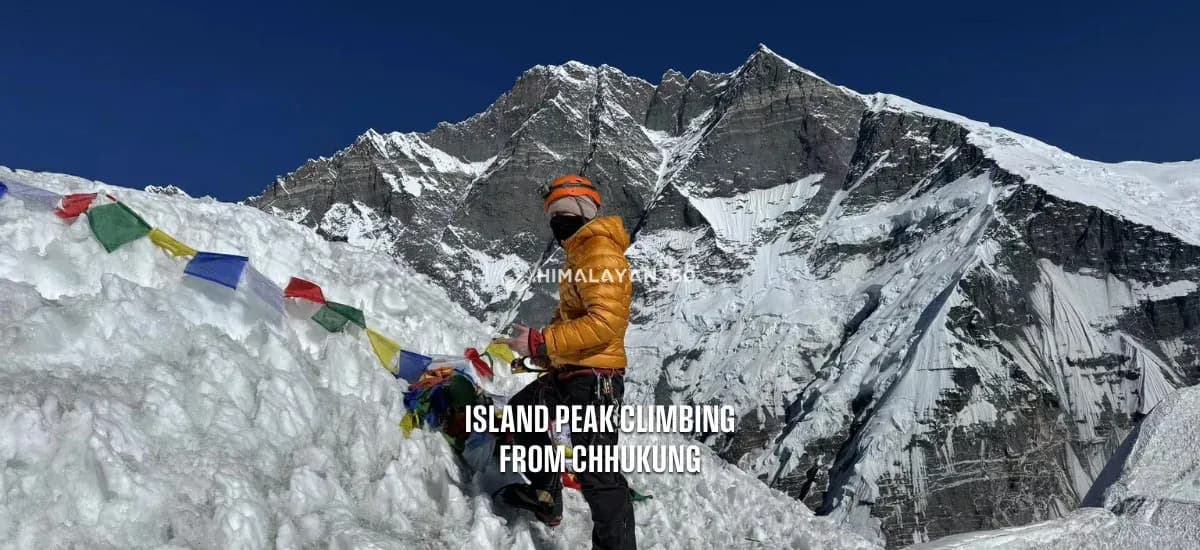
| Island Peak Climbing from Chhukung | Moderate -Challenging. Shorter, more focused climb for acclimatized trekkers already in Khumbu | 6,189M (20,305FT) | 3 days |
| Island Peak Climb with EBC Trek | Challenging. Full EBC trek + Island Peak summit, long itinerary | 6,189M (20,305FT) | 18 days |
| Lobuche East Peak Climbing from Lobuche | Challenging / Technical trekking peak (steeper, more technical than Island Peak) | 6,119M (20,075FT) | 3 days |
Detailed Cost Analysis for Peak Climbing in Nepal

From the bar graph above, it is clear that Mera Peak Climbing is the most expensive option at USD 3,070 among the five packages. Island Peak Climb with EBC Trek and Island Peak climbing follow closely to this price at USD 2,813 and USD 2,751, respectively. The most budget-friendly options are Island Peak Climbing from Chhukung and Lobuche East Peak Climbing from Lobuche, both priced at USD 899, making them accessible choices for climbers who want a focused summit push without a long approach trek.
A Himalayan 360° View of the World at your Feet
From Mera Peak and Island Peak to Lobuche East, these climbs take you above 6,000 meters into a 360° world of ice, rock, and endless sky. Mount Everest and its sister giants frame the horizon in every direction, and you see the whole Khumbu spread out below you. It’s a moment you never forget.
Mera Peak Climbing
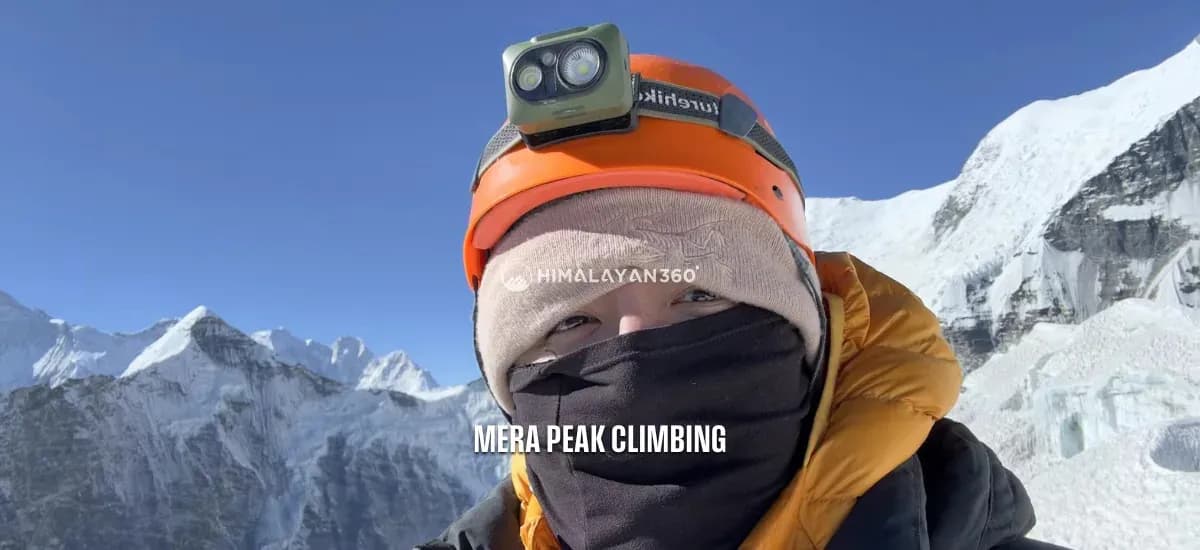
Mera Peak is the highest trekking peak in Nepal, standing at 6,476 meters. On the Mera Peak Climbing, you will be trekking through the quiet Hinku Valley, across glaciers, and reach a high, non-technical but physically tough summit. From the summit, you can see five of the world’s tallest mountains, Everest, Lhotse, Makalu, Cho Oyu, and Kanchenjunga on a clear day. It is ideal for fit trekkers with some high-altitude experience who want their first real Himalayan climbing experience. The trip includes skilled guides, acclimatization days, and proper high-camp support to make the climb safe and successful.
- Best time to climb: February, March, April, May, June, September, October, November, December
- Trip duration: 17 Days
- Maximum altitude: 6,476M (21,247FT) at Mera Summit
- Key highlights: Summit of Mera Peak, views of five 8,000ers, crossing Zatrawala Pass, remote Hinku Valley, teahouse trekking and tented camp experience, and using basic mountaineering skills like glacier walks and rope work
- Transportation: Drive (Kathmandu to Ramechhap airport), Flight (Manthali to Lukla)
- Required permits: Mera Peak Climbing Permit from the Nepal Mountaineering Association and Sagarmatha National Park Permit
Island Peak Climb with EBC Trek
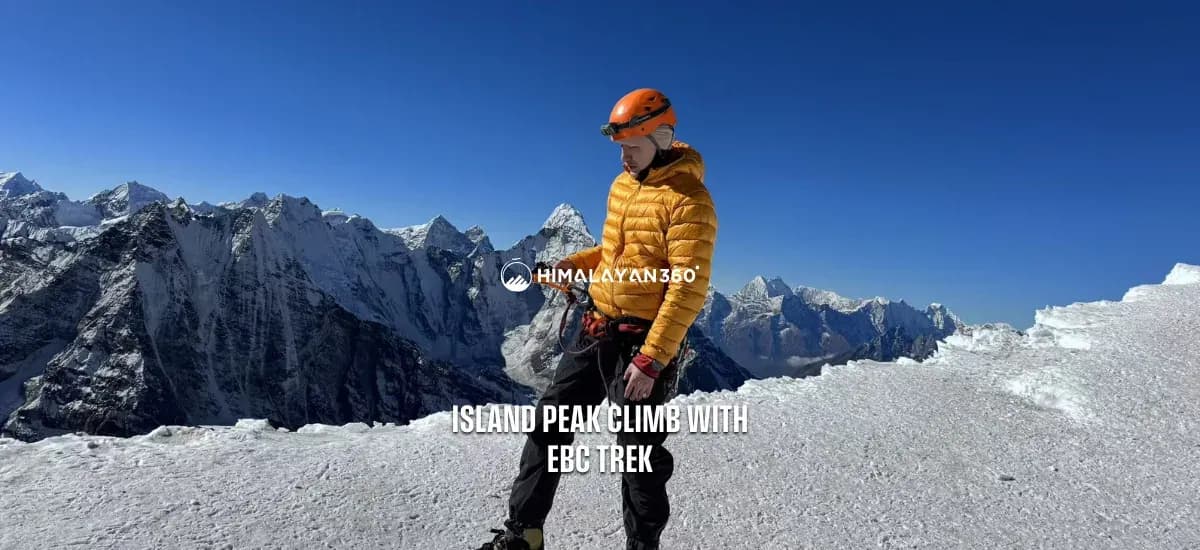
The Island Peak Climb with Everest Base Camp Trek is an 18-day adventure that combines two amazing experiences in one: visiting Everest Base Camp and climbing Island Peak (6,189M). First, you will follow the famous Everest trekking trail and explore Namche Bazaar, Tengboche, Dingboche, Lobuche, Everest Base Camp, and Kala Patthar. After enjoying these highlights, the route leads to Island Peak Base Camp, where you will prepare for your summit climb. The final climb includes glacier walking, using fixed ropes, and a steep push to the top. This expedition is suitable for trekkers who want to stand on the base of the world’s highest peak while also experiencing the excitement of climbing a real Himalayan peak.
- Best time to climb: February, March, April, May, June, September, October, November, December
- Trip duration: 18 Days
- Maximum altitude: 6,189M (20,305FT) at Island Peak Summit
- Key highlights: Reaching Everest Base Camp (5,364M), sunrise from Kala Patthar (5,555M), Island Peak summit, Tengboche Monastery, Sherpa culture, Himalayan wildlife, and glacier walking with basic mountaineering gear.
- Transportation: Drive (Kathmandu to Ramechhap airport), Flight (Manthali to Lukla)
- Required permits: Island Peak Climbing Permit from the Nepal Mountaineering Association and Sagarmatha National Park Permit
Lobuche East Peak Climbing from Lobuche
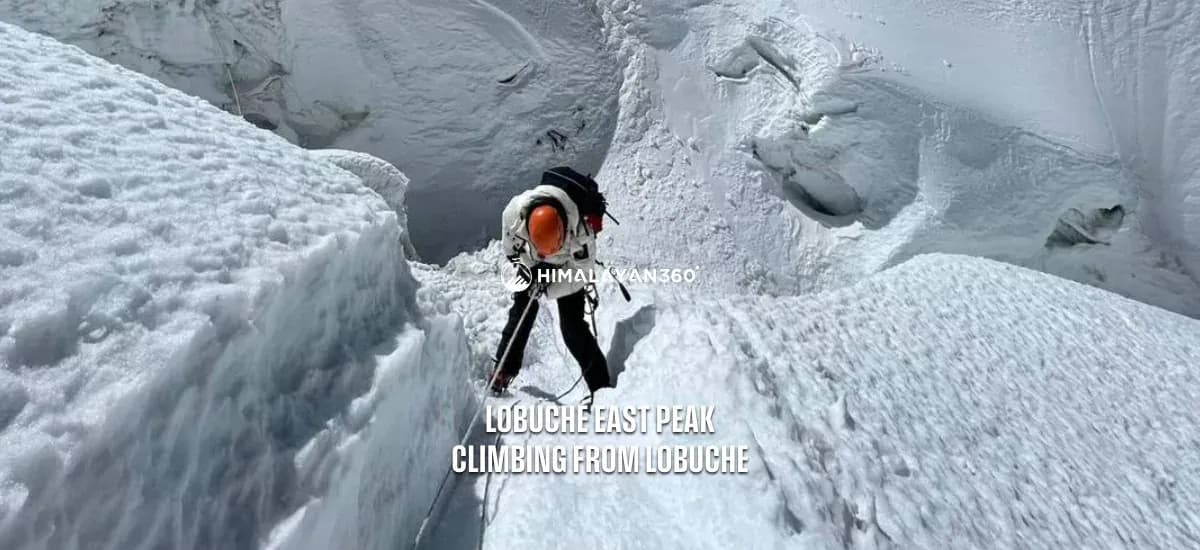
Lobuche East Peak Climbing from Lobuche is a short yet challenging 3-day summit add-on for trekkers who are already on the Everest trail. The climb starts from Lobuche village and follows a direct route to the 6,119M summit, where you will see 360 degree view of Everest, Lhotse, Nuptse, Ama Dablam, and the Khumbu Glacier. The itinerary includes 1 preparation day in Lobuche, overnight at Lobuche High Camp, and an early morning summit push. It is suitable for fit trekkers who want a serious mountaineering experience without committing to a long duration.
- Best time to climb: February, March, April, May, June, September, October, November, December
- Trip duration: 3 Days
- Maximum altitude: 6,119M (20,075FT) at Lobuche East Peak Summit
- Key highlights: Summit of Lobuche East, close-up views of Mount Everest, Lhotse, Ama Dablam, and Nuptse from the summit, walking on Lobuche and Khumbu Glaciers
- Transportation: None
- Required permits: Lobuche Peak Climbing Permit from the Nepal Mountaineering Association
Is Peak Climbing in Nepal Safe for Beginners?
Yes, peak climbing in Nepal is safe for beginners, but only with proper preparation and guidance. Nepal offers many “trekking peaks” below 6,500 m that are suitable for first-time climbers, with lower technical difficulty and strong support systems like guides, fixed ropes, and rescue services. Popular beginner climbs like Island Peak have success rates of about 70–85%, and this can increase to nearly 90% for climbers who are well prepared.
However, it is not risk-free. High altitude, changing weather, and physical demands can still make climbing challenging. Risks like altitude sickness and avalanches exist, and hundreds of accidents have occurred in the Himalayas over time. The main difference is preparation. Choosing the right peak, giving time to adjust to altitude, and climbing with experienced guides improves safety and success for beginners.
Physical Fitness & Preparation for Peak Climbing
Proper fitness and preparation are essential for peak climbing in Nepal. An organized 12-week plan builds strength step by step. In the first 4 weeks, focus on creating a routine with 3–4 cardio sessions of 30 minutes, 2 light strength workouts, and a 1–2 hour hike on weekends. From weeks 5–8, increase intensity with 4 cardio sessions of 45 minutes, 2 strength sessions with added weight, and longer weekend hikes of 3–5 hours to improve stamina.
In weeks 9–10, training reaches its peak with back-to-back hikes lasting 5–8 hours while carrying a full backpack, along with hard training sessions to build stamina. The final 2 weeks are for recovery, where training is reduced by half and replaced with light walks to keep your body fresh. This step-by-step approach prepares you physically and makes your climb safer and more successful.
Beginner Tips for a Successful Peak Climbing Experience
For beginners, successful peak climbing in Nepal is less about technical skills and more about good preparation, strong fitness, and respecting the altitude. Here are some good tips for beginners.
- Practice walking with “duck feet” in crampons and learn how to use an ice axe to stop yourself if you start sliding
- Check weather conditions before climbing
- Inform your guide immediately if you experience headaches, nausea, or dizziness
- Hire experienced guides and support staff
- Learn how to use a Jumar (ascender) to climb steep sections and a Figure-8 or ATC (descender) to safely rappel down
- Wear your trekking boots on training hikes for months before the trip to avoid blisters
- Drink 3–5 liters of water every day, as dehydration can thicken your blood and raise the risk of altitude sickness
Start Your Peak Climbing Journey Today
Moving from trekking to peak climbing is an exciting milestone. Choosing beginner-friendly peaks like Mera or Island Peak helps you gain both climbing skills and mental strength while reaching your first summit.
With proper physical training, a trusted local guide, and slow acclimatization, these trekking peaks are achievable. From watching the sunrise over the Everest range on Mera Peak to tackling the final ice wall on Island Peak, your first summit will stay with you forever.

 18Days
 6,189m
 Strenuous